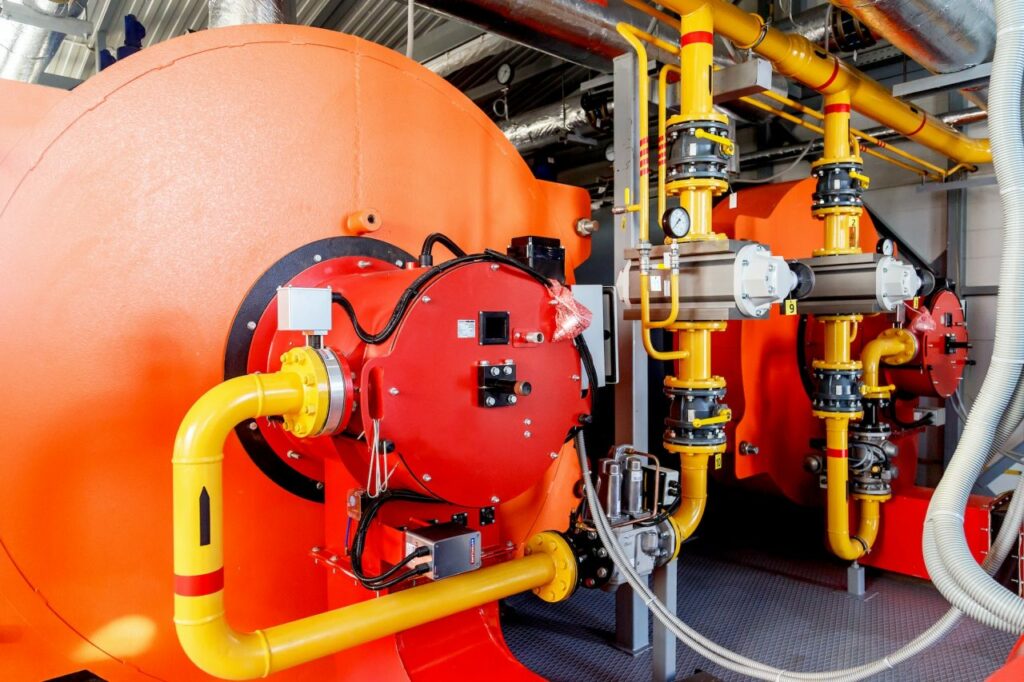
Industrial ovens fail in production when burner selection doesn’t match actual thermal demands. An undersized burner struggles to reach process temperature, widening quality variance and extending cycle time. Oversized equipment cycles unnecessarily, wearing components and wasting fuel. We understand that specifying an industrial oven burner requires translating your operational constraints—production volume, desired cycle time, product sensitivity—into concrete equipment parameters.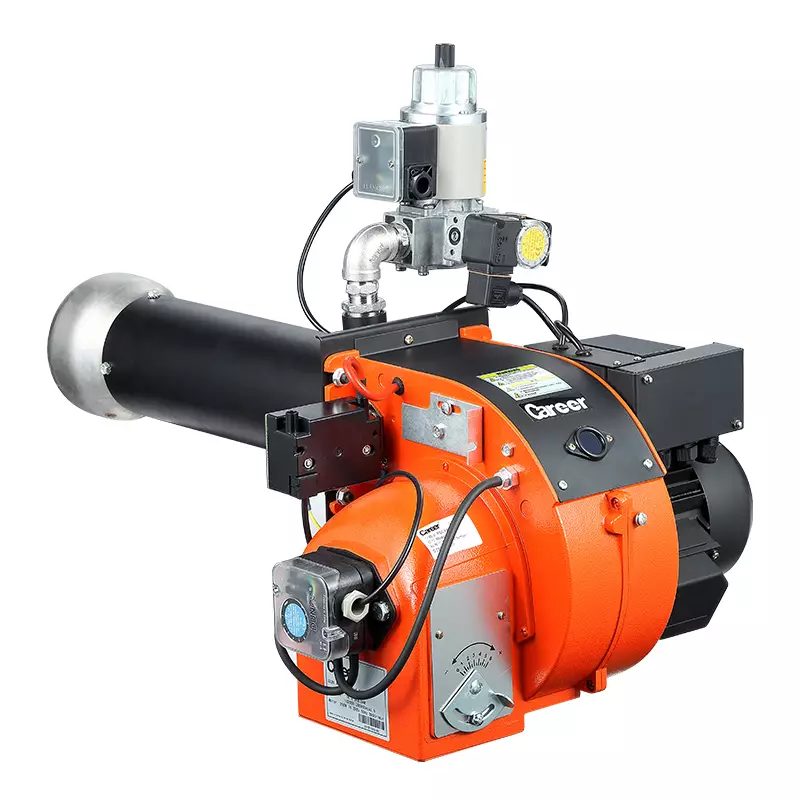
Matching Burner Output to Oven Heat Load
Begin by determining your oven’s net thermal requirement. Multiply chamber volume by the temperature rise needed, then account for wall losses and infiltration during operation. Most industrial ovens operate in the 100–300°C range; a 5-cubic-meter oven chamber reaching 200°C requires approximately 150–200 kW of continuous heat input once equilibrium stabilizes.
Your burner’s rated output must exceed this steady-state load by 20–30 percent to handle ramp-up time and compensate for seasonal ambient variation. The GX25 automatic gas burner delivers 118.4–270 kW output, matching mid-range bakery, drying, and food processing ovens effectively. If your oven requires faster heat-up—say, 45 minutes instead of 90 minutes to temperature—you’ll need capacity at the upper end of your burner’s range.
Never confuse installed burner capacity with actual firing rate. Oversizing provides headroom for load swings, but only if the burner can modulate down to match lower demand without destabilizing. Full-fire-only burners waste fuel during partial-load periods, common in batch processes where chamber temperature holds steady between product runs.
Temperature Control: Why Modulation Matters in Bakery and Drying Applications
Industrial oven success hinges on maintaining precise chamber temperature despite changing load conditions. A fresh batch of product entering a warm chamber absorbs energy; exterior surface temperature rises faster than interior, creating quality defects in baked goods or uneven drying in textiles. The burner must throttle back automatically as the oven reaches setpoint, then cycle or modulate to hold temperature within ±5°C.
Single-stage burners fire at full capacity or shut off completely. This on-off cycling causes temperature overshoot followed by a lag period while the chamber cools. Products near the oven door see temperature swings of 20–40°C, ruining consistency. Multistage or modulating burners address this by firing at partial load, reducing overshoot and maintaining steadier conditions throughout the chamber.
Career Burner’s GX25, a burner oven industrial, supports both single- and multi-stage flame modulation, allowing your control system to hold temperature across your entire operational range. When paired with an oven thermostat, this flexibility translates directly to reduced scrap rates and more uniform product characteristics batch-to-batch. The automatic control system continuously adjusts fuel-air ratio as load varies, preventing both rich combustion (soot, inefficiency) and lean combustion (flashback risk).
Fuel Flexibility and Supply Reliability
Many facilities operate on natural gas but face periodic supply disruptions, seasonal price volatility, or regulatory pressure to diversify fuel sources. A burner locked into a single fuel type becomes a liability if supply tightens or pricing spikes.
The GX25 accepts both natural gas and LPG without modification, providing operational flexibility if your energy mix shifts. This dual-fuel capability also matters in regions where natural gas infrastructure remains underdeveloped or where LPG offers cost advantage during certain seasons. Confirm fuel pressure availability at your site—most industrial gas lines supply 100–300 mbar, but some regional grids operate at lower pressures, affecting which burner models perform safely.
Document your typical gas consumption rate. The GX25 consumes 12.0–25.0 m³/h of natural gas depending on firing level. Cross-check this against your facility’s supply-line capacity to ensure adequate fuel delivery without pressure drop. Undersized fuel lines create operational headaches: the burner demands more gas as chamber temperature rises, but pressure dips below safe operating margins, starving the flame and triggering safety shutdowns.
Safety and Automation Features That Protect Product Quality
Oven fires demand built-in safeguards because burner malfunction creates both safety and product loss. Flame detection and automatic ignition restart mean you recover from a brief interruption without manual intervention—critical during overnight production runs. Air pressure monitoring prevents dangerous conditions where the burner attempts to fire without adequate combustion air, which leads to incomplete burning and carbon monoxide risk.
Career Burner integrates flame detection, air pressure monitoring, and fuel/air regulation into the GX25 control module, creating a closed-loop system that corrects drift automatically. If stack temperature drops (indicating incomplete combustion), the controller enriches fuel-air ratio. If air pressure falls below safe minimum, the system shuts down before hazardous conditions develop.
This automation protects your product indirectly: a stable, monitored flame means predictable oven conditions, reducing the variance that spoils batches. Facilities running unattended night shifts especially benefit from automatic safety interlocks, as manual monitoring becomes impractical.
Installation Fit and Retrofit Considerations
Existing oven reburning often constrains burner selection more than new construction does. Your oven’s mounting flange size, the location of gas and air inlet ports, and available electrical supply (220V/50Hz is standard for industrial burners) narrow viable options immediately. Compact all-in-one burner designs like the GX25 reduce installation complexity compared to field-assembled systems requiring separate blower, control module, and safety valve assembly.
Lead time affects your procurement planning. Stock units ship within weeks, but custom configurations or high-volume orders may require 45 days or longer. If your current burner is failing, ordering a direct replacement reduces downtime risk. If you’re planning a controlled upgrade during scheduled maintenance, longer lead time allows better supplier selection and cost negotiation.
Installation quality matters significantly. Improper air supply ducting, misaligned fuel lines, or incorrect electrode gap for spark ignition all degrade reliability. We recommend professional installation to ensure optimal performance and warranty compliance. Once commissioned, routine maintenance—filter cleaning and nozzle inspection—costs little but extends burner life substantially.