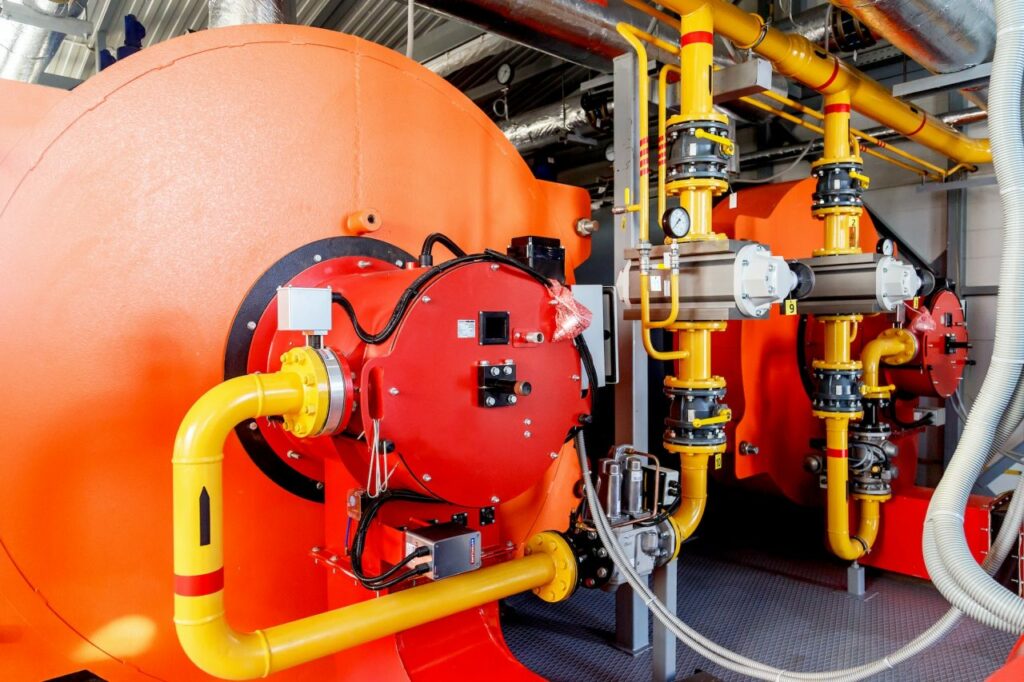
An LPG burner does much more than create a flame. Inside an industrial heating system, fuel delivery, combustion air, ignition, flame detection, and firing control must operate in a coordinated sequence. That coordination determines whether heat is produced steadily and safely or whether the burner needs to shut down.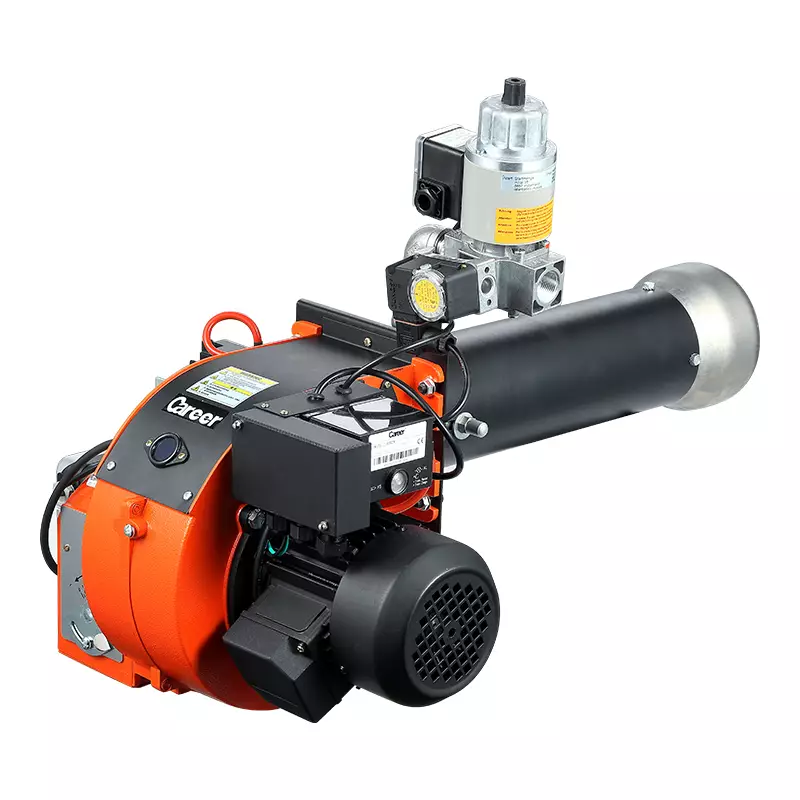
For an industrial LPG gas burner, the operating principle starts before ignition. LPG must reach the burner at the required pressure, combustion air must be supplied in the correct amount, and the control system must establish suitable conditions before fuel is released for combustion. Once ignition occurs, the burner continues adjusting and monitoring the process rather than simply maintaining an open flame.
Fuel and Air Arrive Separately
LPG enters the burner through the gas train, while combustion air is supplied separately. These two flows have to be brought together under controlled conditions because the quality of combustion depends heavily on their relationship.
An automatic gas burner uses control components to regulate fuel and air rather than relying on a fixed manual setting. That arrangement gives the burner a defined starting point for ignition and provides a basis for maintaining the required combustion conditions as operation continues.
The Burner Establishes the Conditions for Ignition
Ignition does not begin simply because LPG reaches the burner. A controlled startup sequence first prepares the combustion chamber and verifies that operating conditions are suitable for firing.
Once the required conditions are established, the ignition system initiates the flame. Fuel and air then enter the combustion zone in a controlled relationship, allowing the mixture to burn and release thermal energy.
Combustion Becomes a Controlled Process
After ignition, the objective changes from creating a flame to maintaining useful combustion. Fuel and air must continue reaching the combustion zone in a relationship that supports stable heat release.
We at Career Burner integrate fuel-air regulation into its automatic burner design so combustion can remain controlled during operation. Our GX25 is designed for natural gas and LPG and combines forced-draft air supply with automatic control functions. Its configuration supports single- or multi-stage flame modulation, depending on the operating arrangement.
Flame shape and combustion intensity ultimately influence how thermal energy reaches the connected equipment. A boiler, hot-water system, oven, or dryer does not simply need “a flame”; it needs a controllable source of heat that can respond to its operating requirements.
For that reason, burner operation is closely connected to the equipment receiving the heat. The combustion system has to produce heat at a rate that matches the process rather than treating maximum firing as the normal operating condition.
Flame Detection Closes the Safety Loop
A flame that has been established still needs to be monitored. Flame detection provides the control system with confirmation that combustion is actually present after fuel has been admitted.
If the expected flame condition is not detected, the burner can respond through its safety control sequence rather than continuing to supply fuel without confirmed combustion. Gas pressure and air pressure monitoring provide additional operating information for the control system.
By integrating flame detection, pressure monitoring for air and gas, and safety shut-off functions, our GX25 operates through a systematic, monitored sequence. The system verifies safety conditions before ignition, confirms active combustion, and sustains operation exclusively while all necessary parameters remain available.
Firing Rate Follows Heat Demand
Heat demand rarely remains constant throughout an industrial process. A dryer may require more energy during one stage and less during another, while a boiler may cycle or modulate according to the thermal load placed on the system.
An automatic gas burner responds to these changes through its control arrangement. Instead of treating the flame as a fixed-output source, the burner can regulate firing conditions so the combustion process better corresponds with the required heat input.
The GX25, for example, is specified with an output power range of 118.4–270 kW, while its listed natural-gas consumption range is 12.0–25.0 m³/h. Those figures describe the published natural-gas configuration; they should not be interpreted as LPG consumption values because fuel properties and operating conditions affect actual parameters.
Such distinctions matter when selecting or setting up combustion equipment. Burner capacity has to be considered alongside the fuel being used, the operating pressure, the connected thermal equipment, and the required control strategy.
The GX25 Shows How These Functions Work Together
This configuration unites automatic control, flame detection, pressure monitoring, fuel-air regulation, and safety shut-off into a streamlined design. Our Career Burner solution serves applications requiring steady, controlled heat—including boilers, hot-water systems, industrial ovens, dryers, and food-processing lines.
From an engineering perspective, the important point is not any single component. Burner performance comes from the interaction between fuel delivery, air supply, ignition, monitoring, and firing control.
That interaction explains how an industrial LPG gas burner turns a pressurized fuel supply into usable process heat. LPG provides the energy source, air supports combustion, ignition starts the reaction, sensors verify the flame, and the control system manages the firing process as operating conditions change.
A burner therefore works as a coordinated control system rather than simply a device that produces fire. At Career Burner, we apply this integrated principle to the GX25, bringing the main combustion and monitoring functions into one automatic configuration for industrial heating applications.