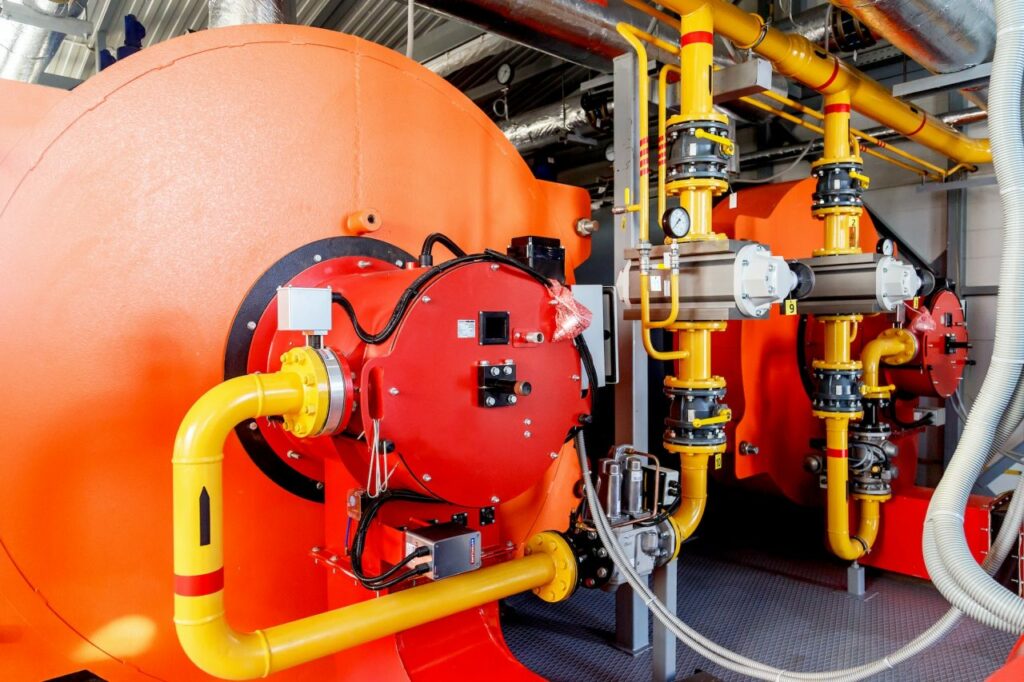
A gas burner may look similar whether it is installed on a furnace or a boiler, but the combustion system does not face the same job in both cases. A furnace burner generally needs to deliver heat directly into a chamber or process space, while a boiler burner releases heat through a heating surface to generate hot water or steam.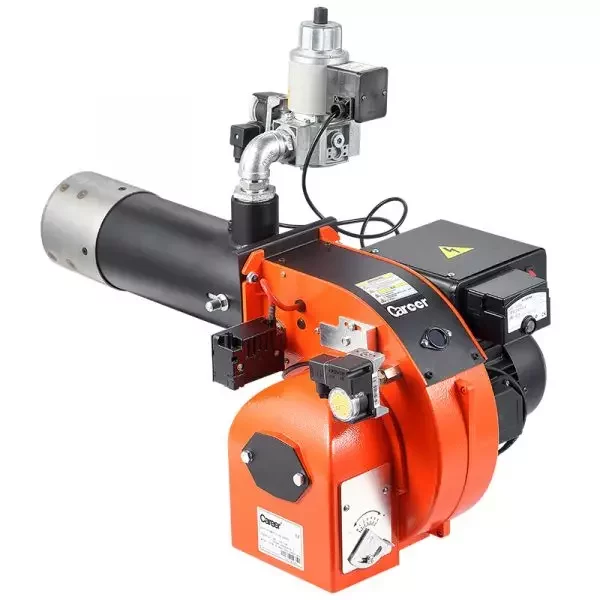
That difference changes what engineers should prioritize. Gas burners for furnaces are often evaluated around flame shape, temperature distribution, and direct heat transfer. A boiler gas burner is more closely tied to boiler capacity, heat-transfer surfaces, firing-rate control, and stable operation across changing steam or hot-water demand.
How Does Heat Reach the Process in Each System?
The biggest difference is what happens to the heat after combustion.
In a furnace, combustion heat is typically transferred directly to the material, chamber atmosphere, or process equipment. The burner therefore has a direct relationship with the temperature environment inside the furnace. Flame length, direction, intensity, and distribution can all influence how heat reaches the process.
Boiler combustion follows a different path. The burner produces heat inside the boiler furnace, and that energy is transferred through heat-transfer surfaces to water or steam. The burner consequently has to work with the boiler’s combustion chamber and heat-transfer design rather than directly heating the production material.
We at Career Burner supply gas-fired burners across industrial and commercial heating applications, including both boilers and furnaces. Our gas burner range covers capacities from 50 kW to 7,000 kW and includes different control configurations for varying heating requirements.
Why Is Flame Shape More Critical in Furnace Applications?
Furnace heating often depends on where and how the flame releases its energy. A flame that is too long, too concentrated, or poorly positioned can create uneven heating even when the burner has sufficient nominal capacity.
That makes flame geometry an important part of furnace burner selection. The required flame pattern depends on the furnace structure, product being heated, chamber dimensions, and process temperature.
Industrial direct-fired systems can use nozzle-mix designs in which fuel and air remain separate until reaching the combustion point. At Career Burner, our industrial gas burner range uses this principle for direct-fired applications such as ovens, dryers, textile machinery, food processing, and other process-heating equipment.
For these applications, gas burners for furnaces are therefore evaluated not only by heat output but also by how effectively the flame fits the actual heating zone.
Why Does a Boiler Burner Have a Different Control Priority?
Boiler operation is strongly connected to the amount of steam or hot water the system needs. Burner output therefore has to respond to changes in boiler load while maintaining stable combustion.
A boiler gas burner may use single-stage, two-stage, or fully modulating control depending on the system design. Our gas-fired range includes these control options, allowing burner configuration to be matched to different operating requirements.
Furnace control can also require modulation, but the reason may be different. Temperature uniformity, heating-cycle requirements, or material-processing conditions can determine how the firing rate should change.
The distinction is useful during selection: boiler control is closely associated with maintaining the required thermal output of the water or steam system, while furnace control is often more directly connected with maintaining the desired process temperature and heat distribution.
Where Is the Burner Installed, and What Does That Change?
Physical location also affects burner design and selection.
A furnace burner is positioned to interact with a defined heating chamber. Its mounting direction, flame reach, and combustion characteristics need to suit the furnace geometry. Direct-fired applications may require the flame to enter the process chamber in a particular orientation.
Boiler burners are mounted to the boiler’s combustion chamber and must operate within the dimensions and combustion characteristics established by the boiler manufacturer or system designer. The burner flame must release sufficient energy without creating conditions that are unsuitable for the boiler’s heat-transfer surfaces.
We offer gas burners specifically across boiler and furnace applications, but the same burner category should not be treated as automatically interchangeable between every type of equipment.
Which Burner Needs More Attention to Process Temperature?
Furnace applications generally place greater emphasis on the relationship between combustion and the material or atmosphere being heated. The burner is part of the process-temperature system itself.
A metal-heating furnace, drying oven, or food-processing line may require a particular temperature profile rather than simply a certain total heat input. Burner arrangement and flame characteristics can consequently affect product quality as well as energy use.
Boilers have a different thermal objective. Their combustion system ultimately supports water heating or steam generation, so engineers are usually concerned with boiler load, combustion stability, heat-transfer performance, and the ability to adjust firing according to demand.
Our product range at Career Burner reflects this distinction by covering both process-oriented industrial gas burners and gas-fired burners for boiler systems.
How Should You Choose Between the Two Burner Types?
The equipment should determine the burner rather than the other way around.
For a furnace, selection should begin with the chamber dimensions, required process temperature, heating method, flame pattern, fuel, and required heat distribution. The question is essentially: How must the flame deliver heat to the process?
For a boiler, the starting point is different. Engineers need to examine boiler capacity, required steam or hot-water output, combustion-chamber dimensions, fuel conditions, firing-rate requirements, and control strategy. The question becomes: How must the burner deliver heat to maintain the boiler’s required thermal output?
A boiler gas burner should therefore be selected as part of the boiler system, while furnace burner selection should account for the furnace’s actual process conditions.
What Is the Practical Difference Between Furnace and Boiler Burners?
The difference is ultimately determined by the destination of the heat.
Gas burners for furnaces are generally shaped by direct process heating requirements. Their flame has to work with the furnace chamber, heating zone, and material or atmosphere being treated. Flame distribution can therefore become a central engineering variable.
Boiler burners, in contrast, operate as the combustion source for a heat-transfer system. Their output must work with the boiler’s combustion chamber and respond appropriately to steam or hot-water demand.
That is why identical fuel capability or similar burner capacity does not make two burners equivalent. We at Career Burner provides gas-fired solutions for both application categories, with product configurations spanning different capacities and control requirements.
The most reliable way to distinguish the two is to start with the heat path: furnace burners are designed around how the flame heats the process, while boiler burners are designed around how combustion heat is transferred into water or steam. Once that difference is established, capacity, flame configuration, modulation, mounting, and control requirements become much easier to evaluate.