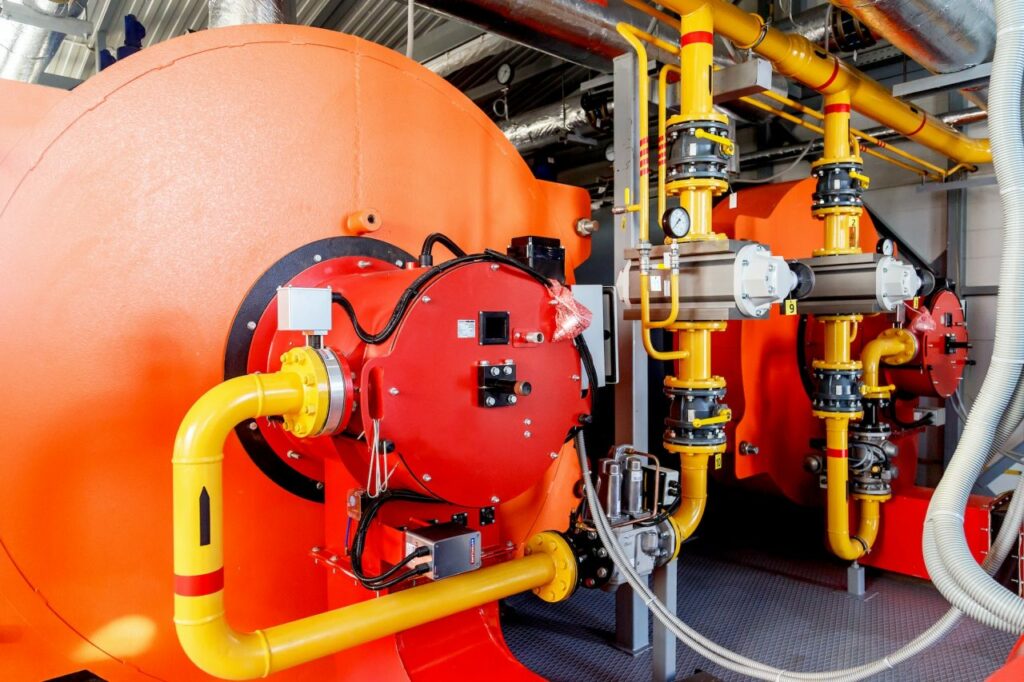
Burner capacity has a direct effect on how an industrial oven reaches temperature, recovers from heat loss, and maintains stable conditions during production. A burner that is too small may struggle to keep up with the process, while one that is unnecessarily large can create a control problem when the oven needs only a fraction of its maximum output.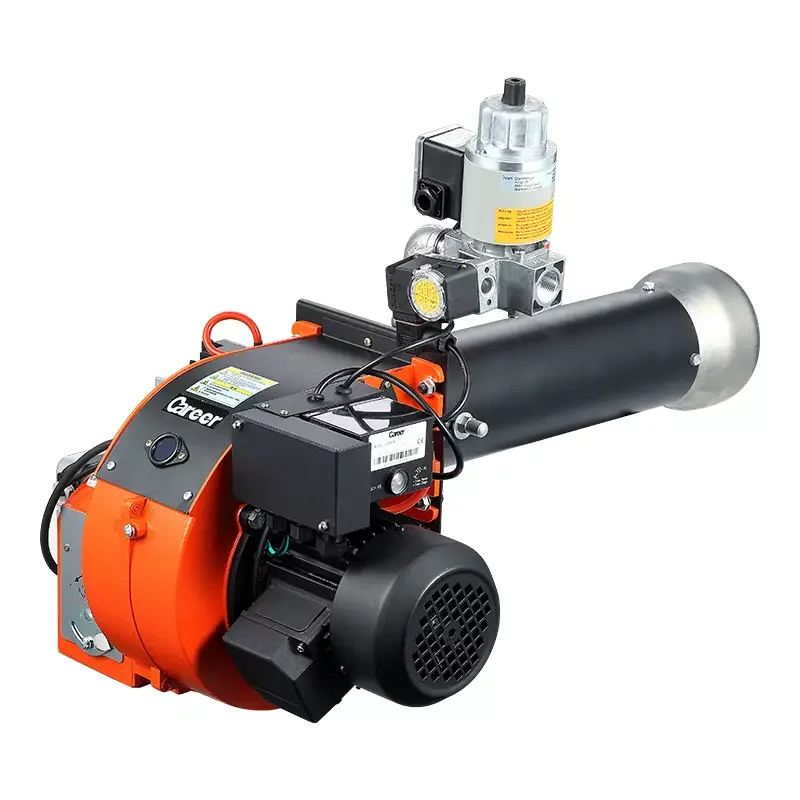
For an industrial oven burner, the useful question is therefore not simply “How many kilowatts does it provide?” Capacity has to be considered alongside the oven’s thermal load, operating cycle, temperature requirements, fuel, and method of firing-rate control. Those factors determine how effectively the available combustion output can be turned into usable process heat.
How Does Burner Capacity Control Oven Heat-Up Time?
An oven needs thermal energy to heat its chamber, internal components, fixtures, and incoming product. Burner capacity determines the maximum rate at which the combustion system can supply that energy.
Higher available output can shorten the time required to reach the target temperature, provided the oven and heat-transfer system are designed to accept that level of firing. A lower-capacity burner may take considerably longer to complete the same heating cycle.
Startup is only part of the equation. Industrial ovens often operate continuously or through repeated production cycles, meaning the burner must also replace heat removed by cold material entering the chamber and heat escaping through doors, walls, exhaust systems, and other paths.
Capacity consequently sets the upper limit of the oven’s heating response. It does not, by itself, guarantee faster or better heating.
What Happens When Burner Capacity Is Too Low?
Insufficient capacity becomes most obvious when the oven is placed under its actual production load.
An empty chamber may reach the target temperature without difficulty, yet the same oven can struggle once production begins. Incoming material absorbs heat, openings introduce cooler air, and the system loses energy continuously. If the burner cannot deliver enough additional heat, temperature recovery becomes slow.
That can extend heating cycles and make it difficult to maintain the required process temperature. A production line may then spend more time waiting for the oven rather than processing material.
Why Can Too Much Burner Capacity Become a Problem?
Oversizing creates a different kind of mismatch.
A burner with substantially more capacity than the oven normally requires may have to operate at a very low firing rate or cycle on and off to prevent excessive heat input. Depending on the control system, that can make temperature regulation more difficult.
Process heating often depends on stability rather than maximum temperature. Rapid swings in heat input can be undesirable when the material requires a controlled temperature profile.
That is why maximum burner output should not be viewed as the sole measure of performance. The more useful question is how closely the burner’s controllable operating range corresponds with the oven’s actual demand throughout the production cycle.
How Does Modulation Make Burner Capacity More Usable?
Modulation changes the way available capacity is translated into heat.
An oven rarely needs exactly the same firing rate during startup, normal production, temperature recovery, and low-load operation. A burner with appropriate staging or modulation can adjust heat input instead of repeatedly operating at maximum output.
Fuel-air regulation is part of the same picture. The GX25 uses forced-draft air supply and automatic fuel-air ratio control, allowing combustion conditions to be managed as firing requirements change.
We at Career Burner incorporate these functions into the same burner platform because capacity is most useful when the combustion system can control how that capacity is delivered.
Which Oven Conditions Determine the Required Burner Capacity?
Sizing industrial gas burners for sale should start with the oven rather than the burner.
Engineers need to consider target temperature, production throughput, material temperature at entry, required heating time, chamber construction, insulation, exhaust losses, door openings, and the amount of heat absorbed by the product.
Operating conditions can change the calculation considerably. A batch oven that opens periodically may experience short periods of substantial heat loss. A continuous oven may instead face a relatively constant thermal load as material moves through the heating zones.
Fuel selection also matters. Our GX25 is designed for natural gas and LPG, but its published natural-gas consumption range of 12.0–25.0 m³/h should not be interpreted as LPG consumption. Fuel characteristics, gas composition, and operating conditions affect actual fuel requirements.
This is why capacity calculations should be based on the actual thermal duty and fuel conditions rather than applying a generic burner-to-oven ratio.
How Does the GX25 Approach Capacity and Heat Control?
A burner becomes more useful when its capacity, combustion control, and monitoring functions support the same operating objective.
Our GX25 combines its 118.4–270 kW output range with automatic control, forced-draft air supply, fuel-air regulation, flame detection, and air and gas pressure monitoring. The configuration is intended for applications such as industrial ovens and dryers where controlled heat input is required.
Those functions address different parts of the same problem. Capacity provides the available thermal range. Modulation determines how much of that range is used. Fuel-air regulation supports the combustion process, while flame and pressure monitoring provide operating feedback.
This combination is more relevant to oven performance than the maximum kW figure considered on its own. An oven needs a burner that can supply sufficient heat when the load increases and reduce or stage that input as demand falls.
What Does the Right Burner Capacity Look Like in Practice?
The right capacity is the point where the burner can cover the oven’s demanding operating conditions without becoming unnecessarily difficult to control during normal production.
A useful selection process therefore starts by calculating the oven’s real thermal load and identifying its peak demand. The next step is to examine how the burner can operate across that load range, including its firing stages, modulation strategy, fuel requirements, and combustion-air arrangement.
For an industrial oven, capacity should ultimately be judged by what happens inside the process: how quickly the oven reaches temperature, how effectively it recovers after heat loss, and how steadily it maintains the required conditions.
The key is not to maximize burner capacity. It is to make the available capacity useful at the temperatures and production loads the oven actually encounters. Once that relationship is correct, the burner stops being merely a heat source and becomes a controllable part of the oven’s thermal process.