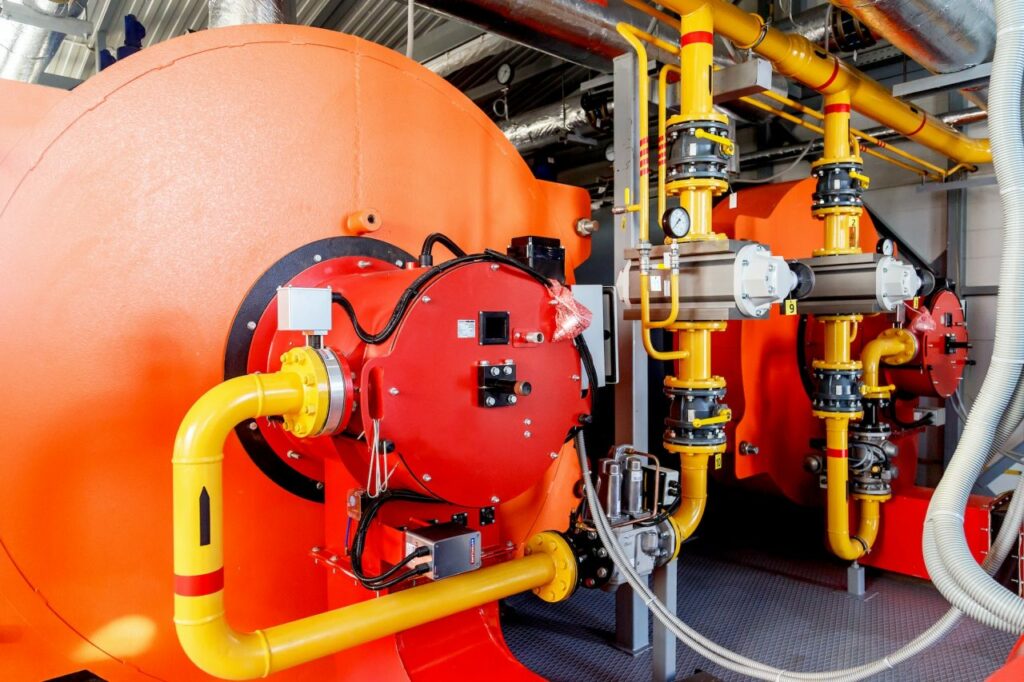
An industrial facility should choose LPG over natural gas when LPG solves a supply or operating constraint that natural gas cannot address as practically. The decision is especially relevant for plants without suitable pipeline access, sites where extending gas infrastructure is impractical, or operations that need a fuel supply independent of a fixed natural-gas connection. For applications like these, we at Career Burner consider the available fuel infrastructure and operating conditions when determining whether an LPG burner is the more practical solution.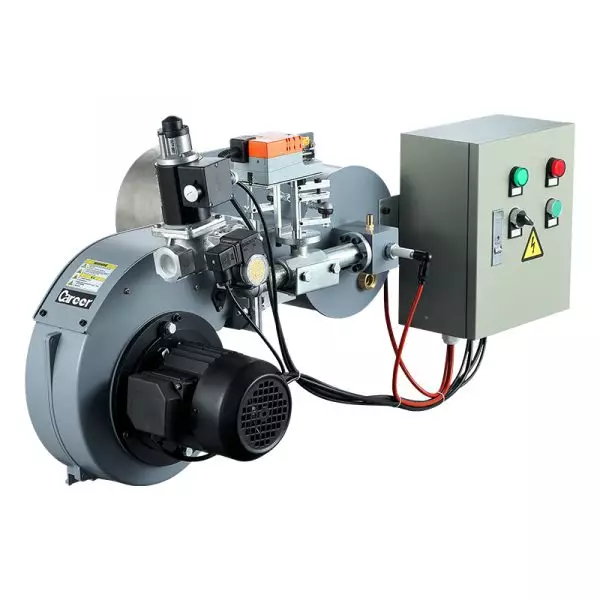
People would not make that decision from fuel price alone. The more useful question is whether LPG provides the better overall route from fuel supply to reliable process heat. Site location, fuel logistics, thermal demand, and burner compatibility all determine the answer.
A Missing Pipeline Can Be the Deciding Factor
Natural gas is attractive when an industrial facility already has dependable pipeline service. The situation changes when the required gas infrastructure does not exist or cannot readily support the process.
A remote facility may need to address pipeline connection requirements before it can even consider burner installation. New plants can face the same issue if their location does not offer suitable natural-gas access. Under those circumstances, LPG deserves consideration because it can be delivered to the site and stored for use.
That makes LPG particularly relevant when access to natural gas is the main obstacle to industrial heating. The decision is not that LPG has universally better fuel economics; rather, LPG may remove an infrastructure barrier that natural gas cannot easily overcome.
Our first question would therefore be practical: can the facility obtain the required natural gas reliably without creating a disproportionate infrastructure project? If the answer is no, the case for LPG becomes substantially stronger.
The Site Has to Support the Fuel, Not Just the Burner
Choosing LPG shifts the infrastructure requirement rather than eliminating it. A facility needs an appropriate arrangement for LPG storage, deliveries, pressure regulation, and fuel distribution to the combustion equipment.
That changes the selection decision. LPG is a sensible option only when the site can accommodate those requirements and maintain a dependable replenishment arrangement.
Fuel demand also matters. A plant with intermittent or moderate thermal requirements may approach LPG logistics differently from a continuously operating facility with substantial consumption. Storage capacity and delivery frequency need to correspond with actual production requirements.
We therefore compare the complete supply arrangements rather than isolated fuel prices. Natural gas may be the easier option where a suitable pipeline already exists. LPG may be more practical where establishing that pipeline would be the larger project.
We at Career Burner take a similar application-focused view of combustion equipment. Our industrial gas burners are nozzle-mixing burners designed for direct-fired industrial applications, with published capacities from 5.3 kW to 348.3 kW.
Process Heat Determines Whether LPG Is Practical
A fuel decision cannot be separated from the process duty. Once LPG is identified as a potential supply option, the facility still needs to determine whether the combustion system can deliver the required heat under the available fuel conditions.
Fuel type, pressure, and burner output need to be evaluated together. An existing natural-gas burner should not automatically be assumed suitable for LPG simply because both are gaseous fuels.
At Career Burner, our published BX series is compatible with natural gas, LPG, and biogas and is intended for demanding direct-fired applications. We also state that system compatibility should be evaluated using fuel type, pressure, and output requirements.
That gives us a straightforward engineering checkpoint. The required process duty must fall within an appropriate burner capability, while the available LPG supply conditions must support proper operation.
An industrial LPG burner is therefore most appropriate when its fuel requirements and output can be matched to the actual heating process. Burner selection should follow the process requirement, not simply the decision to use LPG.
The Economics Change Once Natural Gas Is Already Available
A facility with an established natural-gas connection starts from a very different position.
Pipeline service may already provide the required fuel continuously, meaning the plant has no need to create an alternative storage and delivery system. In this situation, LPG needs a stronger justification because switching fuels would introduce additional infrastructure and logistics.
Continuous production deserves particular attention. High and steady fuel consumption can place greater demands on LPG storage and replenishment. If existing natural-gas infrastructure already supports the required thermal load, replacing it with LPG may solve no meaningful problem.
We would therefore distinguish between fuel substitution driven by necessity and substitution driven by preference. The former can have a clear engineering rationale. The latter requires much closer scrutiny of total operating and infrastructure costs.
Natural gas should remain the preferred option when it is already reliable, appropriately supplied, and well matched to the process.
The Right Moment to Choose LPG Is When It Removes the Bigger Constraint
The answer to the title question ultimately depends on what is preventing the facility from achieving reliable industrial heat.
Choose LPG when natural-gas pipeline access is unavailable or impractical, the site can properly support LPG storage and deliveries, and the combustion system can be matched to the required process duty. Those conditions give LPG a concrete operational purpose rather than making it an alternative chosen without a clear reason.
Choose natural gas when a suitable pipeline connection already exists and provides reliable fuel for the facility’s operating requirements. In that case, LPG must offer a meaningful improvement before the additional storage and delivery infrastructure can be justified.
For an industrial LPG gas burner, we would verify the fuel type, available pressure, required output, and existing system configuration before recommending equipment. We at Career Burner provide industrial nozzle-mixing burners for direct-fired applications and lists LPG among the compatible fuels for its BX series.
The practical rule is simple: LPG should be chosen when it solves a bigger problem than it creates. For a facility without practical pipeline access, that problem may be fuel availability itself. For a pipeline-connected plant with stable supply, natural gas may remain the more straightforward solution.
Viewing fuel decisions through a practical lens, we design our systems at Career Burner to ensure that both fuel and burner selection align directly with your operational realities. If site conditions favor LPG and we accurately match the process requirements to the hardware, LPG emerges as a robust, defensible industrial heating choice rather than a mere substitute for natural gas.