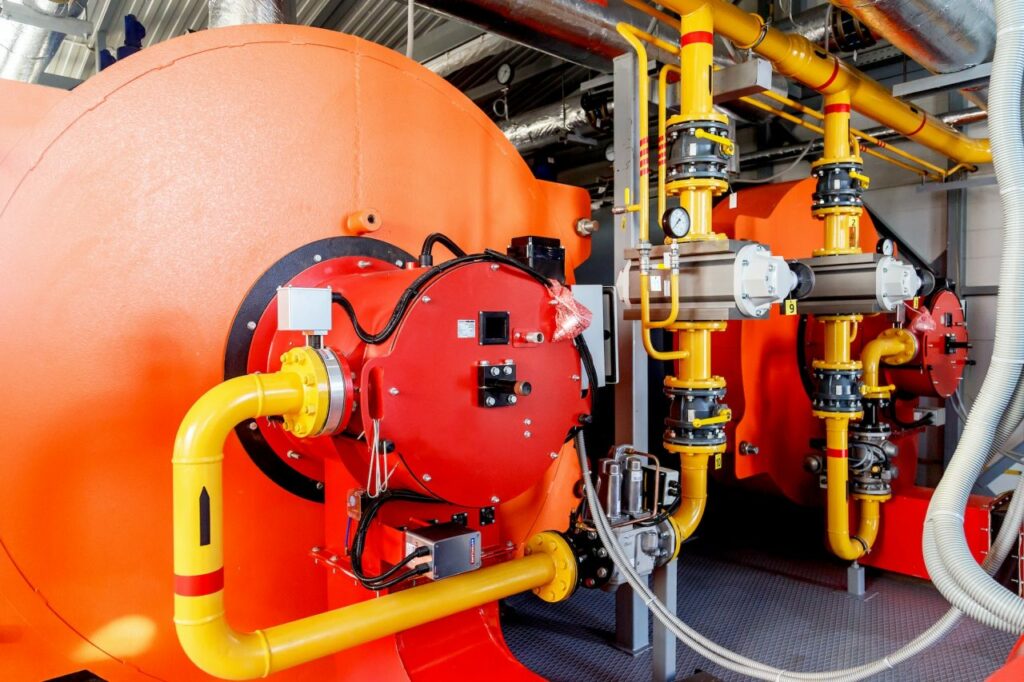
When a boiler burner is oversized for the actual heating load, the system cycles excessively between full fire and standby, creating thermal stress and wasted energy. Conversely, an undersized burner must run at maximum capacity continuously, pushing the equipment into unstable combustion and accelerated wear.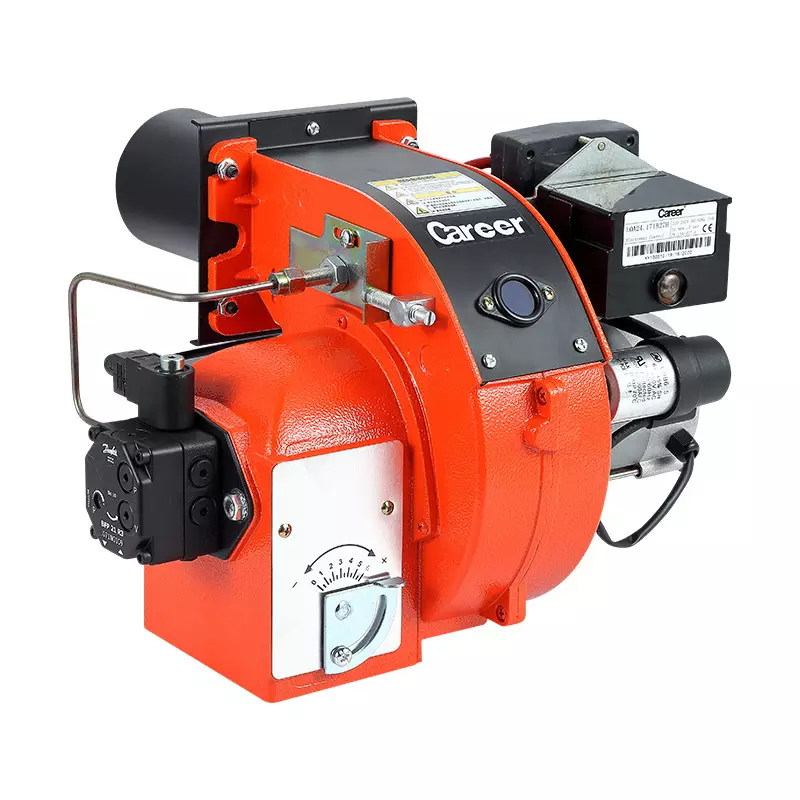
Capacity mismatch is a fundamental efficiency problem in industrial heating, yet it’s entirely avoidable through proper sizing analysis.
Why Burner Capacity Mismatch Destroys Efficiency
Industrial heating efficiency is not determined by a burner’s maximum output—it’s determined by how often the burner operates within its design envelope. Boiler burners sized to match actual load run steadily, producing consistent steam or hot water with minimal energy waste. A burner sized incorrectly operates outside its performance parameters, either cycling excessively or running at continuous maximum fire.
The consequences are measurable and compounding. Oversized systems cycle on and off repeatedly, wasting fuel during standby periods and creating thermal shock that stresses the boiler shell. Undersized systems struggle to meet demand, running at maximum fire continuously, overheating tubes, and producing incomplete combustion. Both scenarios translate to higher fuel consumption, shorter equipment life, and unscheduled maintenance—the opposite of efficient operation.
Oversized Burners: The False Economy of Extra Power
Many managers assume that buying a larger boiler burner provides a safety buffer against future growth or unexpected demand spikes. In practice, oversizing creates a cascade of efficiency penalties that persist throughout the equipment’s operating life.
When a burner’s nominal capacity far exceeds the system’s actual load demand, it reaches target temperature quickly, then shuts down entirely. The boiler shell cools, pressure drops, and the burner must fire again to restore setpoint. This pattern repeats continuously throughout operating hours.
Each on-off cycle represents wasted energy. During standby periods, the burner consumes pilot light fuel without producing useful heat. During ignition ramp-up, unburned fuel momentarily escapes the stack before combustion stabilizes and reaches efficiency.
Facilities that purchase oversized burners to reduce initial installation costs often face disproportionately higher repair and replacement expenses over the equipment’s lifetime.
Undersized Burners: When Capacity Shortage Becomes a Liability
An undersized boiler burner must run at maximum fire continuously to meet the system’s thermal demand. There is no modulation headroom, no turndown flexibility, no capacity reserve to handle demand fluctuations. The burner operates constantly at the edge of its performance envelope, where small variations in fuel supply, air temperature, or combustion chamber pressure cause combustion instability.
Tube erosion accelerates from exposure to high-velocity, unstable flames. The system operates below its rated efficiency potential. Over extended operating periods, this efficiency degradation accumulates substantial wasted fuel costs and lost productivity across any industrial facility.
Furthermore, undersized burners force the boiler to work harder than design intent. This accelerates wear on combustion tubes, refractory surfaces, and control systems. Maintenance intervals shorten. Unplanned shutdowns increase. The apparent cost savings from purchasing a smaller, less expensive burner evaporate quickly under the weight of operational penalties.
The Modulation Zone: Where Boiler Burners Actually Live
Industrial boiler burners rarely operate at nameplate capacity continuously. Modern combustion systems, including Our lineup, are designed with modulation—the ability to turn down heat output to match demand without shutting off completely.
At Career Burner, our BX20 immersion tube burner features a modulation ratio of 1:40, enabling the burner to adjust output substantially while maintaining stable combustion and flame integrity.
Modulation is essential because real heating loads vary constantly throughout operating hours.
A burner with good modulation capability tracks these changes smoothly, maintaining complete combustion across the entire operating range. A burner without adequate modulation range must cycle or remain at maximum fire, neither of which supports efficiency.
The most efficient operating range occurs when the burner modulates smoothly, maintaining stable flame geometry, complete combustion, and consistent air-fuel ratios across load variations.
The practical implication is that you must size the boiler burner to keep typical facility loads within its modulation capabilities, not at the absolute maximum or minimum performance edge.
We at Career Burner offer capacity ranges from 30kW to 7000kW, accommodating everything from small heating systems to large industrial boiler installations. This breadth of offerings ensures that operators can select equipment matching their actual facility load profiles rather than forcing compromises that require oversizing or undersizing.
Right-Sizing as a Long-Term Efficiency Strategy
Proper capacity selection is not merely a procurement detail—it is a strategic efficiency decision that affects the facility’s operating costs and reliability for decades. Right-sizing requires thorough understanding of actual heating load profiles, peak demand windows, seasonal variations, and realistic future growth plans.
Armed with this knowledge, operators can select burner capacity that enables stable, modulated operation rather than pushing equipment to extremes.
At Career Burner, we work directly with industrial customers to analyze heating requirements and recommend capacity selections that balance efficiency, reliability, and operational flexibility.
This consultative approach helps operators avoid the dual pitfalls of oversizing and undersizing, each carrying distinct operational and financial consequences.
The value from correct capacity selection compounds throughout the equipment’s service life. A properly sized boiler burner avoids the excessive cycling losses of oversized systems and the instability penalties of undersized units. Fuel consumption remains lower. Maintenance demands decrease.
Unplanned shutdowns become rare. The capacity decision made at installation continues to deliver operational and economic benefits for years, making it one of the most consequential choices in industrial heating system design.