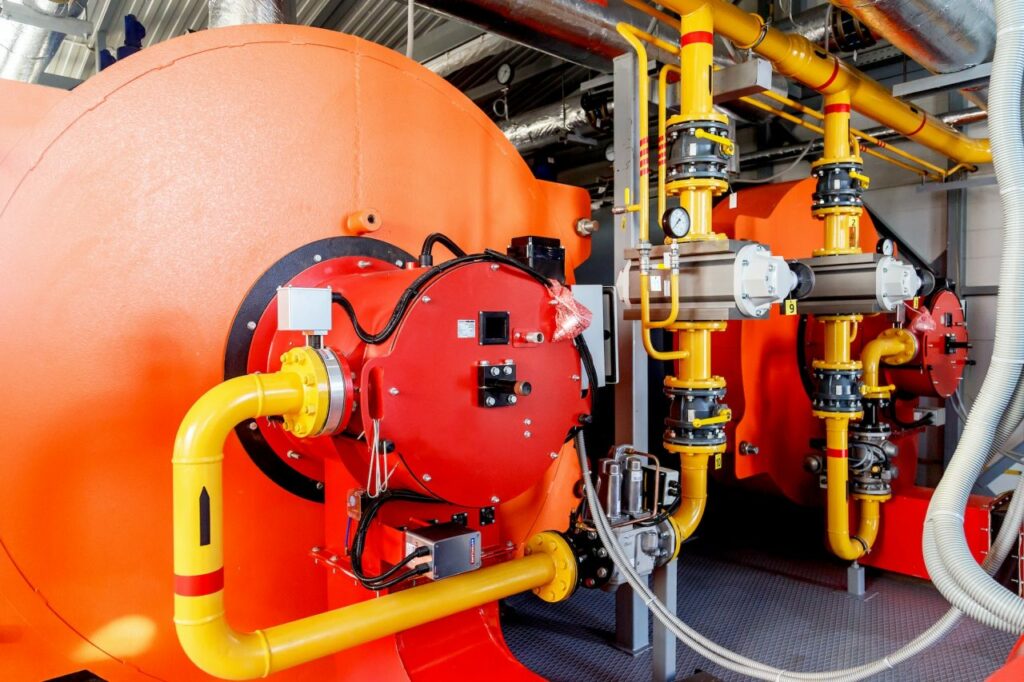
Industrial heating becomes harder to manage when temperature demand changes faster than an operator can respond. Manual firing adjustments may work for a relatively steady process, but repeated changes in production load can make consistent combustion and temperature control more difficult.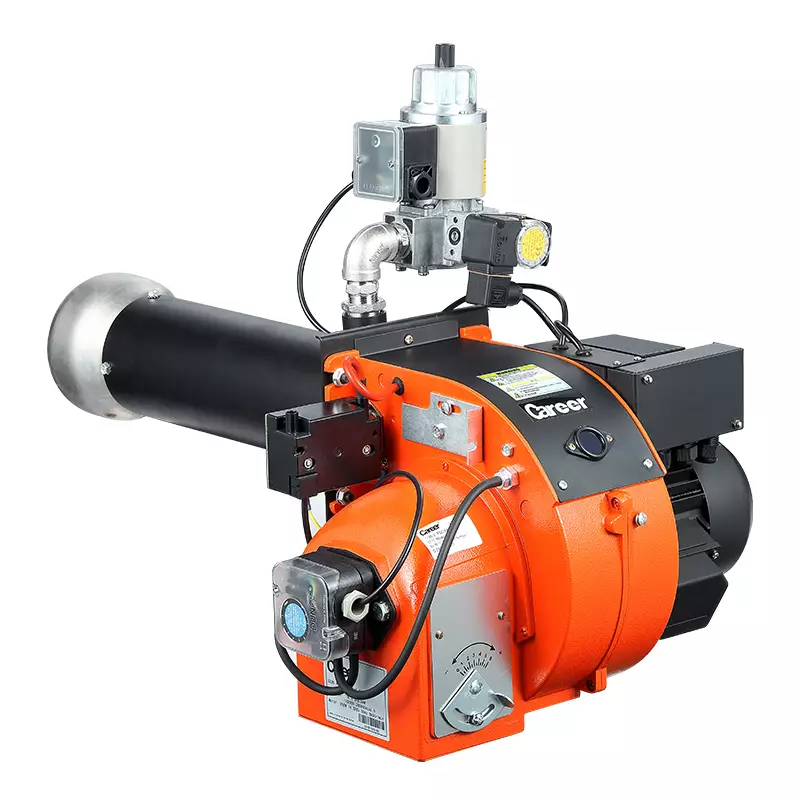
Automatic burners address this problem by turning combustion into a controlled sequence. Fuel delivery, ignition, flame supervision, and firing adjustments can be coordinated with the heating system instead of relying on continuous manual intervention. The result is a more repeatable way to operate industrial thermal equipment.
The Heating Process Becomes a Controlled Sequence
Automation begins before the burner reaches normal firing conditions. A properly designed system can coordinate the sequence required to establish combustion and monitor whether the flame has been successfully established.
Once the burner is operating, control functions can continue supervising the combustion process. The burner can respond according to signals from the heating equipment rather than depending entirely on an operator to make each adjustment.
That distinction matters in industrial environments. Furnaces, ovens, dryers, boilers, and other thermal systems may operate for long periods and experience repeated heating cycles. A consistent control sequence can reduce the variability associated with manual intervention.
An automatic gas burner is therefore better understood as part of a control system rather than simply a burner that starts by itself. Its value comes from coordinating combustion with the operating requirements of the equipment.
Heat Output Can Follow the Process Instead of the Operator
Thermal demand is rarely constant throughout an industrial production cycle. Startup, warm-up, steady operation, and temperature recovery can require different amounts of heat.
Automatic firing control can respond to these changes by adjusting burner operation according to the control signal from the heating system. Instead of maintaining one fixed firing condition, the combustion system can be configured to operate in response to process demand.
That can be particularly useful where temperature needs to remain within a defined operating range. If heat demand falls after the desired temperature is reached, reducing firing rather than continuing at a high output can prevent unnecessary heat input.
The exact control method depends on the burner and application. Modulation, staged firing, temperature control, and other arrangements can be selected according to how quickly and how frequently the process changes.
Stable Combustion Depends on Coordinated Fuel and Air
Changing fuel input without appropriately managing combustion air can disturb the combustion process. Automatic control can coordinate these variables so that the burner operates within its intended firing range.
This becomes especially relevant when the heating load varies. A system that repeatedly moves between higher and lower firing conditions needs predictable fuel and air behavior across those operating points.
We designed Career Burner’s GX25 automatic control gas burner for natural gas and LPG applications, integrating seamless automatic control functions to support your industrial heating needs.
Automation does not automatically guarantee optimum combustion, however. Burner adjustment, fuel pressure, combustion-air supply, chamber conditions, and control settings still need to match the installation. Good automation depends on a properly configured combustion system.
Safety Moves Into the Control Logic
Industrial combustion requires more than simply turning fuel on and off. Flame establishment and continued flame presence need to be supervised so that abnormal conditions can be addressed through the burner control sequence.
Automatic systems can coordinate ignition, flame detection, fuel shutoff, and other safety functions according to their design. This reduces dependence on an operator noticing and responding to every combustion event manually.
The surrounding heating equipment also forms part of the safety picture. Interlocks and control signals may need to account for conditions such as airflow, process temperature, or other equipment-specific requirements.
We therefore evaluate automatic combustion as a combination of operating control and protective logic. A burner should not be considered adequately automated merely because it has an automatic ignition function.
Efficiency Comes From Avoiding Unnecessary Firing
Automation can contribute to better fuel utilization by matching heat input more closely with actual process demand. The mechanism is straightforward: if the process requires less heat, the combustion system does not necessarily need to continue operating at a higher firing rate.
That does not mean every automatic burner will deliver the same efficiency improvement. Actual fuel consumption depends on burner design, operating conditions, furnace insulation, heat losses, temperature requirements, control strategy, and many other factors.
High efficiency burners should therefore be evaluated as part of the complete heating installation. Automatic control can support efficient operation, but it cannot compensate for excessive heat loss or an incorrectly sized combustion system.
A useful comparison is to examine how the burner behaves across the expected operating range rather than focusing only on maximum firing capacity. Stable low-fire operation and appropriate control response can be just as important as peak output.
What We Look For in an Automated Burner Installation
The practical question is not simply whether a burner has automatic controls. We first identify what the heating equipment needs the control system to accomplish.
The specification should define the fuel type, required heat range, operating temperature, response to changing loads, and preferred temperature-control method. Fuel supply and combustion-air conditions also need to be established because automatic control operates within the limits of the installed system.
During any equipment retrofit, we know that seamless integration is just as critical as the burner itself. Factors like electrical wiring, control signals, mounting, fuel trains, and combustion-air setups directly impact the installation process.
That is why we provide the Career Burner GX25—a versatile automatic control gas burner designed to adapt effortlessly to your natural gas and LPG heating systems.
The strongest reason to automate an industrial burner is ultimately control. Instead of treating combustion as a fixed heat source, the heating system can respond to what the process actually requires. Ignition, firing, flame supervision, and heat delivery become coordinated parts of one operating sequence.
That can make industrial heating more consistent and easier to manage, particularly where thermal demand changes throughout production. Automation is most effective when the burner, controls, fuel supply, and heating equipment are specified as one system rather than selected independently.