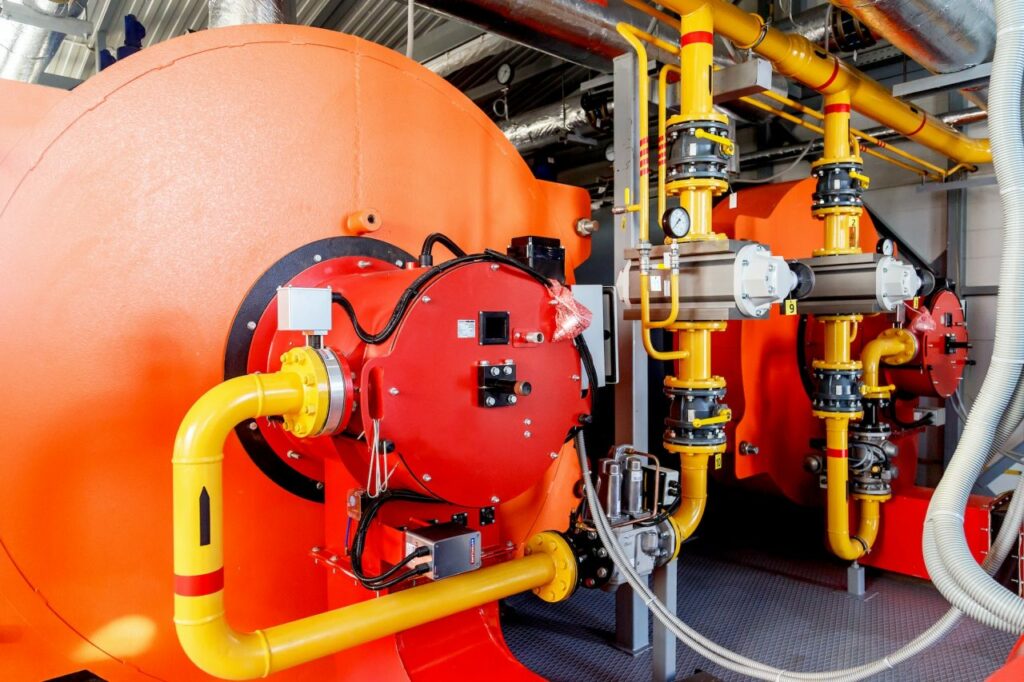
Within any larger thermal system, an industrial burner serves as one interconnected link rather than a standalone heat source: combustion creates the thermal energy, the heating equipment absorbs it, and automated controls regulate the entire process according to current demand.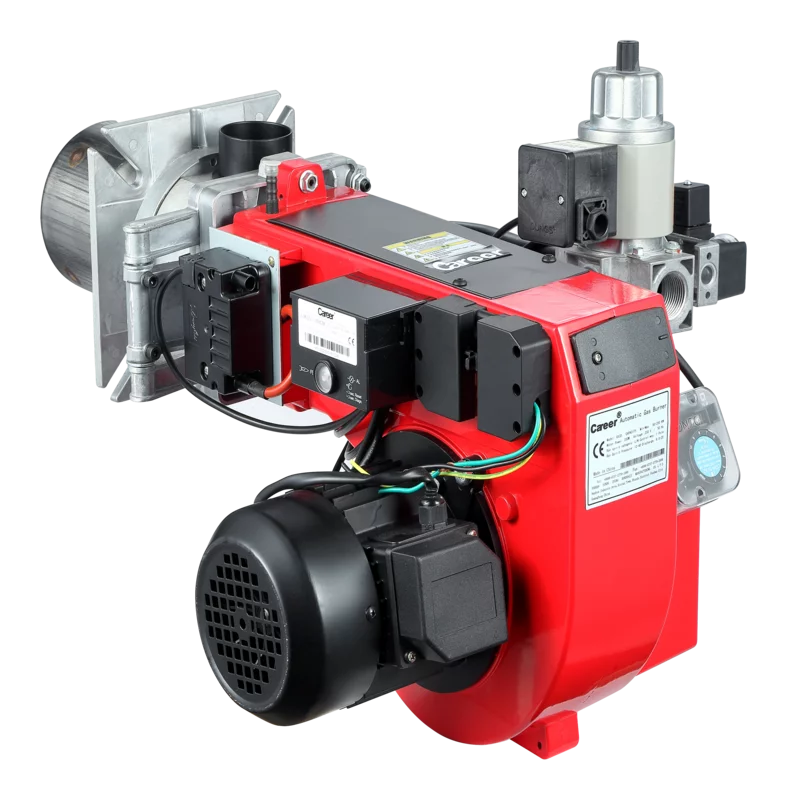
Successful integration depends on matching these parts. A burner can have the required fuel capacity yet still be unsuitable if its flame characteristics, firing range, air supply, mounting arrangement, or controls do not match the equipment receiving the heat.
The Burner Becomes Part of the Heating System
Integration begins at the mechanical connection between the burner and the heating equipment. The burner supplies the combustion process, while the furnace, boiler, oven, dryer, or other thermal unit provides the environment in which that heat is transferred.
Fuel enters through the appropriate fuel system, while combustion air is supplied to support the flame. The resulting hot gases then move through a defined heat-transfer path rather than simply releasing energy into an open space.
Industrial burner systems must therefore be selected around the equipment’s thermal requirements. Our portfolio covers combustion equipment for boilers, furnaces, ovens, dryers, and other industrial heating applications, illustrating why the receiving system is central to burner selection.
Combustion Must Match the Equipment’s Heat Path
Heat transfer is the point where burner output becomes useful process energy. Different heating systems require different flame and gas-flow characteristics because their heat-transfer arrangements are not identical.
A direct-fired furnace may expose the process to combustion gases, while an indirect system keeps combustion separated from the heated medium. An immersion tube arrangement provides another configuration, with combustion taking place inside a tube that transfers heat to the surrounding liquid.
The burner must consequently produce a flame that fits the available combustion space and heat-transfer design. Flame length, shape, firing rate, combustion-air movement, and burner position can all influence how evenly energy reaches the intended heating surface.
Controls Connect Burner Output With Heat Demand
A heating system rarely requires exactly the same heat input throughout an operating cycle. Controls provide the connection between process demand and burner firing rate.
Depending on the equipment, the control strategy may involve on-off operation, staged firing, or continuous modulation. A modulating system can adjust combustion output as the thermal load changes, helping the heat source follow the process rather than operating permanently at maximum capacity.
Safety controls are part of this integration as well. Flame detection, fuel shutoff, pressure monitoring, ignition controls, and emergency shutdown functions can interact with the burner management system and the wider heating equipment.
Our burner designs incorporate control and monitoring features appropriate to their configurations. The exact arrangement, however, depends on the burner model and the heating equipment into which it is installed.
Boiler Integration Shows Why Matching Matters
Boilers provide a clear example of the relationship between combustion and heat transfer. A burner fires into the boiler’s combustion chamber, producing hot gases that transfer energy to water or another heating medium through the boiler’s heat-transfer surfaces.
Choosing a burner for boiler service therefore requires more than comparing maximum fuel input. The burner must suit the boiler’s combustion-chamber geometry, required heat input, fuel type, combustion-air arrangement, control system, and operating range.
A burner for boiler applications also needs to work within the boiler manufacturer’s design conditions. Incorrect matching can affect flame position, heat distribution, combustion stability, and overall system operation.
Career Burner identifies gas and oil combustion equipment for industrial boiler heating, providing examples of how burner configurations are developed around specific thermal equipment.
Installation Conditions Shape System Behavior
Even a technically appropriate burner can behave differently depending on installation conditions. Available combustion air, exhaust resistance, chamber pressure, mounting orientation, fuel pressure, and surrounding equipment all influence combustion.
Physical integration is equally important. The burner mounting arrangement must position the combustion zone correctly, while fuel and air connections need to meet the requirements of the selected equipment.
Retrofitting introduces additional constraints because an existing heating system may have been designed around another burner configuration. Available space, existing controls, fuel trains, electrical interfaces, and combustion-chamber dimensions should be assessed before replacement equipment is specified.
Integration also affects maintenance. Engineers should be able to access ignition components, flame sensors, valves, and other service points without creating unnecessary downtime.
Integration Should Be Evaluated as One System
The most useful way to evaluate burner integration is to follow the complete energy and control path. Start with the fuel and combustion-air supply, then examine how the burner forms its flame, where the hot gases travel, how heat reaches the process, and how controls respond to changing demand.
That approach prevents a common selection mistake: treating burner capacity as the primary specification while overlooking the equipment that receives the heat.
For example, a high-capacity burner may exceed the practical firing requirements of a boiler or furnace. Conversely, a burner with insufficient low-fire capability may struggle to follow a process with highly variable demand. The operating envelope must match on both ends.
Our approach is to consider the burner and heating equipment as a connected thermal system. Career Burner provides industrial combustion solutions intended for different heating configurations, so fuel, thermal duty, control requirements, and installation conditions all form part of the evaluation.
Integration ultimately determines whether combustion energy can be converted into useful process heat reliably. The burner establishes and controls combustion, while the heating equipment determines how that energy is transferred and used.
When choosing a burner for boiler or other industrial heating applications, the focus should shift beyond mere capacity to how the equipment will function within the entire heating network. Addressing this broader system integration leads to more accurate matching, predictable performance, and a solid foundation for specifying combustion hardware.