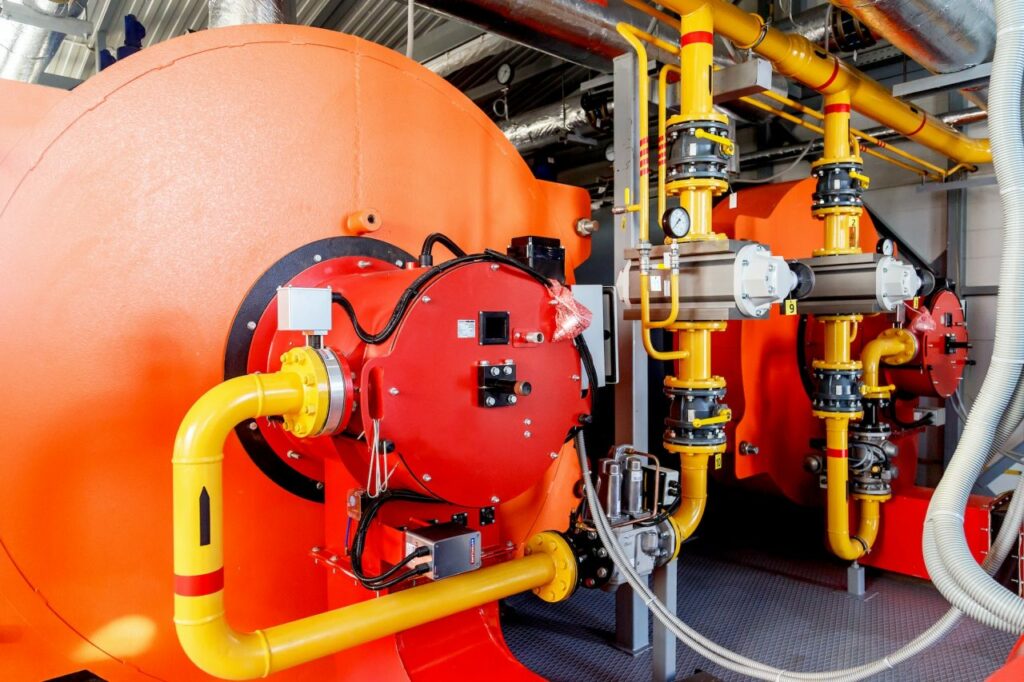
Industrial burners do not feature a universal, fixed service life across all plant environments. In fact, two identical burners can age at drastically different paces depending on their operational profile—such as continuous, high-temperature duty versus lighter cycles with optimized combustion maintenance.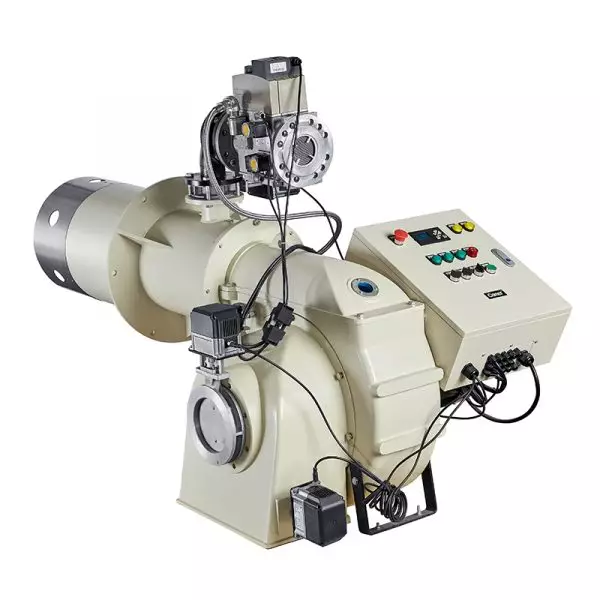
Rather than viewing longevity as a static spec, we see it as a direct outcome of operating practices, combustion control, and proactive wear management. While proper burner design is foundational, overall furnace conditions, fuel quality, thermal cycling, component health, and routine maintenance are equally critical to equipment lifespan.
A Burner Does Not Age at One Constant Rate
Operating hours alone do not tell the whole story. A burner running continuously under demanding thermal conditions experiences a different pattern of stress from one that starts and stops frequently at a lower average load.
Thermal cycling is particularly significant. Repeated heating and cooling can place mechanical stress on burner heads, refractory components, seals, and other parts exposed to changing temperatures. Corrosive atmospheres, dust, deposits, and process contaminants can introduce additional deterioration.
Furnace conditions can also change how the burner experiences heat. Damaged refractory around a burner opening may alter flame geometry and expose components to temperatures or flow conditions outside their intended design environment.
That is why burner technology should be evaluated in relation to the complete heating installation. A durable burner operating in an unsuitable environment can still experience premature wear.
Heat, Cycling, and the Furnace Environment Do the First Damage
High-temperature exposure is unavoidable in combustion equipment, but excessive or uneven thermal loading can accelerate deterioration. Burner components must withstand the temperature, flame pattern, and operating conditions for which they were designed.
The surrounding furnace plays a major role. Nutec Bickley notes that refractory deterioration can change flame geometry, reduce radiation efficiency, and expose metallic burner components to excessive heat. The same source identifies thermal deformation, corrosion, and thermal fatigue among the internal factors affecting burner condition.
Fuel and air passages can also deteriorate through erosion, deposits, or obstruction. Injectors that no longer maintain their intended geometry may change flow patterns and disturb the air-fuel mixture.
Such changes are not necessarily dramatic at first. A small deterioration in combustion behavior can gradually create a larger operating problem as the burner continues to run under altered conditions.
Combustion Drift Turns Wear Into More Wear
Combustion quality and mechanical condition are closely connected. A worn injector, damaged stabilizing component, or restricted air passage can change flame behavior. Once combustion moves away from its intended condition, additional thermal stress may develop elsewhere in the system.
Air-fuel imbalance is one example. Nutec Bickley identifies injector wear and damage as potential causes of changes in flow patterns and air-fuel mixing, which can contribute to unstable flames, higher fuel consumption, or increased emissions.
Flame stabilization components deserve similar attention. Swirlers, diffusers, retention devices, and related parts help establish the intended flame pattern. Deterioration can lead to flame lift, instability, or failure.
The practical lesson is that burner wear should not be judged only by visible damage. Changes in flame length, shape, ignition behavior, pressure, or combustion measurements can reveal deterioration before a major component failure occurs.
The Small Parts Often Decide Whether the System Keeps Running
The burner body may remain physically intact while smaller components begin creating operational problems. Ignition electrodes, flame detectors, valves, actuators, injectors, seals, and control components each have their own exposure to heat, electrical stress, movement, or contamination.
Flame detection is particularly important because a dirty, aged, or incorrectly positioned sensor can cause nuisance shutdowns even when the main burner hardware remains serviceable. Ignition components can similarly degrade until starting becomes unreliable.
Valve and actuator condition also influences combustion control. Mechanical wear or restricted movement can prevent the system from maintaining its intended firing conditions.
We therefore distinguish between the service life of the burner assembly and the service life of its individual parts. Replacing a worn electrode or detector does not necessarily mean the burner itself has reached the end of its useful life.
Maintenance Determines How Much of the Original Design You Keep
Preventive maintenance cannot stop normal wear, but it can prevent relatively small defects from developing into major combustion problems. Inspection should concentrate on the components that directly affect flame formation, fuel and air delivery, ignition, and flame supervision.
Cleaning burner passages and checking injectors can help preserve the intended flow pattern. Inspection of refractory around the burner can reveal cracking, erosion, or deformation that may affect flame development.
Combustion tuning is another important part of maintaining operating condition. Nutec Bickley recommends periodic maintenance of critical combustion components and a comprehensive annual inspection for continuously operating equipment, including checks of injectors, flame stabilization elements, refractory, alignment, seals, and gas-train condition.
Maintenance should also respond to abnormal behavior rather than waiting for a scheduled inspection. Delayed ignition, repeated flame failures, unusual flame characteristics, or unexplained changes in operating performance can indicate that intervention is already needed.
A Longer Life Starts With Staying Inside the Design Envelope
The best way to extend burner life is not simply to replace components more frequently. It is to keep the combustion system operating within the conditions for which it was designed.
That begins with appropriate burner selection. A burner that is correctly matched to the required heat range, fuel, firing pattern, and furnace geometry is less likely to spend its working life compensating for an unsuitable application.
A low NOx boiler burner adds another reason to maintain the intended operating condition. Low-emission combustion designs can depend on specific fuel-air distribution, staging, or flame characteristics, so deterioration in components or combustion control can affect both operation and emissions.
We at Career Burner develop low-NOx gas burner solutions for industrial heating requirements. Our approach is to consider combustion performance together with the conditions in which the equipment will actually operate.
Condition monitoring can then provide an earlier indication of change. Tracking combustion measurements, fuel and air pressures, flame behavior, and recurring alarms can help identify gradual deterioration before it becomes an unplanned shutdown.
Ultimately, industrial burner service life is determined by accumulated operating stress and how effectively that stress is managed. Heat, thermal cycling, furnace conditions, contamination, component wear, combustion drift, and maintenance all contribute.
A burner does not necessarily reach the end of its useful life simply because individual parts have worn. If the main assembly remains sound and the system can be restored to its intended combustion condition through appropriate maintenance and component replacement, useful service can continue. Protecting that condition from the beginning is what turns burner durability from a product claim into a practical operating outcome.