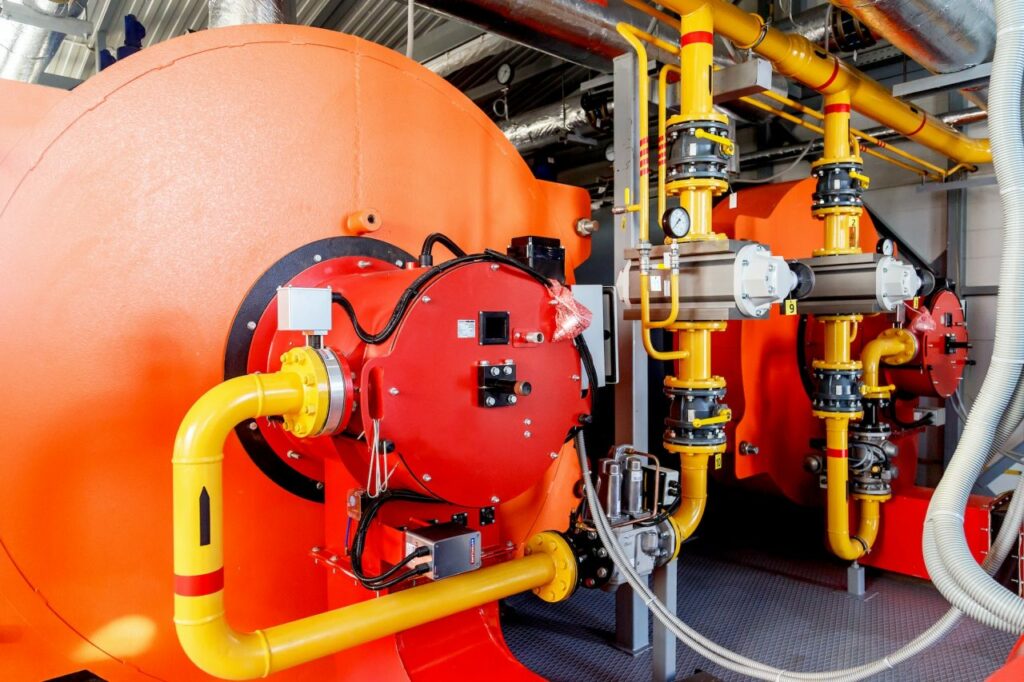
Premix and diffusion burners both use fuel and air to generate heat, but they arrange the combustion process differently. The defining distinction is simple: a premix burner mixes fuel and air before the main combustion zone, while a diffusion burner brings fuel and air together at or near the flame.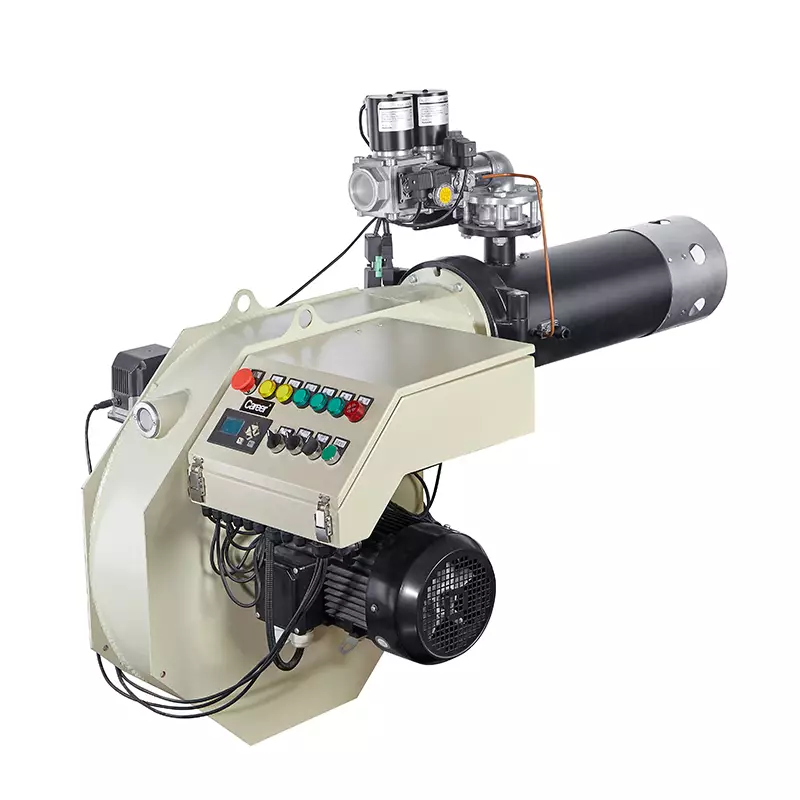
That difference affects flame formation, temperature distribution, combustion control, and the strategies available for reducing nitrogen oxide emissions. Understanding the mixing method is therefore a useful starting point when comparing industrial gas burner designs.
The Main Difference Is Where Mixing Occurs
A premix design prepares the fuel-air mixture upstream of the combustion zone. Air is deliberately mixed with the gas before ignition, creating a relatively uniform mixture that reaches the flame region.
Diffusion combustion takes the opposite approach. Fuel and combustion air remain separated until they enter the combustion zone, where mixing and burning occur together. The flame develops around the interface between the fuel-rich and air-rich streams.
Neither principle is automatically suitable for every installation. Chamber geometry, fuel properties, firing rate, control requirements, and emissions targets all influence the appropriate design.
How Premix Burners Form the Flame
Premixing changes the conditions entering the flame. A lean premixed configuration introduces additional air before combustion, producing a more diluted mixture and, under appropriate conditions, a cooler and more uniform flame.
That principle is directly relevant to NOx reduction. We identify lean premixed combustion as one of the technologies used to reduce NOx, explaining that mixing extra air with fuel before combustion can produce a cooler, more uniform flame.
The challenge lies in controlling the mixture reliably. Premixed combustion requires careful management of fuel and air because changes in the mixture can affect flame stability and operating behavior. Burner geometry and control systems consequently become important parts of the overall design.
How Diffusion Burners Control Mixing
Diffusion burners maintain separation between fuel and air until combustion begins. Fuel and air enter the combustion region independently, and turbulent mixing takes place as the streams interact.
This arrangement provides a different way to establish and stabilize a flame. Instead of delivering a fully prepared mixture to the flame zone, the burner controls the way the two streams meet and burn.
Flame temperature and local oxygen concentration can vary throughout a diffusion flame. Consequently, engineers may use other combustion-control techniques to limit high-temperature zones and manage emissions.
Staged combustion is one example. We at Career Burner describe staged combustion as introducing fuel and air in multiple stages to limit oxygen and temperature peaks, thereby reducing NOx formation.
Why Mixing Strategy Affects NOx
Nitrogen oxides are strongly associated with high-temperature combustion conditions. Controlling peak flame temperatures and the availability of oxygen in critical regions can therefore reduce NOx formation.
Premixing provides one route to that control by creating a leaner, more uniform mixture before ignition. Diffusion-based systems can pursue emissions reduction through different arrangements, including staged combustion or flue gas recirculation.
Flue gas recirculation, or FGR, introduces part of the exhaust stream back into the combustion process. The recirculated gases dilute the combustion mixture and reduce flame temperature, limiting conditions that promote NOx formation.
To address nitrogen oxide emissions, our low-NOx systems at Career Burner incorporate FGR, staged combustion, lean premixing, surface stabilization, catalytic combustion, precise air-to-fuel ratio control, and overfire air. Specifically, the integrated FGR technology achieves NOx emissions of ≤30 mg/Nm³.
Choosing Between the Two Combustion Approaches
The right comparison is not simply premix versus diffusion. Engineers need to consider how the combustion method interacts with the equipment receiving the heat.
Furnace dimensions, chamber pressure, required firing range, fuel supply, ignition requirements, flame shape, and heat-transfer arrangement can all influence burner suitability. A combustion method that works well in one thermal system may require a different configuration in another.
Emissions requirements add another decision layer. If NOx limits are demanding, the burner may incorporate a specific emissions-control strategy rather than relying solely on whether it is classified as premix or diffusion.
At Career Burner, our low-NOx gas burner range is engineered for various applications, including industrial boilers, incinerators, and food processing systems. Our burners are compatible with natural gas, LPG, and biogas, and feature customized configurations tailored to diverse load requirements.
Where Low-NOx Burner Design Fits
A low-NOx burner should be evaluated according to the combustion mechanism it uses to control temperature and mixing, rather than by its marketing label alone.
Premixing is one established strategy because distributing air through the fuel before combustion can moderate flame temperature. Other designs may rely on staged combustion, FGR, surface stabilization, or combinations of control methods.
The term ‘ultra-low NOx burner‘ requires specific operational context. These advanced combustion systems are engineered to achieve minimal nitrogen oxide emissions, setting them apart from emerging zero-NOx approaches. However, actual emission performance depends heavily on the specific burner model, fuel type, operating conditions, and applicable measurement basis.
For this reason, engineers should examine documented emissions data and operating conditions instead of assuming that one burner architecture automatically produces the lowest emissions.
The Practical Difference Comes Down to Combustion Control
Premix and diffusion burners differ primarily in when and where fuel meets combustion air. Premix systems prepare the mixture before the combustion zone, while diffusion systems combine the streams during combustion.
That distinction influences flame structure and determines which control strategies can be used to manage temperature, stability, and emissions. Neither architecture should be selected independently of the thermal equipment.
Our focus is therefore on the complete combustion arrangement: fuel, air, flame, controls, chamber, heat-transfer requirements, and emissions target. We at Career Burner provide low-NOx gas burner configurations that use several combustion technologies, including FGR and lean premixing, rather than treating one method as the universal answer.
The better burner is the one whose combustion method matches the application. Understanding the premix-diffusion distinction gives engineers a clearer basis for evaluating flame behavior and emissions-control options before moving to detailed burner selection.