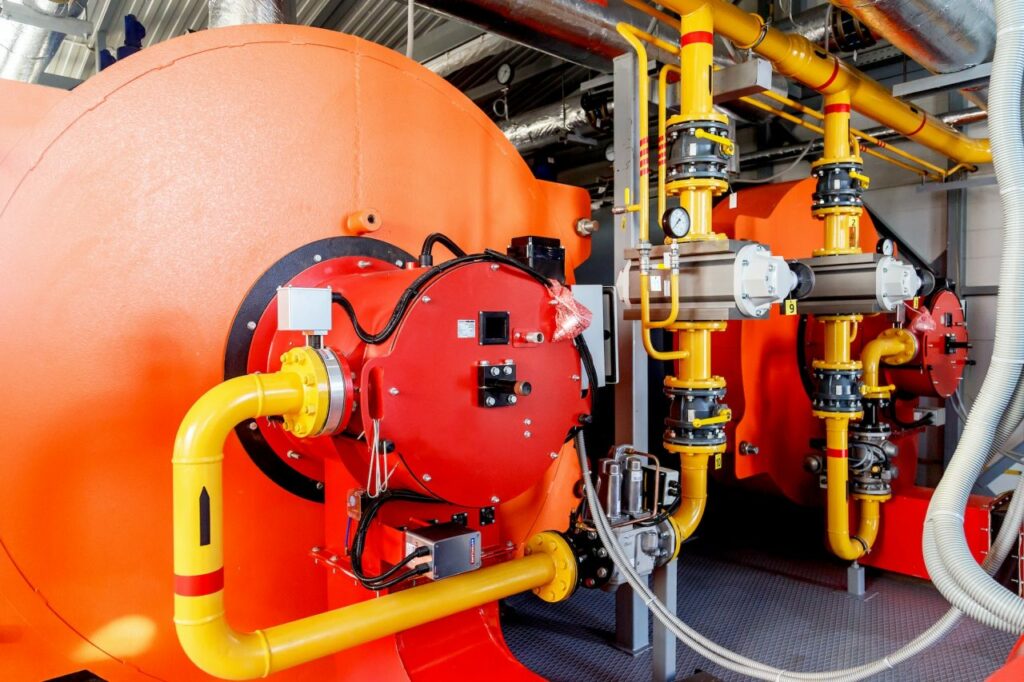
When it comes to industrial heating, raw fuel consumption tells only part of the story. A truly effective system must dynamically adjust to shifting heat loads while keeping the fuel-air mix precisely dialed in; otherwise, poor control quickly leads to erratic firing, fluctuating process temperatures, and wasted energy.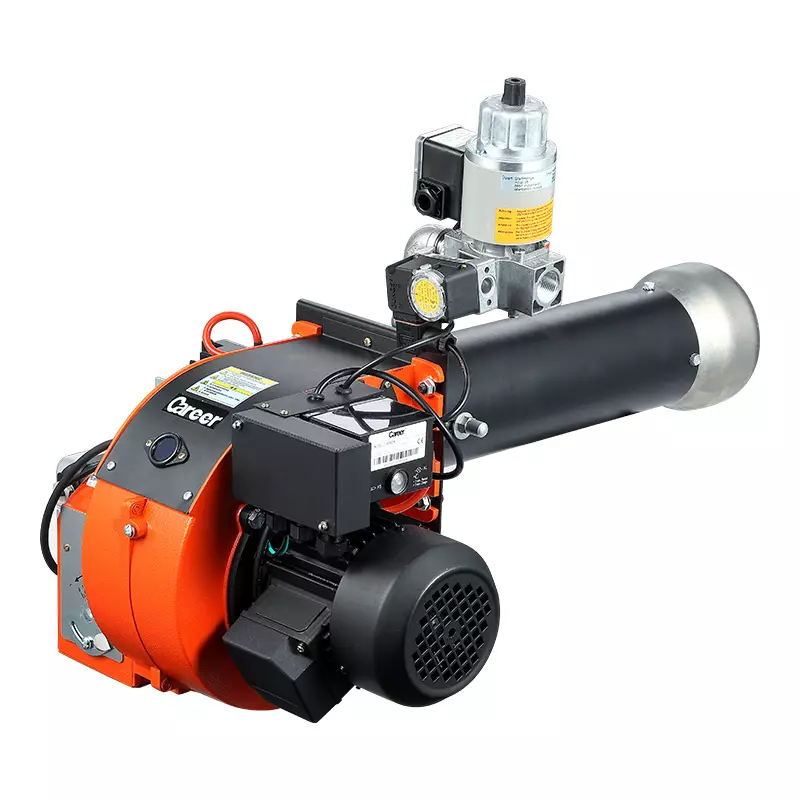
Mastering combustion control therefore begins with looking closely at how a burner manages fuel delivery, airflow, ignition sequences, and flame stability.
That is why we treat heating performance as a control challenge rather than a simple matter of burner sizing. A well-engineered setup does more than just supply the right amount of heat right when the process demands it—it constantly tracks the operational variables that dictate safe, steady combustion.
Matching Heat Input to Actual Process Demand
Industrial equipment rarely operates at one fixed thermal load. A boiler may experience changing steam demand, while an oven or dryer can require different heat input during startup, production, and reduced-load periods.
An automatic gas burner can respond to this changing demand through controlled fuel delivery and combustion-air adjustment. The objective is not simply to increase firing whenever the temperature falls. Instead, the control system needs to regulate heat input in relation to the process requirement.
We engineered the Career Burner GX25 for natural gas and LPG service, equipping it with automatic control and integrated fuel-air regulation. The unit provides a rated consumption range of 12.0–25.0 m³/h for natural gas and an output power of 118.4–270 kW.
Why Fuel-Air Regulation Affects Heat Quality
Combustion requires a suitable relationship between fuel and air. That relationship influences how consistently the flame develops and how effectively chemical energy is released as useful heat.
Too little air can interfere with complete combustion, while excessive air can increase the quantity of hot gas leaving the process. Neither condition is desirable when the objective is stable thermal operation.
A high efficiency gas burner therefore should not be judged only by its maximum output. Fuel-air regulation, flame behavior, operating range, and the requirements of the heated equipment all matter. Control quality becomes particularly relevant where process temperatures must remain consistent.
What Automatic Control Actually Monitors
Automatic combustion control is more than an on/off command. The GX25 incorporates flame detection, air-pressure monitoring, gas-pressure monitoring, fuel-air regulation, and safety shut-off functions. These features give the system information about whether key operating conditions remain within the intended range.
Flame detection is especially significant because continued fuel supply requires confirmation that combustion is established. Pressure monitoring provides another operating check, while automatic regulation coordinates the fuel and air streams.
Career Burner describes the GX25 as a compact forced-draft design with single- or multi-stage flame modulation. Its listed control mode is single, so the exact control behavior of an installed system still depends on its configuration and connected process equipment.
How Better Control Supports Process Stability
Temperature consistency is often the practical measure of combustion performance. If heat input changes too abruptly, the process can overshoot its target or respond unevenly. If the burner cannot follow demand closely enough, the equipment may cycle more frequently or struggle to maintain the required thermal condition.
Control helps bridge that gap by making firing behavior more responsive to the process. A high efficiency gas burner with appropriate control can be integrated into systems where consistent heat delivery matters, including boilers, hot-water systems, industrial ovens, dryers, and food-processing equipment.
The result should be evaluated at the process level. A burner can have strong combustion characteristics yet deliver poor overall results if its output range, air supply, chamber conditions, or control logic do not match the equipment it serves.
Where Safety and Performance Meet
Combustion control also has a direct connection with operational safety. Fuel and air cannot be treated as independent variables; changes in one can affect flame stability and the conditions inside the combustion zone.
The GX25 incorporates integrated flame detection, air and gas pressure monitoring, and safety shut-off mechanisms. These built-in safety functions immediately halt operations whenever the required combustion conditions are not met.
For us, this is an important distinction between manually managed firing and a coordinated automatic system. Performance is not simply about producing more heat. Reliable operation requires the system to recognize relevant conditions and respond according to its control design.
What Should Be Evaluated Before Installation?
The first question should be the thermal requirement of the equipment being heated. Required output, normal operating load, fuel type, available gas conditions, combustion-air arrangement, and the desired control response all influence the appropriate configuration.
Fuel compatibility also needs to be established. The GX25 is specified for both natural gas and LPG, but the manufacturer notes that gas purity and concentration can affect the stated parameters.
Career Burner recommends the GX25 for equipment such as boilers, hot-water systems, industrial ovens, dryers, and food-processing equipment requiring controlled heat. An automatic gas burner should still be evaluated as part of the complete installation, because burner performance depends on the surrounding combustion and process conditions.
Control Turns Combustion Into Usable Process Heat
Combustion control improves industrial heating performance by connecting burner output with the actual demands of the thermal process. Fuel-air regulation supports stable combustion, while flame and pressure monitoring provide operating feedback and safety functions.
The most effective evaluation is therefore not a search for the highest-rated burner alone. We look at how the burner, control system, fuel supply, air supply, and heated equipment work together. When those elements are properly matched, combustion becomes a controllable source of process heat rather than a simple fuel-burning operation.