Burner sizing determines whether an industrial heating system can deliver the required heat under real operating conditions. Selecting a burner with sufficient maximum capacity is only part of the decision. The burner must also respond appropriately when the process operates below peak demand.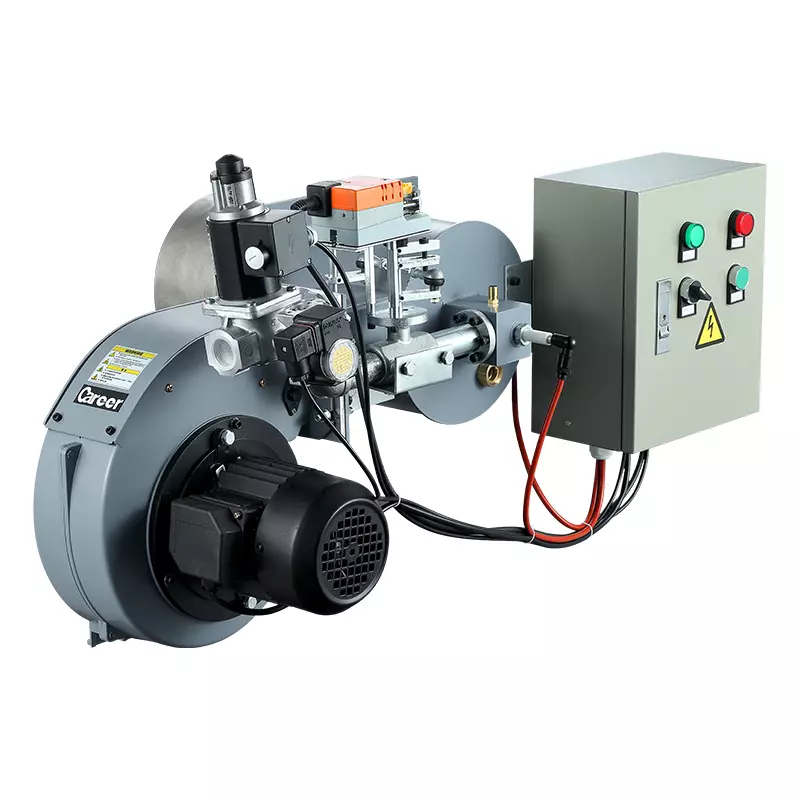
For boilers, furnaces, dryers, ovens, and other thermal equipment, an unsuitable burner size can create operating limitations even when the basic fuel and combustion arrangement appear correct. Proper sizing connects the burner’s firing range with the actual thermal duty of the equipment.
Burner Capacity Must Follow Actual Heat Demand
Every heating process has a specific heat requirement. That requirement changes according to production rate, operating temperature, material load, startup conditions, and other process variables.
The selected burner needs enough maximum output to meet the highest realistic thermal demand. However, choosing capacity based only on the theoretical peak can result in a burner that is unnecessarily large for most operating conditions.
A better sizing process begins with the actual heat-load profile. Maximum demand establishes the upper requirement, while normal and minimum loads show how the burner will need to operate throughout the production cycle.
Oversizing Can Disrupt Low-Load Operation
An oversized burner can produce more heat than the equipment needs during normal operation. Reducing its firing rate may address part of this mismatch, but the minimum stable output and control strategy then become important.
Frequent cycling can occur in systems where the burner cannot reduce output sufficiently to follow low thermal demand. Each operating cycle involves ignition and shutdown events, so excessive cycling can complicate temperature management and place additional demands on operating components.
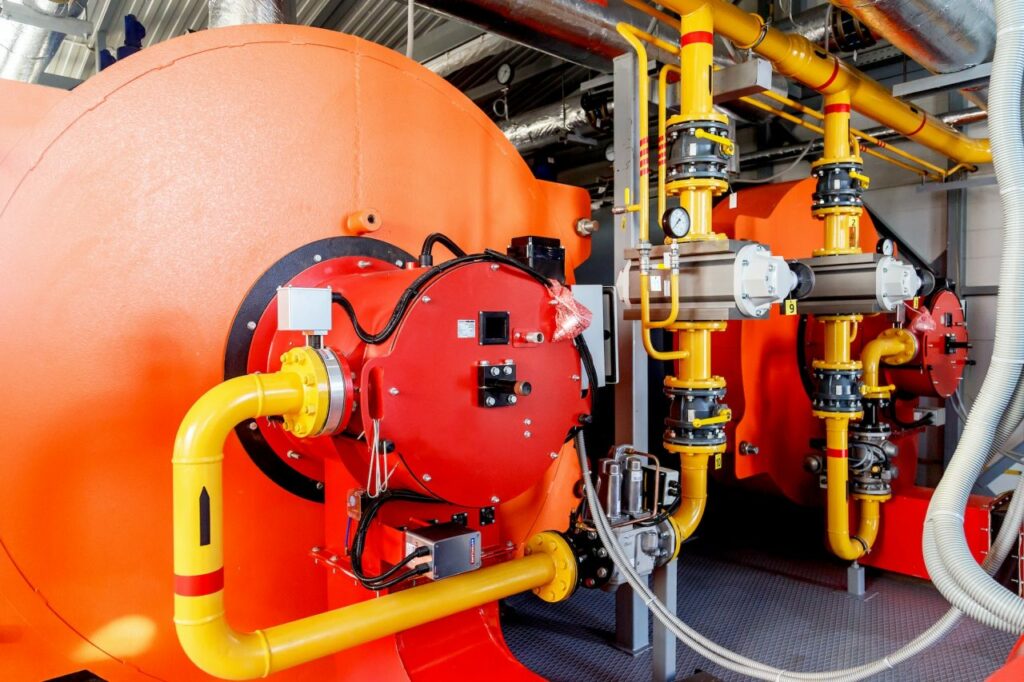
A burner for boiler service must therefore be matched to the boiler’s actual operating envelope rather than selected simply because its maximum rating exceeds the required heat load.
Undersizing Leaves Peak Demand Unmet
Capacity that falls below the genuine process requirement creates a different problem. The burner may run close to maximum output without providing enough heat to maintain the required operating conditions.
Such a mismatch can become particularly noticeable during startup, production peaks, cold-weather operation, or periods when the heated material introduces a larger thermal load.
Undersizing can also limit future operating flexibility. If production requirements increase later, a burner with insufficient capacity may require modification or replacement rather than simply being adjusted through its existing controls.
Turndown Matters Beyond Maximum Capacity
Maximum firing rate does not describe the entire operating range. Turndown indicates how far the burner can reduce its output from maximum firing conditions while maintaining the required combustion behavior.
A suitable turndown range helps the burner follow changing heat demand. This becomes especially relevant for processes that spend considerable time at partial load.
Modulation can provide a more direct response to changing requirements than simple full-fire operation. The appropriate range still depends on the thermal equipment, because the burner must remain stable while the heating system continues to transfer and use the available energy.
Career Burner offers industrial burner configurations for different heating requirements, including gas and oil-fired systems. Selecting among these configurations requires consideration of both maximum heat input and the operating range required by the specific equipment.
Boiler Geometry Adds Another Sizing Constraint
Boiler applications introduce physical constraints that cannot be determined from heat demand alone. The burner must operate within the boiler’s combustion chamber and produce a flame appropriate for its dimensions and configuration.
Combustion-chamber volume, burner mounting position, heat-transfer surfaces, combustion-air arrangement, and exhaust conditions can influence the suitability of a particular burner size.
Replacement projects require additional attention. Existing burner openings, mounting dimensions, fuel connections, control interfaces, and available space may restrict which burner configurations can be installed without modification.
A technically appropriate capacity can therefore become unsuitable if the physical and combustion characteristics do not align with the boiler.
The Data Needed for Accurate Burner Sizing
Engineers should establish the required thermal duty before comparing burner models. Maximum, normal, and minimum loads provide a more useful basis than a single estimated heat requirement.
Fuel type and supply conditions come next. Natural gas, LPG, oil, methanol, and other fuels have different combustion characteristics and equipment requirements.
Information about the heating equipment is equally important. Boiler capacity, furnace dimensions, operating pressure, process temperature, existing burner arrangement, combustion-air availability, and control method can all affect the final selection.
Installation conditions should also be reviewed. Fuel pressure, electrical supply, mounting space, exhaust resistance, and connection requirements can determine whether a proposed burner can operate as intended.
Our approach is to evaluate these variables together before deciding on capacity. Career Burner supports industrial combustion applications with burner configurations selected around the requirements of the thermal equipment rather than maximum output alone.
Sizing Should Match the Complete Heating System
Burner sizing is ultimately a system-matching exercise. The correct burner needs enough capacity for genuine peak demand without creating an unnecessary mismatch at lower loads.
Turndown, flame stability, combustion-chamber geometry, fuel conditions, controls, and installation requirements all contribute to the decision. Looking at only the rated maximum output can hide important limitations.
We supply combustion equipment designed for a wide range of industrial heating applications, such as boiler systems. To ensure optimal performance, we size each burner based precisely on the thermal duty and operating environment of your host equipment.
Industrial burner manufacturers can offer multiple capacity ranges, but the final selection still needs to reflect the actual process. A larger burner is not automatically a better burner, and a smaller burner is not necessarily more efficient if it cannot satisfy peak demand.
Correct sizing means finding the point where capacity, operating range, combustion conditions, and equipment requirements align. That balance gives engineers a more reliable basis for achieving stable heating performance throughout the production cycle.
For industrial systems, the most useful sizing question is therefore not simply “How much heat can this burner produce?” It is “Can this burner provide the right amount of heat across the conditions in which the equipment will actually operate?” That distinction is what makes burner sizing an engineering decision rather than a simple capacity comparison.