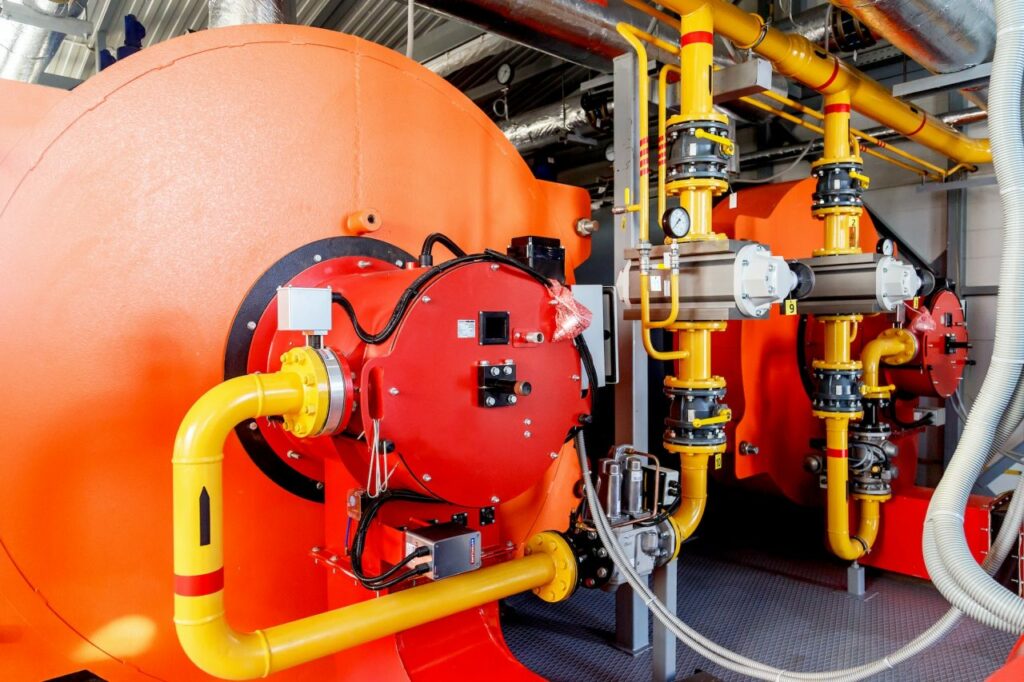
Industrial burner performance depends on more than rated capacity. Fuel characteristics, fuel delivery, combustion-air supply, mixing, flame stability, control response, and the surrounding thermal equipment all influence how effectively a burner converts fuel into usable heat.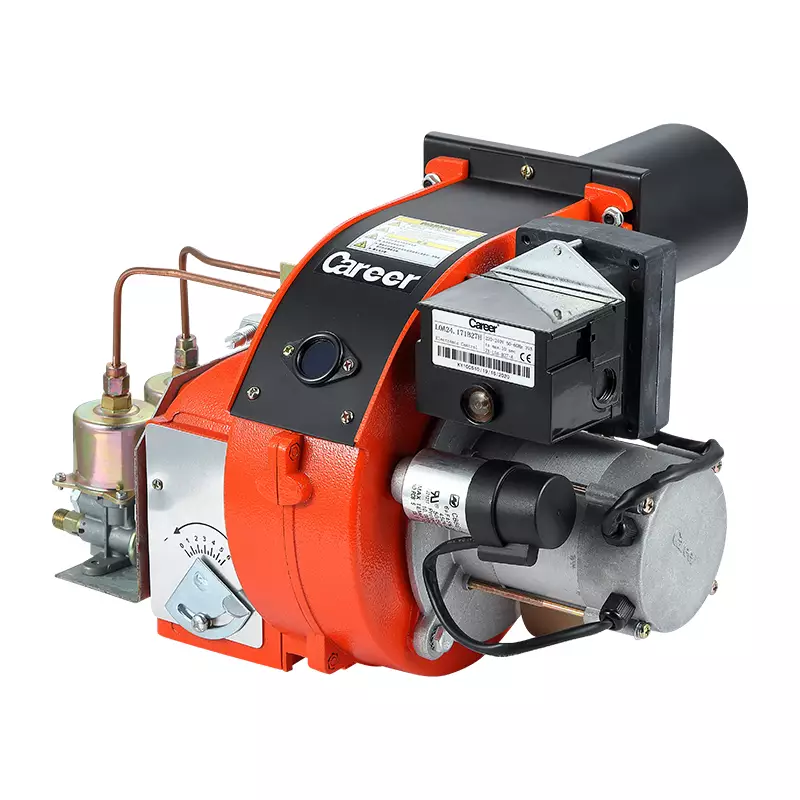
For methanol-fired systems, these variables deserve particular attention because liquid fuel requires controlled atomization and consistent delivery. We therefore look at performance as the interaction of several combustion conditions rather than relying on one headline specification.
Fuel Characteristics Set the Starting Conditions
Every combustion system begins with the properties of its fuel. Methanol, diesel, natural gas, LPG, and biomass-derived fuels require different methods of handling, injection, mixing, and ignition. A burner designed for one fuel cannot automatically be assumed to perform identically with another.
Methanol combustion therefore starts with appropriate fuel preparation. At Career Burner, our methanol burner range is designed for methanol and biomass oil, incorporating an atomization unit, corrosion-resistant materials, and air-fuel mixture control. The listed capacity range is 50–300 kW.
Fuel consistency also affects operating stability. Changes in fuel concentration or supply conditions can influence combustion behavior, making controlled fuel delivery an important part of overall burner performance.
Air-Fuel Mixing Shapes Combustion
Combustion requires fuel and oxygen to meet under controlled conditions. An insufficient air supply can contribute to incomplete combustion, while excessive air can reduce flame temperature and increase heat carried away through the exhaust.
Liquid methanol introduces an additional requirement: atomization. Breaking the liquid into smaller droplets increases the surface area available for vaporization and mixing. The referenced product information describes atomization technology and precision air-fuel control as features of its methanol burner range.
Consequently, combustion-air volume alone does not determine performance. The quality and consistency of the fuel-air mixture are equally important to ignition, flame development, heat release, and stable operation.
Flame Stability Determines Heat Delivery
A burner may have adequate fuel supply and combustion air yet still produce inconsistent results if the flame is poorly stabilized. Flame position, shape, intensity, and response to changing firing conditions influence how effectively heat reaches the process.
Flame supervision also forms part of dependable combustion operation. Our referenced methanol burner information includes flame sensors and built-in safety valves, providing monitoring and protection within the burner system.
Stable combustion becomes especially relevant when a thermal process operates at different loads. A burner must maintain an appropriate flame as heat demand changes rather than performing well only at one operating point.
Control Systems Maintain Performance
Control determines how the burner responds when the process requires more or less heat. Depending on the system, fuel input and combustion air may be adjusted through staged or modulating operation to follow changing demand.
Precision control is particularly relevant to methanol-fired equipment because consistent fuel delivery and air-fuel mixing help maintain predictable combustion. The referenced product range states that its controls can adapt to varying methanol fuel concentrations.
Control functions also extend beyond thermal output. Ignition, flame detection, safety shutoff, and abnormal-condition responses must work together so that the burner does not continue firing when required operating conditions are absent.
Application Conditions Change the Outcome
A burner does not operate in isolation. Furnace geometry, chamber pressure, available combustion air, exhaust conditions, heat-transfer surfaces, and burner positioning can all affect actual results.
For this reason, the same nominal burner capacity can produce different process outcomes in different equipment. A boiler, furnace, kiln, or drying system may place different demands on flame shape and heat distribution.
At Career Burner, we identify our methanol burner range for industrial boilers, furnaces, kilns, drying equipment, and commercial cooking lines. These applications demonstrate why burner selection needs to consider the thermal environment as well as the fuel.
Installation conditions can matter just as much. Fuel connections, combustion-air arrangements, mounting requirements, electrical controls, and available maintenance access all influence whether the burner can operate as intended.
Maintenance Prevents Performance Drift
Performance can change after installation even when the original burner design was appropriate. Deposits, component wear, corrosion, altered settings, or problems with flame detection can gradually affect fuel delivery and combustion conditions.
Material selection is consequently part of long-term performance. Career Burner specifies corrosion-resistant stainless steel components for its methanol burner range, addressing the material demands associated with methanol service.
Maintenance should therefore involve more than confirming that the burner still ignites. Inspection of fuel delivery, atomization, air settings, ignition components, flame sensing, and safety devices can help identify changes before they develop into larger operating problems.
Performance Must Be Evaluated as a System
Industrial burner performance emerges from several connected variables: fuel properties, fuel preparation, air-fuel mixing, flame stability, control response, installation conditions, and maintenance. Looking at only rated capacity or fuel consumption cannot capture the complete picture.
Our approach is to consider the burner together with the process it serves. For methanol applications, that means assessing fuel handling, atomization, corrosion resistance, combustion-air control, flame supervision, thermal duty, and operating range as interconnected requirements.
We at Career Burner offer methanol burner solutions with a stated 50–300 kW capacity range and equipment designed for methanol or biomass oil combustion.
The practical answer is therefore not a single factor. Performance depends on whether the burner can consistently establish the right combustion conditions and maintain them as process demand and operating conditions change.
Engineers assessing methanol burner solutions should look beyond nominal capacity and examine the complete combustion chain. Matching the fuel system, air supply, flame characteristics, controls, application environment, and maintenance requirements provides a much stronger basis for judging expected burner performance.