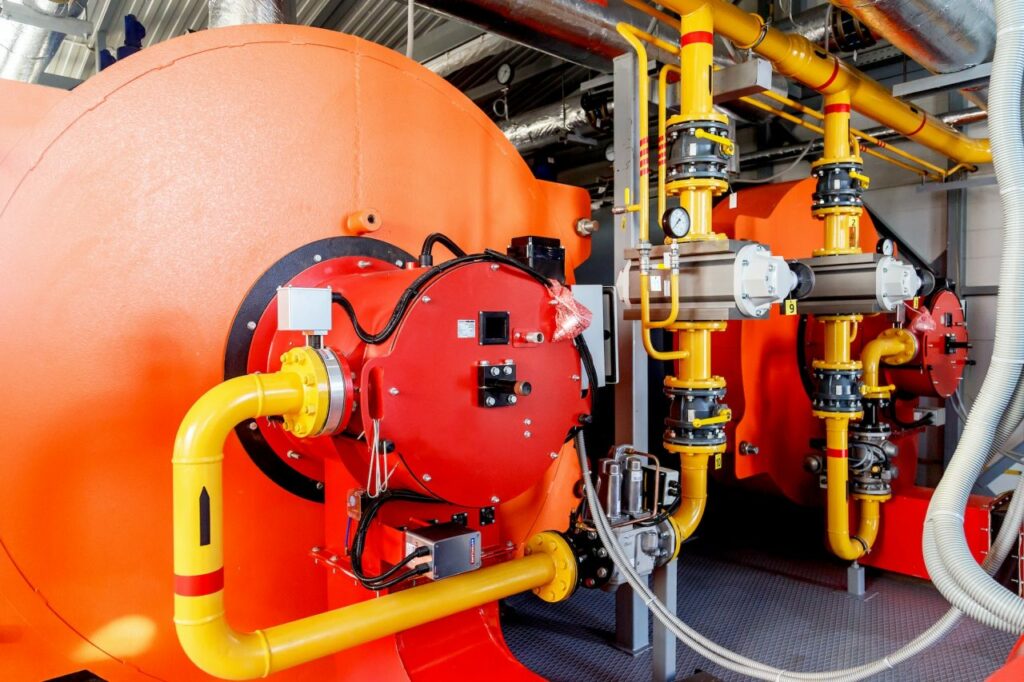
Industrial heating equipment cannot be judged by heat output alone. A burner may produce the required temperature yet still be unsuitable if its flame does not fit the combustion chamber, its control range is too narrow, or its fuel and air system cannot maintain stable combustion. For us, industrial suitability means the burner must work as part of the complete thermal process rather than operate as an isolated heat source.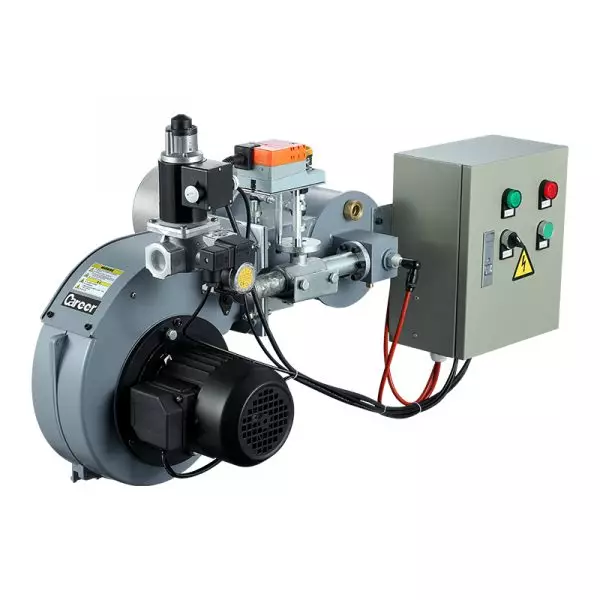
That distinction becomes especially important for ovens, dryers, textile machinery, food-processing equipment, and fume incinerators. Each process imposes different demands on flame shape, heat distribution, modulation, and control. Our industrial gas burner designs therefore start with the operating conditions rather than simply selecting the largest available capacity.
Industrial Suitability Starts With the Heat Duty
The first question we ask is how much useful heat the process actually requires. Burner capacity has to correspond to the thermal load of the equipment, including the heat required by the product or process and the losses that occur through the system.
Oversizing is not automatically a sign of better engineering. Excess capacity can make low-load operation more difficult if the burner cannot reduce its firing rate sufficiently. Undersizing creates the opposite problem: the equipment may struggle to reach its required operating condition or maintain production demand.
Our industrial gas burners cover 5.3 kW to 348.3 kW within the dedicated industrial range. That range is designed around direct-fired industrial applications rather than being treated as a universal solution for every heating system.
Fuel and Air Control Must Work Together
Gas selection is only one part of combustion design. The burner also needs an appropriate supply pressure and a controlled combustion-air flow so that fuel and air reach the flame in the intended proportions.
Nozzle-mixing technology is particularly relevant here. Our industrial range uses a nozzle-mix arrangement in which fuel and air remain separate until they meet at the combustion point. That configuration supports controlled diffusion-flame formation and is suited to applications where stable, adjustable combustion is required.
Fuel compatibility also has to be established before installation. The dedicated range supports natural gas, LPG, and biogas, but the actual fuel specification, supply conditions, and equipment requirements still need to be checked before a burner is selected.
Flame Behavior Determines Process Compatibility
Industrial equipment does not simply need “a flame”; it needs the right flame in the right location. Flame length, shape, velocity, and heat distribution can affect how effectively energy reaches the material, air stream, chamber, or heat-transfer surface.
A burner that performs well in one application can therefore be inappropriate for another. Drying equipment may require broad and controlled heat distribution, while another process may require a more concentrated flame. Combustion-chamber dimensions and operating conditions should be reviewed together with the burner’s flame characteristics.
We consider this relationship particularly important for direct-fired equipment. Career Burner’s industrial nozzle-mix range is intended for applications including ovens, dryers, textile machinery, food-baking equipment, coffee roasters, paint-finishing lines, grain dryers, and fume incinerators.
Control Range Matters More Than Maximum Output
Industrial loads rarely remain completely constant. Production rates, material throughput, ambient conditions, and operating cycles can change the amount of heat required. A burner therefore needs sufficient control authority to follow those changes without repeatedly operating outside its useful range.
Turn-down ratio becomes an important specification in this situation. Career Burner’s BX-series industrial nozzle-mix burners provide turn-down ratios of up to 40:1, allowing firing rate to be adjusted over a broad operating range. The appropriate ratio still depends on the individual process and its minimum and maximum heat demand.
For a buyer, this means maximum capacity should never be considered in isolation. The more useful question is whether the burner can operate stably across the range in which the equipment normally runs.
Safety and Emissions Are Part of the Burner
Industrial combustion also requires controlled ignition, flame supervision, and appropriate fuel-system protection. A burner should be evaluated together with the associated gas train, control equipment, monitoring devices, and installation requirements rather than viewed simply as a mechanical flame generator.
Combustion performance also has an environmental dimension. NOx and CO emissions depend on combustion conditions, equipment configuration, fuel characteristics, and tuning. Where emission limits are demanding, the burner specification needs to reflect those requirements from the beginning rather than treating emissions as an afterthought.
For applications requiring lower NOx emissions, we also offer dedicated low-NOx burner technology. The selection should be based on the applicable emission requirement and the complete combustion system rather than on a generic “low-emission” label.
What We Check Before Recommending a Burner
Our selection process starts with practical operating information: the heating equipment, required heat input, fuel type, available gas conditions, operating temperature, load variation, and desired control method. Existing-system dimensions and combustion-chamber conditions also matter when a project involves a retrofit.
We then consider whether the burner’s flame characteristics and modulation range fit the process. A gas burner for industrial use should not be selected merely because its rated capacity looks appropriate on a datasheet. Its operating range, fuel compatibility, combustion arrangement, and integration requirements all have to work together.
Finally, we check the support requirements around installation and maintenance. Industrial gas burners for sale may look similar at a glance, but differences in configuration, controls, spare components, and application suitability can have a significant effect on the final installation.
The Industrial Standard Is System Fit
What makes a burner genuinely suitable for industrial service is not one isolated specification. It is the ability to deliver controlled heat under the actual conditions of the process while maintaining stable combustion, appropriate modulation, safe operation, and the required emissions performance.
We therefore recommend evaluating the burner against the complete thermal duty rather than choosing solely by maximum output or purchase price. When comparing industrial gas burners for sale, it is equally important to consider whether the combustion characteristics, control range, fuel system, and process interface are properly aligned with the application. For us, the strongest industrial solution is the one that is correctly matched before installation—not one that needs to be corrected after problems appear.