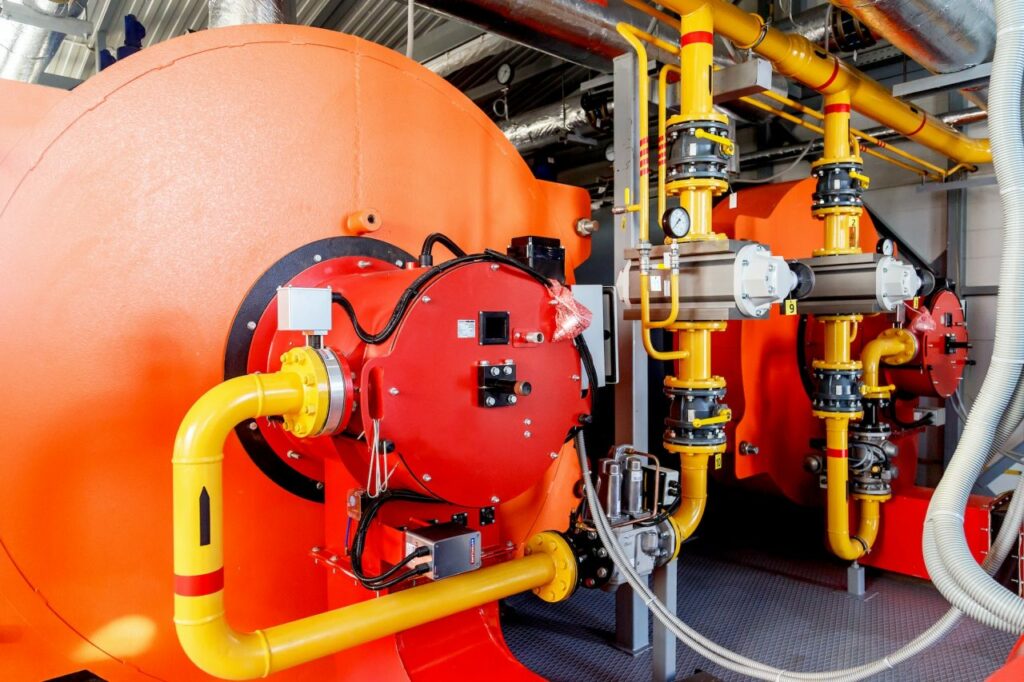
A burner can have enough rated capacity and still be the wrong choice for a heating system. Problems often appear only after installation: unstable low-fire operation, uneven heating, poor response to changing loads, or a fuel requirement that does not match the plant infrastructure.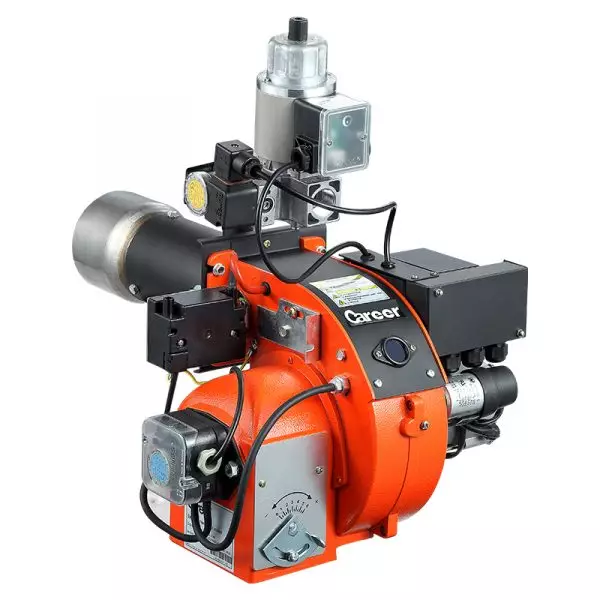
We look at burner selection differently. Instead of starting with a product rating, we start by asking how the heating equipment actually operates. That means understanding its heat demand, fuel conditions, temperature profile, combustion space, and required control behavior before deciding which burner configuration makes sense.
A Maximum Heat Rating Does Not Tell the Whole Story
Consider a furnace that needs high heat during startup but substantially less once the process reaches its working temperature. Selecting a burner solely from the peak requirement may leave the system with more capacity than it can use effectively during normal operation.
The opposite mistake is also possible. A burner selected too close to the calculated average load may lack the reserve needed for startup, production changes, or periods of greater heat loss.
We therefore separate the process into its actual operating points. Minimum demand, normal demand, peak demand, startup requirements, and temperature recovery all provide useful information. The resulting range is more meaningful than a single heat-input figure.
Good burner solutions should reflect that range. The objective is not simply to produce enough heat, but to give the heating system usable control across the conditions it will encounter.
The Plant’s Fuel Supply Sets the First Boundary
Fuel availability can eliminate unsuitable options before any detailed burner comparison begins. The relevant question is not just whether a burner is designed for a particular fuel, but whether the site’s fuel conditions support the required combustion performance.
Natural gas, LPG, oil, methanol, and waste oil involve different fuel-delivery and combustion arrangements. Pressure, flow availability, fuel quality, and existing pipework can all affect the final configuration.
We at Career Burner provide combustion equipment covering several industrial fuel requirements, including gas, oil, methanol, and waste-oil applications. We would still treat the actual site fuel conditions as the starting point rather than assuming that broad fuel capability makes every configuration suitable.
The Lowest Useful Firing Rate Can Change the Decision
Once the maximum heat requirement is known, the next question should be: how little heat must the burner deliver while remaining stable?
That question brings turndown into the selection process. A heating system with widely varying demand may need a burner capable of reducing output substantially without repeatedly switching on and off.
At Career Burner, we specify a 40:1 turndown ratio for BX20 immersion tube burner. That specification may be valuable for a process with significant load variation, but it should not be treated as a universal selection target. The required turndown should come from the application’s minimum heat demand.
The Chamber Determines What “Good Combustion” Looks Like
A burner does not operate in empty space. The geometry surrounding the flame influences how heat is distributed, where high-temperature regions develop, and how effectively energy reaches the intended process area.
A long furnace may require different flame development from a compact chamber. Direct-fired equipment also has different requirements from an indirect system in which combustion gases heat a tube or another heat-transfer surface.
Flame length, direction, velocity, and heat-release distribution consequently deserve attention during selection. The right industrial burner should create a thermal pattern that suits the equipment rather than merely producing the required quantity of energy.
Control Requirements Should Be Defined Before the Burner Is Finalized
Heating behavior also depends on how the burner responds to changing process conditions. Modulation, fuel-air control, ignition, flame detection, and safety interlocks form part of the operating system and should not be treated as separate afterthoughts.
A process with frequent temperature changes may require more responsive firing control than equipment operating under a relatively constant load. The control strategy should therefore be matched to the way production actually runs.
Emissions requirements can influence this decision as well. Where NOx reduction is a project objective, a low-NOx combustion configuration may need to be evaluated alongside the required heat duty and operating range.
We at Career Burner list our NX Low-NOx FGR series with emissions below 30 mg/Nm³ under its stated conditions. Published emissions figures should always be interpreted according to their test conditions and compared with the requirements applicable to the installation.
Turn the Heating Problem Into a Technical Specification
After these questions have been answered, burner selection becomes much more straightforward. The specification should describe the process before it describes the preferred burner.
Record the operating temperature, heating method, chamber arrangement, and minimum-to-maximum heat demand. Then add the fuel type, available pressure, required turndown, and desired flame characteristics.
Next, define the combustion-air arrangement, control method, safety requirements, emissions target, and physical installation limitations. Retrofit projects should include measurements of the existing burner interface so that mechanical compatibility is considered alongside combustion performance.
Our solutions at Career Burner serve industrial thermal applications including boilers, ovens, drying equipment, textile processes, and other heating systems.
The final selection should answer a practical engineering question: can the burner deliver the required heat, at the required temperatures, across the required operating range, using the fuel and infrastructure available at the plant?
That question is more useful than asking which burner has the highest capacity or the widest specification. A well-matched burner is one whose combustion characteristics, control range, physical configuration, and emissions performance fit the actual heating application.
When engineers start with the process, discussions with burner suppliers also become more productive. Rather than comparing catalogue numbers in isolation, they can evaluate each proposed configuration against clearly defined operating conditions and select equipment on a stronger technical basis.