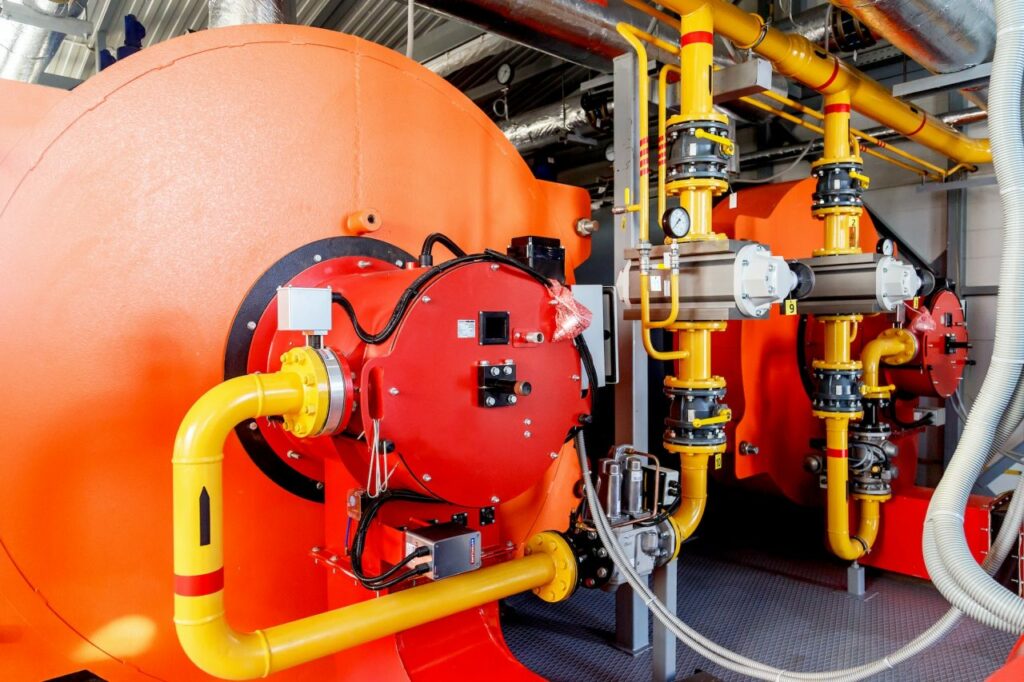
Furnace burner selection isn’t a single decision—it’s five simultaneous choices. Your furnace type dictates thermal demands. Existing infrastructure constrains what physically fits. Regulatory pressure shapes emissions targets. System scale determines whether one burner suffices or multiple units require coordination. Underlying everything is financial justification. We’ve found that synthesizing these layers prevents costly mistakes and extends furnace life substantially.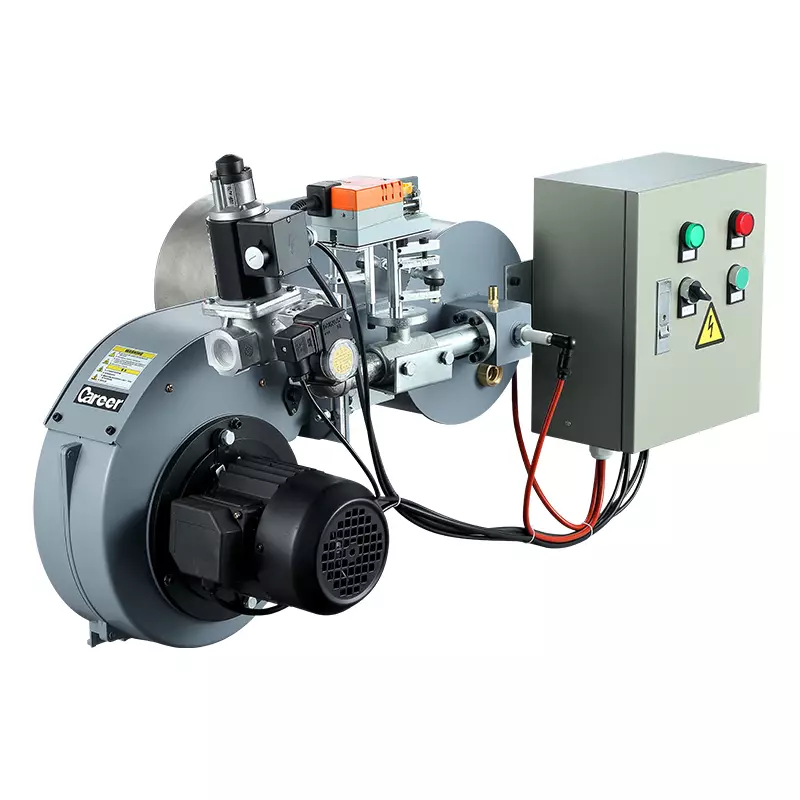
Furnace Type as Your Primary Design Driver
Metal annealing furnaces, forging pits, glass-melting tanks, and ceramic kilns all operate at elevated temperature, but their burner requirements diverge sharply. Each furnace type imposes distinct thermal profiles and reliability expectations that must drive your selection first.
Annealing furnaces prioritize uniform heating and temperature stability. Steel or aluminum workpieces must reach precise temperature—often 650–900°C—holding within ±10°C for metallurgical consistency. Slow ramp rates prevent thermal shock. Gas industrial burner selection emphasizes modulation capability and flame geometry that distributes heat evenly rather than creating hot spots.
Forging furnaces demand rapid temperature rise and sustained high output. Billets entering at ambient must reach forging temperature (1100–1300°C) in 30–60 minutes. Burner specification emphasizes capacity and durability under continuous heavy load, with less focus on precision modulation since forging shops accept ±50°C temperature variation.
Glass-melting furnaces operate continuously at extreme temperature (1600°C+) for weeks without shutdown. Burner reliability becomes critical; a single failure during a campaign ruins months of production. Material selection (refractory-lined burner bores, high-temperature nozzles) dominates specification.
Ceramic kilns often employ staged combustion, where primary and secondary burners introduce fuel and air at different points to control kiln atmosphere. Reduction-atmosphere kilns require burners that combust precisely without excess oxygen, preventing oxidation of glazes. This specialized atmosphere control eliminates generic burner options.
At Career Burner, our nozzle-mix design adapts seamlessly across these applications. By keeping the fuel and air separate until the point of combustion, we deliver the precision control required for annealing and kiln atmospheres, while maintaining the high output capacity demanded by forging processes.
Retrofit Reality vs. New Installation Flexibility
Retrofit decisions define most burner specifications in practice. Your existing furnace has fixed mounting flange dimensions, predetermined air inlet locations, and spatial constraints. Replacing a failed burner with an identical model preserves integration but forecloses upgrades. Retrofitting a higher-capacity or more efficient burner often requires adapting air supply ducting, modifying fuel lines, or reconfiguring controls.
Assess retrofit feasibility early. Request the original burner model and specifications from your furnace documentation. If the burner is 10+ years old, it may no longer be manufactured; sourcing an equivalent requires supplier consultation. If your current burner underperforms (slow heat-up, uneven temperature distribution), upgrading capacity might solve the problem—but only if your air supply can deliver additional combustion air without excessive pressure drop.
New furnace installations offer freedom that retrofits don’t. Burner capacity, mounting orientation, air and fuel inlet sizing, and control system integration can all be optimized for your specific thermal process.
Calculate retrofit modification costs honestly. If adapting your air supply requires ductwork changes or blower upgrades, that expense often erodes savings from a lower-cost generic burner. A purpose-specified burner frequently delivers better ROI when total installation expense is included.
Emissions Compliance and Thermal Performance
Regulatory pressure on industrial furnace emissions has intensified. EPA Tier 2 and 3 standards, state-level NOx limits, and facility-wide air quality permits increasingly constrain burner selection. Low-NOx burners are baseline requirements in regulated jurisdictions, not premium options.
Low-NOx design employs staged combustion, where primary flame zone operates fuel-rich (excess fuel, insufficient oxygen), then secondary air completes combustion downstream. This two-stage approach reduces peak flame temperature, suppressing thermal NOx formation without excessive smoke or incomplete combustion. The trade-off is that staged burners require more sophisticated air supply management and sometimes sacrifice turndown ratio compared to conventional designs.
For furnace applications, staged combustion influences atmosphere control. A reduction-atmosphere kiln naturally benefits from staged burner design because the fuel-rich primary zone produces the reducing conditions the kiln chemistry demands. Metal annealing furnaces can tolerate slight oxidizing atmosphere, so staged burners present no penalty. Forging furnaces, which accept oxidizing conditions, still must meet regulatory thresholds.
Career Burner‘s low-NOx designs integrate emissions control into nozzle-mix architecture rather than compromising capacity or modulation. Compliance and performance need not conflict—proper burner selection delivers both. Evaluate emissions permit requirements early; delaying compliance to save upfront cost often costs more when regulators mandate retrofit within compressed timelines.
Multi-Burner Systems and Coordination
Large furnaces often employ two, three, or four burners positioned around the perimeter to distribute heat and achieve thermal uniformity. Multi-burner systems add complexity because individual burner output and collective system performance interact in non-obvious ways.
Each burner requires its own fuel supply line and pressure regulation, but air supply often comes from a single blower feeding a manifold. If burner #1 develops higher resistance (partially clogged nozzle), it starves burners #2 and #3 of adequate air pressure, degrading performance unevenly. Specifying matched burners—identical models, capacity, and pressure ratings—minimizes this interaction risk.
Load distribution requires coordinated control. Some furnaces operate with all burners firing continuously; others employ staged ignition where burners light sequentially as chamber temperature rises. Document your furnace’s existing arrangement: how many burners, their spacing, individual capacity, and control scheme. Retrofit mismatches create performance imbalances that no tuning resolves.
Total Cost of Ownership Analysis
Furnace burner cost extends far beyond purchase price. A $3,000 commodity burner and a $7,000 high-temperature-rated equivalent diverge sharply in lifecycle cost.
Commodity burners in high-temperature duty typically require component replacement every 12–18 months: ceramic insulation spalls, nozzles coke, electrodes corrode. Premium-grade burners extend service intervals to 24–36 months.
The material cost premium ($4,000) pays back in avoided maintenance labor, parts, and—most importantly—production downtime. A single unscheduled shutdown lasting 8 hours often costs $10,000–$30,000 in lost production.
High-turndown capability reduces energy waste in furnaces operating below continuous capacity. If your furnace runs 40 hours per week at 60 percent average load, modulation down to 40 percent fire rather than cycling on-off saves 15–20 percent energy annually. At $8/MMBtu and 1000 hours operation, that’s $1,200–$1,600 annual fuel savings—recovering the modulation premium within 3–5 years.
When you choose Career Burner industrial gas heating systems, we provide modular specifications tailored to your needs. We start with cost-effective base burners and give you clear upgrade pathways for better materials, modulation control, and emissions capabilities, implemented only when your lifecycle cost analysis proves it worthwhile. We prevent you from overspecifying your equipment while making sure you capture every possible performance gain in your furnace operation.