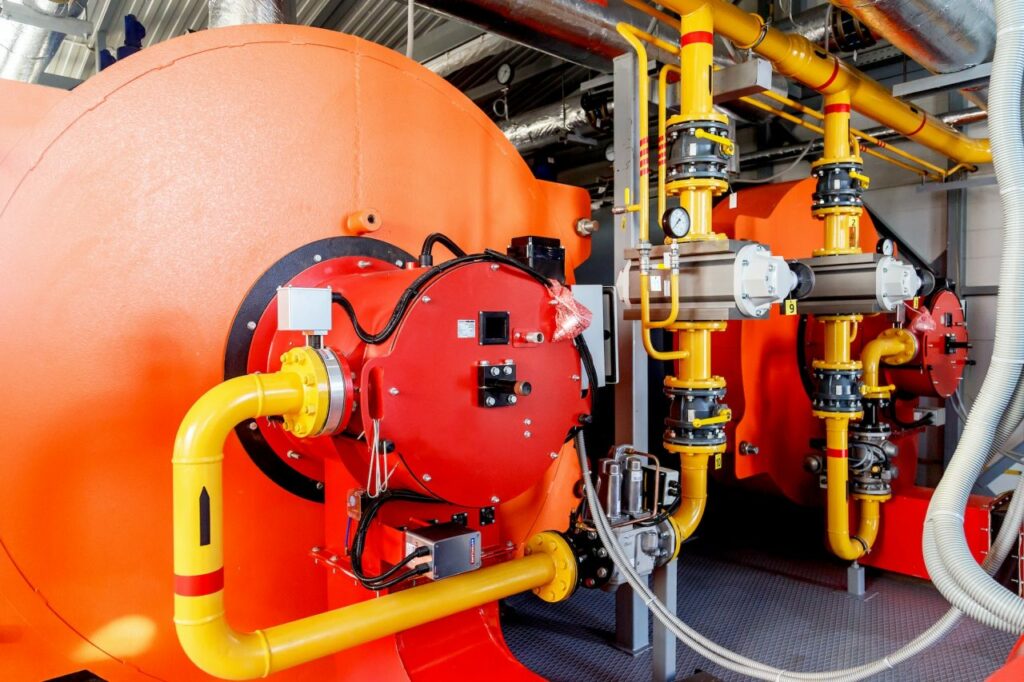
The best incinerator burner is one matched to the waste’s moisture, heating value, volatility, batch size, and required chamber temperature. As a critical ignition and auxiliary heat source, it affects combustion efficiency, fuel use, emissions, and waste destruction quality. Different waste streams place different demands on industrial burners for incinerators, while a poor match can cause incomplete combustion, higher operating costs, and compliance problems.
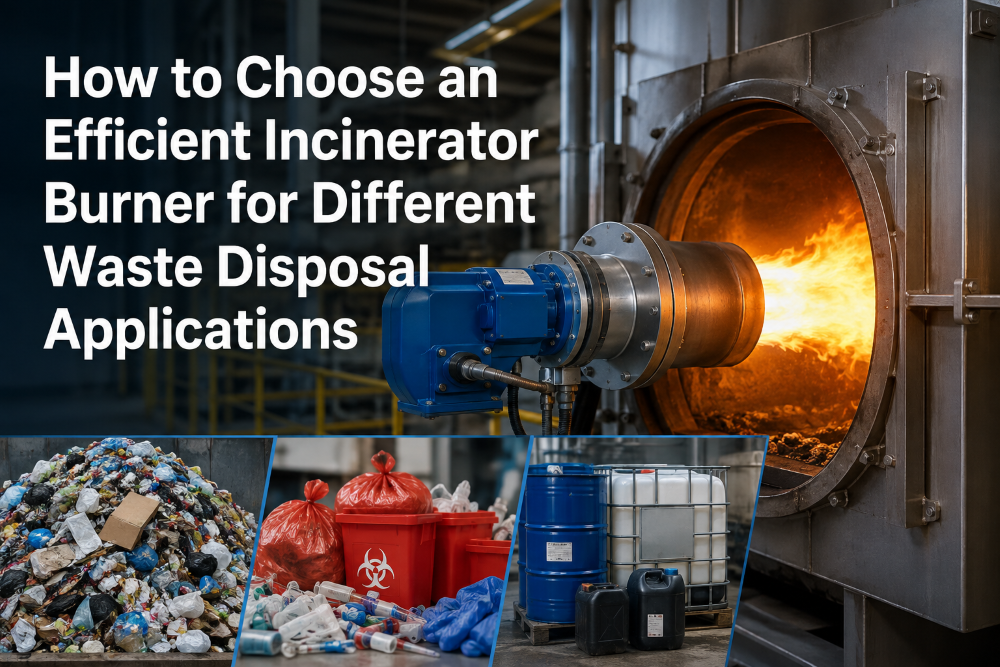
Understand the Waste Disposal Application
Incinerator burner selection should begin with the material entering the chamber because an incinerator for waste disposal rarely handles every waste stream in the same way.
- Municipal solid waste: Its mix of food residue, paper, plastics, and other materials can change from batch to batch. Variable moisture, density, and heating value call for stable ignition and enough adjustment range.
- Medical waste: Infectious materials, dressings, and plastics require controlled combustion and reliable secondary-chamber heating. The World Health Organizationwarns that low-temperature incineration may release dioxins, furans, and particulate matter under certain circumstances, making temperature and emission control especially important.
- Hazardous waste: Solvents, chemicals, halogenated materials, and other reactive wastes vary in volatility and composition. Burner and incinerator design must be matched to the specific waste and regulatory requirements.
- Industrial waste: Sludge, resins, oily residues, packaging, and production scrap may have different ash, moisture, and calorific values. The incinerator burner must suit both the material and the loading pattern.
- Animal carcasses and organic waste: These loads are often moisture-rich and slow to ignite, although fat can increase heat release after combustion is established. For buyers searching for a fat incinerator burner for carcasses or fatty organic material, heat load and chamber design are more useful selection factors than the label itself.
Each category differs in moisture, density, volatility, and combustion behavior. Defining these characteristics clarifies the heat, control, and fuel support the application requires.
How to Choose an Efficient Incinerator Burner
1. Match Burner Performance to Waste Characteristics
Selecting the right burner starts with analyzing the specific parameters of your waste stream. High-moisture or low-calorific wastes (like industrial sludge) require burners capable of sustaining continuous auxiliary heat.
Conversely, highly combustible wastes primarily need the burner for initial ignition and flame stabilization. Furthermore, complex or high-salt/halogen materials demand exceptional corrosion resistance in both the burner and downstream equipment.
2. Evaluate Combustion Temperature and Control
Precise temperature regulation is vital for complete waste destruction and preventing the formation of harmful byproducts like dioxins.
- Temperature Requirements: Medical and hazardous waste incineration may require combustion gases to be maintained at at least 850°C for a minimum of two seconds, with higher temperatures required for certain waste compositions or under local regulations. The burner must sustain this heat reliably.
- Turndown Ratio: A high turndown ratio (e.g., 10:1) offers operational flexibility, allowing the burner to adapt to startup, shutdown, and significant fluctuations in the waste’s heating value without sacrificing combustion stability.
- Flame Geometry: The flame shape and length must accurately match the chamber design to prevent refractory degradation and localized overheating.
3. Consider Fuel Type and Energy Efficiency
Fuel selection directly impacts operating costs, system complexity, and environmental performance.
- Gaseous Fuels (Natural Gas, LPG, Biogas): These deliver the cleanest combustion with minimal particulate emissions. They offer precise temperature control and low maintenance but rely on existing pipeline infrastructure.
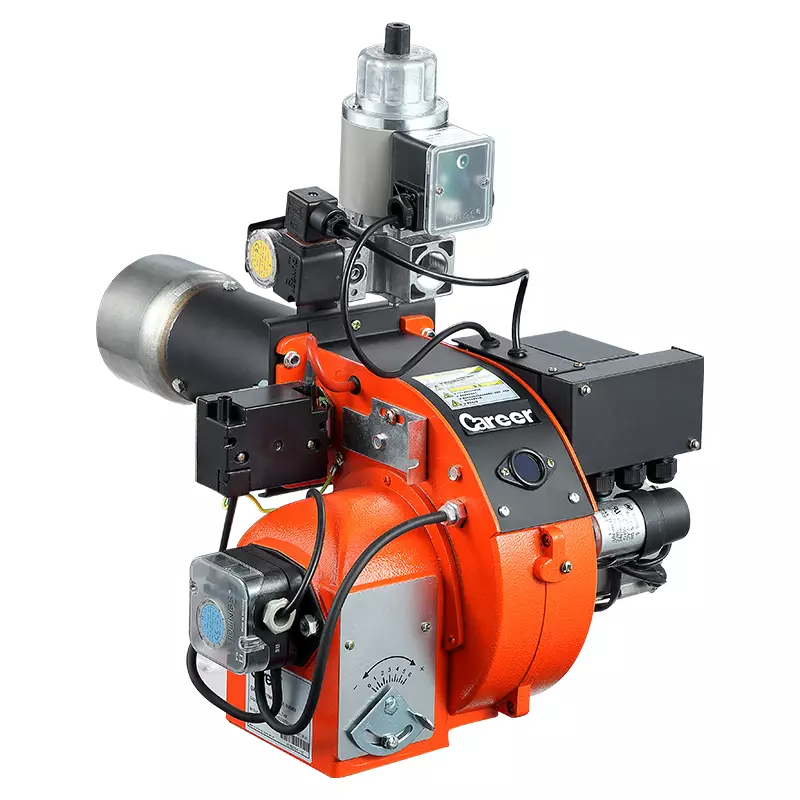
Picture shown: Career Burner GX16, a gas incinerator burner
- Liquid Fuels (Diesel, Heavy Oil, Waste Oil): These provide high energy density and are ideal for off-grid facilities. However, heavy and waste oils require preheating, specialized filtration, and dedicated burner designs.
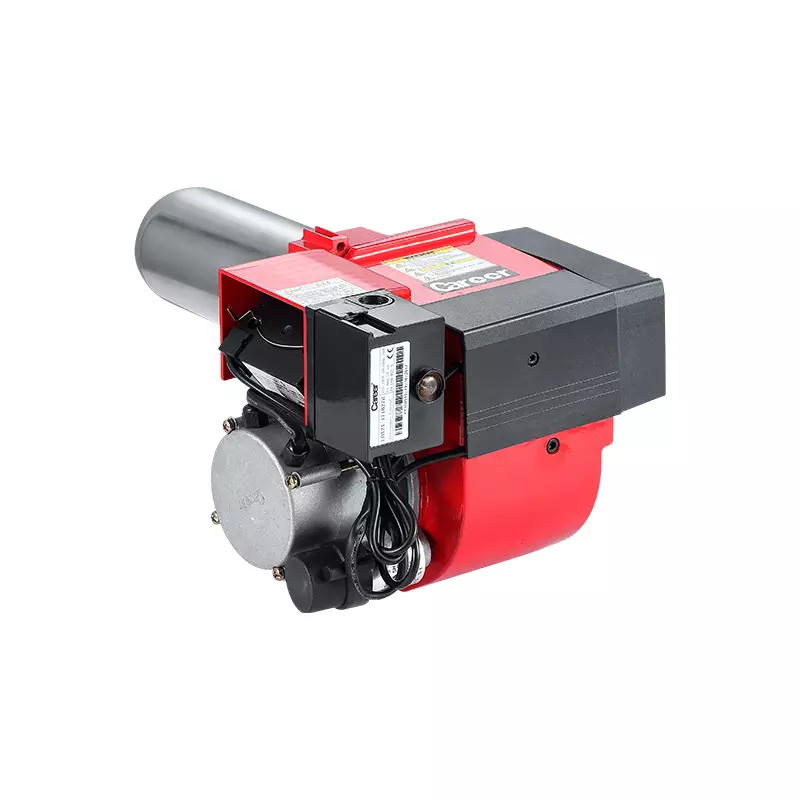
Picture shown: Career Burner CX5, an oil incinerator burner
- Total Efficiency: Beyond base fuel prices, factor in storage, preparation, maintenance, and the added costs of emission compliance when evaluating overall operational efficiency.
4. Check Emission Control and Compliance
With tightening environmental regulations, advanced emission control is non-negotiable. Look for Low-NOx technologies, such as staged combustion and Flue Gas Recirculation (FGR), which significantly reduce nitrogen oxide generation to meet ultra-low emission standards.
If using sulfur-heavy fuels, ensure compatibility with comprehensive flue gas treatment systems. To future-proof your facility, you may consider burners adaptable to cleaner alternative fuels like biogas or hydrogen.
5. Review Capacity, Durability, and Maintenance
Because incinerators endure harsh, continuous operation, the burner’s thermal output must comfortably meet the total heat load with an adequate safety margin. Critical components exposed to high temperatures and corrosive gases—like the combustion head and flame tube—must be constructed from premium materials such as 310S stainless steel, heat-resistant alloys, or ceramics.
Features like pneumatic retractors that withdraw the burner head during shutdown can further extend equipment lifespan. Always prioritize models with straightforward maintenance access and readily available spare parts.
6. Look for Automation and Safety Features
A highly automated PLC-based system is essential for both efficiency and plant safety. Ensure the burner integrates seamlessly with the main incinerator controls to offer automatic ignition, proportional load modulation, and continuous flame monitoring.
Crucial safety interlocks—such as pre-ignition purge, automatic fuel cutoff upon flame failure, gas leak detection, and over-pressure/temperature shutdowns—are mandatory to prevent hazardous malfunctions.
Finally, user-friendly human-machine interfaces (HMI) and data logging capabilities will streamline daily monitoring and troubleshooting.
Career Burner Solutions for Waste Incineration
At Career Burner, we manufacture oil and gas burners for different industrial heating requirements. Our current product portfolio covers capacities from approximately 30 kW to 7,000 kW, and we have more than 30 years of burner manufacturing experience.
For incinerator projects, the table below compares three recommended incinerator products for waste disposal based on fuel type, output, application, and selection value.
| Model | Fuel Options | Output | Heat | Suitable Applications | Selection Value |
| CX5 | Light diesel / kerosene / B10 biodiesel (10% bio-component)
| 24–66 kW | 24 – 66kW 20,000~57,000 kcal/h 82,000 – 225,000 BTU/hr
| Small-batch, intermittent incineration, including pet cremation and small laboratory-waste systems | A lower-output, lower-cost option with stable, reliable ignition. Its broader fuel choice supports selection by local supply and cost. |
| CX14 | Light diesel / kerosene / B10 biodiesel (10% bio-component)
| 89–172 kW | 89 – 172kW 76,500~147,900 kcal/h 304,000 – 587,000 BTU/hr | Small incinerators handling animal carcasses, feces, medical solid waste, and laboratory solid waste | Its moderate capacity and broad application coverage make it one of the main models for incinerator projects. |
| GX16 | Natural gas or LPG | 69–186 kW | 69 – 185.7 kW 60,000~160,000 kcal/h 235,000 – 634,000 BTU/hr | Gas-supplied incinerators, including suitable medical-waste projects | Gas-fired option for strong fuel fl exibility; pipeline gas may provide cleaner combustion and lower operating costs than oil where supply and pricing are favorable. |
Final Thought
The most efficient incinerator burner is ultimately the one correctly matched to the waste, thermal load, fuel supply, control requirements, and local regulations. If you are designing a new waste incineration system or selecting a replacement burner, Career Burner can help evaluate these operating conditions and identify an appropriate oil- or gas-fired solution for your project. For your tailored support, contact our professional team!