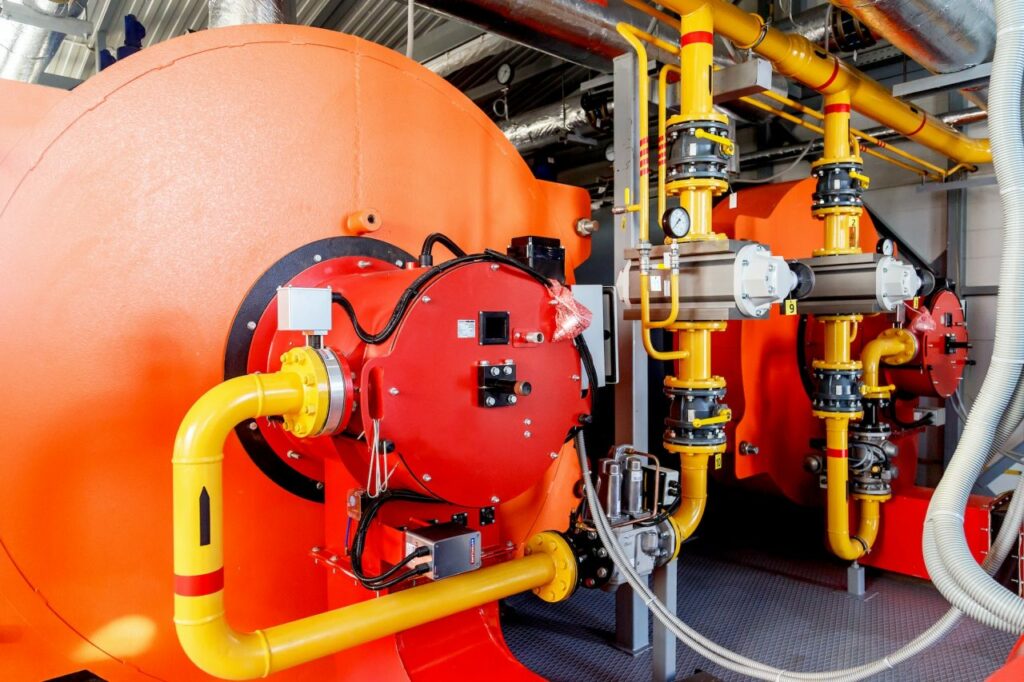
A heating system does not become efficient simply because its boiler has a high thermal rating. Fuel must first be converted into heat under controlled combustion conditions, and the resulting heat must then reach the intended process with minimal avoidable loss. The burner controls this first stage, so its design can influence what happens throughout the rest of the heating system.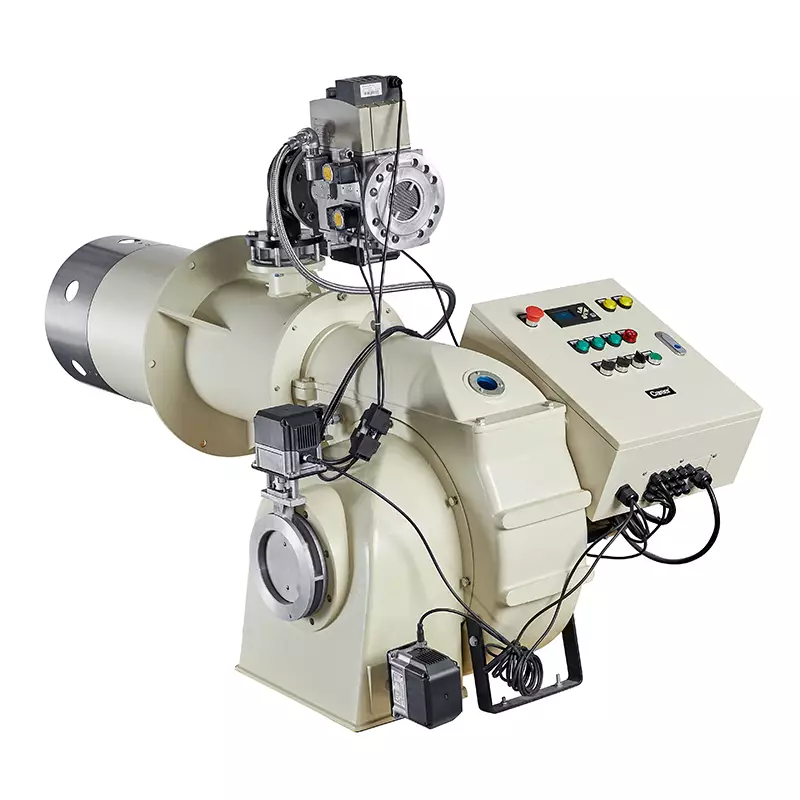
Efficiency Is Determined Before Heat Enters the Boiler
Combustion quality establishes how much of the fuel’s available energy can become useful heat. An unstable flame, poor mixing, or an inappropriate air supply can leave part of that energy unused or send more heat into the exhaust than necessary.
Excess combustion air is one example. Air is required to support combustion, but heating unnecessary air also consumes energy that ultimately travels through the flue. Too little air creates a different problem: incomplete combustion can reduce useful heat release and increase unwanted combustion products.
We at Career Burner therefore view burner selection as an upstream efficiency decision. The boiler cannot recover energy that has already been lost through poor combustion or excessive exhaust losses.
Career Burner explains that fuel-to-air ratio is a fundamental factor affecting burner performance and energy use. That relationship is particularly relevant to industrial heating equipment, where combustion conditions must remain controlled as firing demand changes.
Air-Fuel Control Shapes Combustion Quality
An industrial burner rarely operates under exactly one condition. Firing rate can change as steam demand, water temperature, production requirements, or process loads fluctuate. A combustion system that maintains an appropriate fuel-air relationship across those changes can respond more effectively than one relying on a fixed operating point.
Automatic control is therefore more than a convenience feature. Sensors and actuators can adjust fuel and combustion air as demand changes, helping the burner remain closer to its intended combustion condition.
Control accuracy also affects how the boiler behaves over time. Excessive air at a reduced firing rate, for example, can increase flue-gas losses even though combustion remains stable. Conversely, insufficient air can compromise combustion quality.
For us, the important specification is not simply whether a burner has automatic controls. We want to know how those controls interact with firing rate, fuel supply, combustion air, and the boiler’s existing control architecture.
Flame Management Connects Efficiency With Emissions
Combustion temperature creates an important connection between energy performance and emissions. A flame needs sufficient temperature for reliable combustion, but very high local temperatures can promote thermal NOx formation.
Low NOx burner designs modify the way fuel and air mix or react so that combustion can occur under more controlled temperature conditions. Techniques such as flue gas recirculation, staged combustion, lean premixing, and air-fuel ratio management can alter the combustion environment rather than simply treating emissions after the flame has formed.
Flue gas recirculation provides a useful example. Returning part of the exhaust stream to the combustion zone can dilute the reacting mixture and reduce peak flame temperatures. Staged combustion instead changes the sequence and location of fuel-air interaction.
When developing our low-NOx gas range with built-in FGR technology, our approach has always been holistic. We know that hitting emission targets is only part of the story; we evaluate this design alongside combustion stability, heat transfer performance, and real-world operating realities rather than relying on a single label.
A lower emissions figure is not automatically proof of better fuel economy. We assess whether the combustion strategy maintains effective heat release and stable operation under the conditions the boiler actually encounters.
Part-Load Behavior Reveals Real Operating Efficiency
Peak-load performance can tell us whether a burner is capable of meeting maximum demand, but it says much less about how the system behaves during ordinary operation.
Many industrial boilers spend substantial periods below maximum firing rate. Production schedules may create frequent changes in steam demand, while process heating equipment can move between high and low thermal loads. Under those circumstances, the burner’s ability to reduce output while maintaining stable combustion becomes increasingly significant.
Modulation can help match heat generation with actual demand. That reduces the need to treat every load change as a simple full-fire or shutdown event. The practical outcome depends on the burner, boiler controls, firing range, and operating strategy, so a published turndown figure should not be considered a guaranteed efficiency improvement by itself.
We prefer to examine the load profile first. If a boiler normally operates around partial load, that operating region deserves more attention during burner evaluation than the maximum rating printed on the datasheet.
System Integration Determines Whether Burner Performance Is Retained
Even a well-designed burner cannot deliver its intended performance if the surrounding heating system prevents it from operating correctly. Boiler geometry, combustion-chamber dimensions, draft conditions, heat-transfer surfaces, fuel supply, and control systems all influence the final result.
Retrofit projects make this particularly important. Replacing a burner can change flame shape, heat distribution, combustion-air requirements, and control behavior. A burner that performs well in one combustion chamber may not produce the same result in another without appropriate engineering and commissioning.
Fuel selection also belongs within this system assessment. We at Career Burner listnatural gas, LPG, and biogas among the fuel options for its low-NOx gas burner range. The relevance of each fuel depends on the plant’s supply conditions and the specific burner configuration.
Control integration deserves similar attention. A new burner should work with the boiler’s demand signal, safety controls, flame monitoring, and relevant operating interlocks. Otherwise, theoretical combustion improvements may not translate into reliable day-to-day performance.
Judge Burner Technology by the Heat the Plant Actually Uses
System efficiency is ultimately about useful heat, not the number of advanced features installed on the burner. We therefore compare burner technology against the plant’s actual operating conditions: fuel consumption, firing pattern, excess air, exhaust behavior, load changes, and emissions requirements.
A low-NOx burner may use sophisticated combustion management, but the correct evaluation asks whether that technology remains effective across the boiler’s normal operating range. Likewise, a highly controllable burner is valuable only when its control range corresponds with real process demand.
For facilities considering low NOx burners for boilers, we recommend treating emissions and efficiency as connected engineering questions. Examine how the combustion strategy affects flame temperature, air requirements, modulation, heat transfer, and exhaust losses rather than assessing each specification independently.
That is also why we do not define burner efficiency solely by the burner itself. Career Burner approaches combustion equipment as part of the larger thermal system, where burner design, boiler configuration, fuel, controls, and operating conditions collectively determine energy performance.
The most useful starting point for an upgrade is therefore existing operating data. Reviewing fuel use alongside load profile, excess air, exhaust conditions, and emissions can reveal where the present system is losing energy. Once those losses are understood, burner technology can be evaluated according to its ability to address the actual problem.
A burner influences heating efficiency because it controls the conditions under which fuel becomes heat. Better mixing, appropriate air control, stable modulation, managed flame temperature, and proper system integration can all contribute to more effective fuel utilization. The right choice is the technology that preserves those advantages across the conditions the heating system experiences every day.