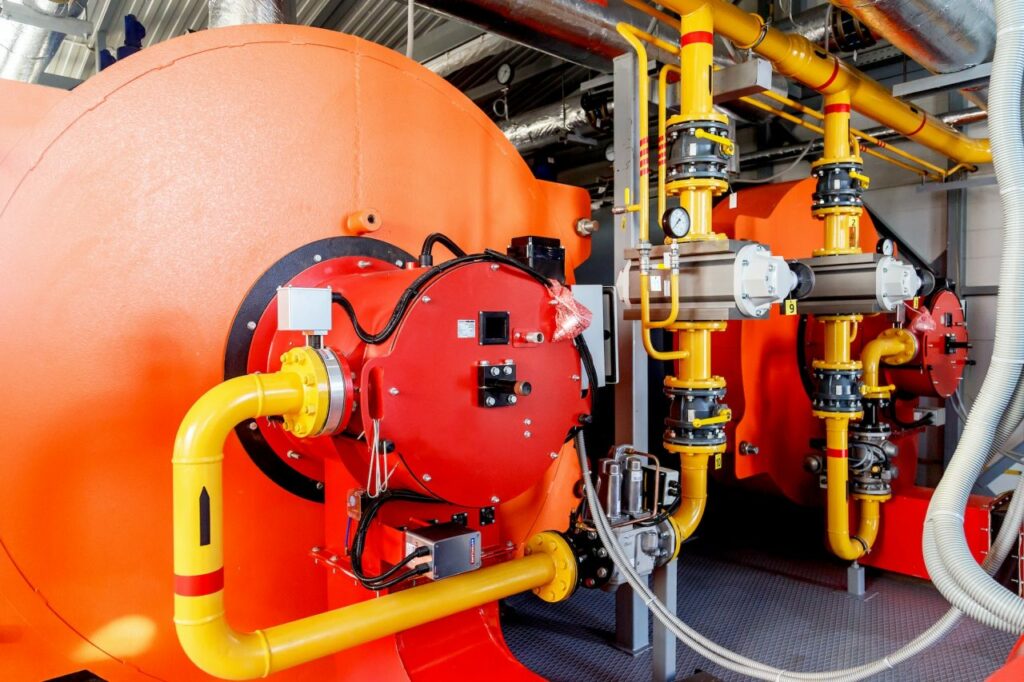
Industrial combustion systems are controlled equipment that turns fuel and air into usable heat while maintaining a stable flame and predictable thermal output. In a boiler, oven, dryer, furnace, or process heater, burner behavior affects how consistently heat reaches the process.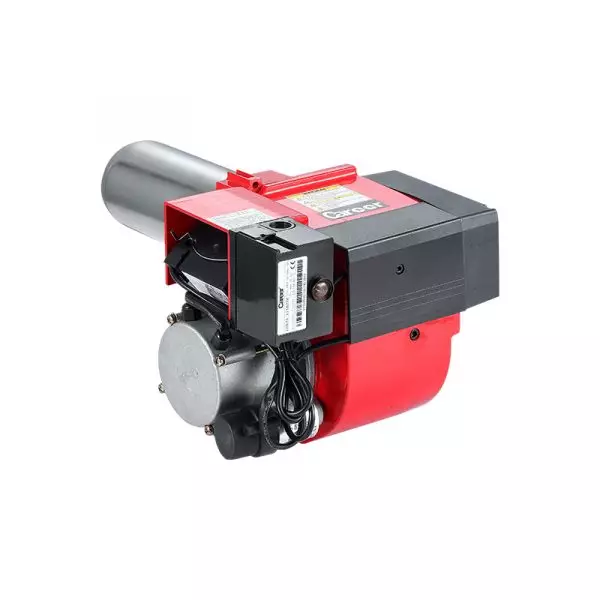
The practical question is not only what the burner is, but what happens after a start command: how fuel and air enter, how ignition occurs, how the flame is monitored, and how output changes as heat demand moves.
From Fuel Supply to Controlled Combustion
An industrial burner starts with two essential inputs: fuel and combustion air. Depending on the equipment, fuel may be gas, oil, methanol, waste oil, or a combination. The burner brings these streams together in a controlled way rather than allowing combustion to occur randomly.
Air-fuel ratio is central to that control. Too little air can cause incomplete combustion, while excessive air can carry useful heat away through exhaust. It must therefore deliver a suitable mixture and maintain conditions that support stable ignition.
Our product range covers oil, gas, methanol, and waste-oil combustion systems, including natural gas and LPG burners. Because fuel characteristics directly impact performance, a thorough evaluation of the fuel type is essential prior to equipment selection.
What Happens During the Firing Sequence?
A typical firing sequence is coordinated rather than instantaneous. The system first establishes conditions for safe ignition. Fuel is then admitted under controlled conditions, an ignition source initiates the flame, and flame detection confirms that combustion has been established.
After flame proving, the burner can supply heat according to process demand. Controls may adjust fuel input, combustion air, or both. Staged or modulating equipment can change firing rate instead of operating at only one fixed output.
Safety functions are integrated into this sequence. The GX25 includes flame detection and pressure monitoring and supports single- or multi-stage flame modulation. This illustrates how a burner combines combustion hardware with monitoring and control.
How Thermal Energy is Transferred to the Process
Producing a flame is by no means the end of the process. The combustion zone must transfer heat into the application in a controlled manner. Burner geometry, flame shape, firing rate, chamber conditions, and burner location all influence heat delivery.
A boiler needs combustion that transfers energy effectively to its heating surfaces. A drying system may require consistent heat across a moving product or process zone. Textile equipment can demand precise temperature management, while incineration equipment may use a burner to sustain required temperatures.
Our BX20 immersion tube burner is used for textile heating with natural gas, while GX-series burners are described for industrial boiler heating and pretreatment drying. Selection therefore starts with the thermal process, not simply the fuel.
How Burner Control Affects Performance
Once combustion is established, control determines how closely heat supply follows process load. A fixed-rate burner may cycle between firing and stopping, while a modulating design can vary output across a defined range.
Turndown matters when demand changes frequently. Our BX20 is specified with a 40:1 turndown ratio, supporting finer adjustment across its stated operating range. That capability can be useful where heat demand changes substantially during production.
What Should Engineers Examine Before Selection?
Start with process duty: required heat input, equipment conditions, operating range, and how heat must be distributed. Fuel availability follows, because a burner designed around one fuel configuration may not suit another without appropriate design and controls.
Control requirements deserve equal attention. Fixed firing, staging, modulation, ignition, flame monitoring, and integration with existing controls can determine whether a burner operates smoothly after installation.
Emissions must be evaluated alongside combustion performance. While low-NOx designs utilize specialized strategies to minimize nitrogen oxide formation, the optimal approach depends on the specific application and operating conditions. To meet these demands, our NX low-NOx series achieves emissions below 30 mg/Nm³.
Installation constraints also matter. Burner dimensions, mounting arrangement, fuel-train requirements, electrical supply, combustion-air arrangement, and maintenance access can determine whether a technically suitable burner is practical for a retrofit or new system.
Why the Combustion Sequence Matters
Understanding industrial burners means viewing them as the control point between fuel, air, flame, and process heat. Their job is not merely to create combustion. They must establish the flame, supervise it, regulate firing, and deliver heat in a way that matches the surrounding equipment.
We approach burner selection from that system perspective because the same fuel can behave differently across a boiler, dryer, furnace, or other process. A suitable solution must match thermal duty, control requirements, fuel conditions, and installation environment.
Career Burner provides oil, gas, methanol, and waste-oil burner solutions for industrial applications. We focus on matching combustion equipment with operating requirements rather than treating burner capacity as the only selection criterion.
The basic principle of an industrial burner is straightforward: fuel and air are controlled, ignition creates a flame, sensors verify combustion, and controls adjust firing to meet thermal demand. The engineering challenge is keeping those steps stable under real operating conditions.
Career Burner’s portfolio of industrial burners spans boilers, drying systems, textile heating, and waste treatment. That range reinforces one practical point: the right burner is defined by the process it serves. Understanding the firing sequence and its controlling variables gives engineers a stronger basis for evaluating burner options.