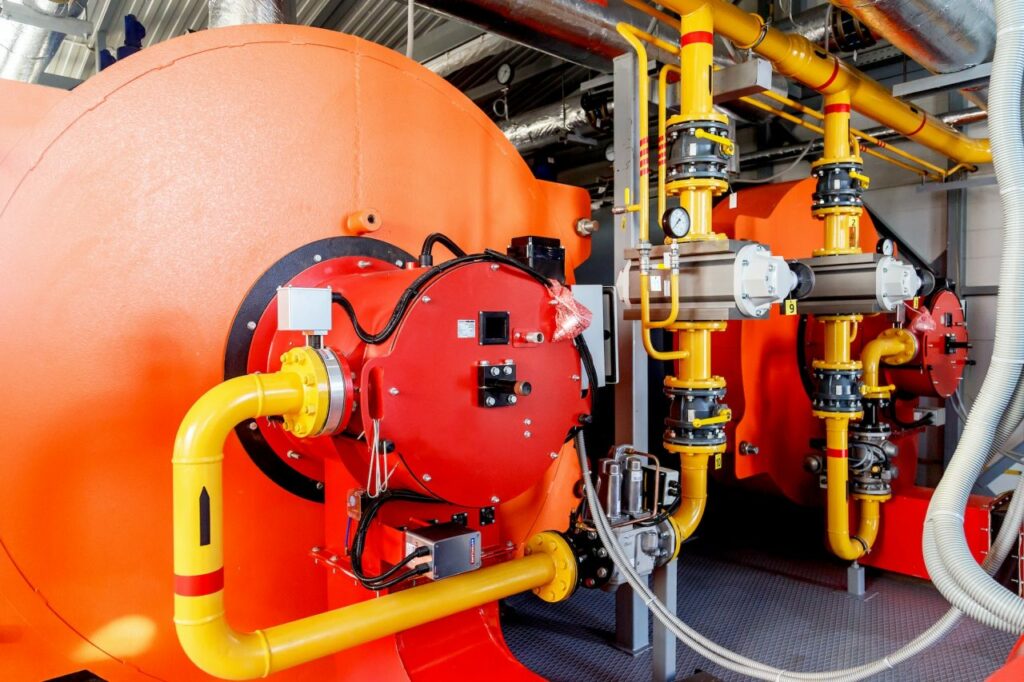
A burner can consume more fuel even when its rated heat output looks adequate. The difference often comes from how effectively the burner mixes fuel and air, stabilizes the flame, responds to changing load, and limits heat losses during combustion. For an industrial heating system, design therefore affects fuel consumption through the quality and control of the combustion process, not simply through burner capacity.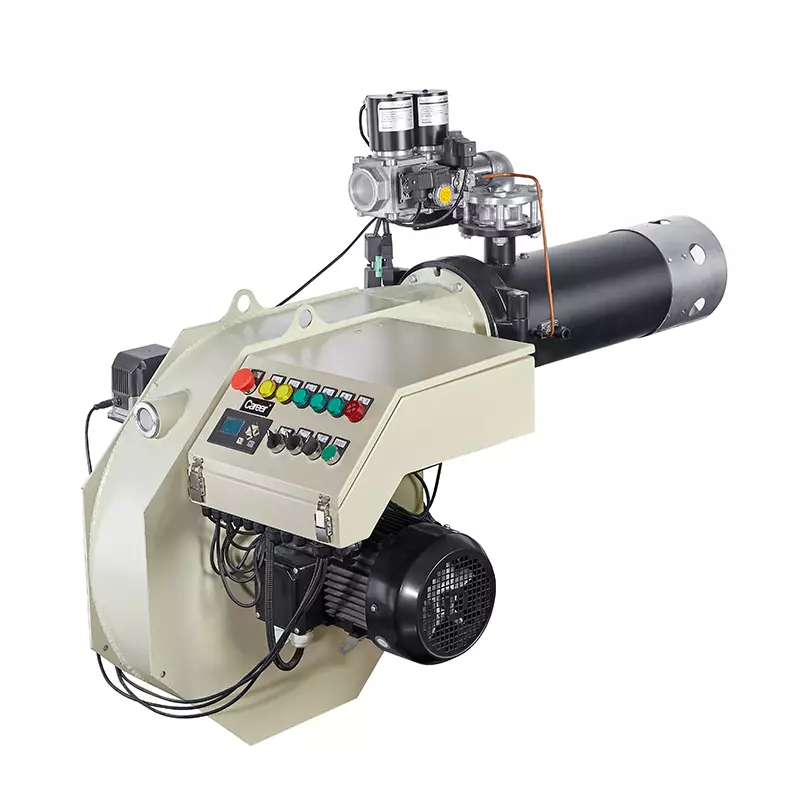
Fuel-Air Mixing Sets The Starting Point
Combustion begins with the relationship between fuel and combustion air. Poor mixing can create locally rich or lean zones, forcing the system to operate with excess air or leaving some fuel insufficiently burned. Both conditions can increase the amount of fuel required to produce a given useful heat input.
At Career Burner, modern burner design can improve this balance through controlled air distribution and fuel delivery. Air-to-fuel ratio control is among the technologies used in the low-emission burner range, helping regulate the mixture for stable combustion. Better control does not mean simply adding more air; the objective is to supply what combustion needs while avoiding unnecessary dilution of the hot gases.
Flame Temperature Changes More Than Emissions
Flame temperature is usually discussed in relation to nitrogen oxide formation, but it also matters to energy use. Very high local temperatures can encourage NOx formation, while poorly controlled combustion can create hot spots alongside cooler regions. A burner designed for more uniform combustion can manage the heat-release pattern more effectively.
Our low NOx designs use approaches such as flue gas recirculation, staged combustion, and lean premixed combustion to control temperature and combustion conditions. The available technology set also includes surface-stabilized burners, catalytic combustion, and overfire air. These methods are not interchangeable; their value depends on the burner, fuel, furnace, and operating conditions.
Why Excess Air Can Raise Fuel Demand
Combustion air is necessary, but excess air also carries heat away with the exhaust gases. If a burner continually operates with more air than the process requires, part of the fuel’s released energy can leave through the stack instead of reaching the heating load.
That makes combustion control a fuel-consumption issue as well as an emissions issue. An air-to-fuel ratio controller can continuously regulate the mixture, while staged combustion and other designs manage where fuel and air enter the flame. The practical goal is a stable combustion zone that converts fuel energy into useful process heat without avoidable losses.
Load Changes Expose Weak Burner Design
Industrial equipment rarely operates at one fixed load all day. Production cycles, ambient conditions, material throughput, and process temperature can change the required heat input. A burner that performs efficiently only near its maximum output may become less effective during lower-load operation.
Designs intended for variable loads can respond more closely to actual demand. We design low nitrogen oxide burners that can be tailored for high-turndown, staged combustion, and variable-load applications. That flexibility matters because reducing fuel input should also reduce unnecessary heat release rather than forcing the equipment into unstable or inefficient operation.
The Combustion Method Shapes The Heat Pattern
Fuel consumption is also affected by where and how heat is released. A burner that creates an uneven flame may leave some parts of a chamber underheated while producing excessive temperatures elsewhere. Operators can then compensate with longer firing periods or higher inputs, even though the nominal burner capacity is sufficient.
Flame stabilization, fuel staging, air distribution, and furnace geometry must work together. For example, flue gas recirculation can return part of the exhaust stream to the combustion zone, lowering flame temperature and influencing the combustion environment. Staged combustion separates fuel and air delivery into multiple stages, controlling oxygen availability and temperature peaks.
Lower NOx Design Can Support Better Energy Control
Low NOx performance should not be treated as a separate environmental feature with no connection to fuel use. A well-engineered combustion system can address emissions and energy performance through the same controls: accurate fuel metering, managed air supply, stable flames, and controlled temperature.
We offer burners compatible with natural gas, LPG, and biogas, with the low-emission range positioned for boilers, incinerators, food processing, and other combustion equipment.
Fuel compatibility matters because changing fuel properties can alter the required combustion conditions. Burner design must therefore accommodate the actual fuel and operating profile rather than relying on one fixed setup.
Design Must Be Matched To The Equipment
Even an efficient burner can perform poorly if it is mismatched with the heating chamber, boiler, process temperature, or exhaust arrangement. Heat-transfer surfaces, furnace volume, draft conditions, and operating cycles all influence how much of the released energy becomes useful process heat.
At Career Burner, selection should begins with the required heat duty and operating range, then consider the fuel, combustion method, control strategy, and equipment geometry. This prevents a common mistake: choosing a burner only because its maximum output appears large enough.
A Better Question Than “How Efficient Is The Burner?”
Fuel consumption should ultimately be evaluated against useful heat delivered, not burner output alone. Two burners with similar ratings can behave differently if one maintains a better fuel-air relationship, handles load changes more effectively, or reduces unnecessary stack losses.
That is why we evaluate burner design as part of the complete combustion system. We develop low nitrogen oxide burners through technologies that control mixing, temperature, staging, and air-fuel conditions. For an industrial user, the most meaningful design is the one that turns the available fuel into consistent process heat while maintaining the required emissions performance.