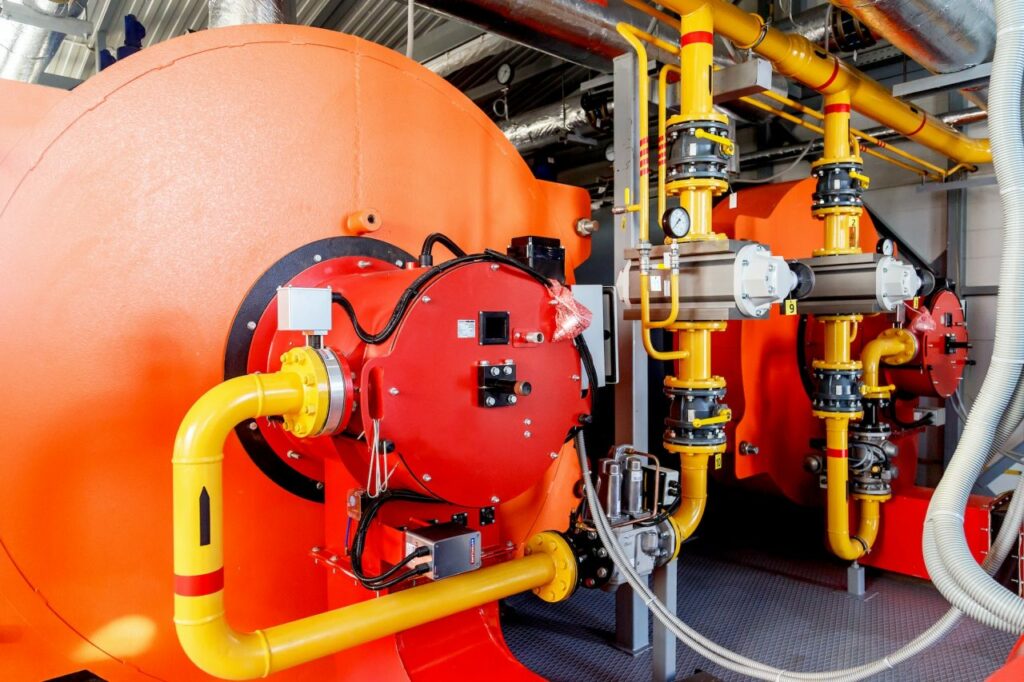
Every industrial burner operates on a fundamental balancing act: mixing the right amount of air with the right amount of fuel. Too much of either, and you waste energy or create dangerous emissions. Too little, and the flame becomes unstable or produces harmful soot. So, what exactly is air-fuel ratio, and why does it determine whether your production line runs profitably or burns through excess operating costs? Simply put, it is the precise relationship between the volume of combustion air and the volume of fuel entering the burner—a ratio that directly impacts thermal efficiency, safety, and regulatory compliance.
At Career Burner, we have spent more than three decades mastering this balance. As an ISO 9001 certified manufacturer based in Foshan, China, we produce fuel oil and industrial gas burner systems that prioritize both performance and precision. Our Career Burner solutions—like the BX20 Immersion Tube Burner for textile dyeing—are engineered to maintain optimal air-fuel ratios automatically, reducing waste and protecting your equipment. We do not just sell burners; we deliver combustion chemistry that works for your bottom line.
Why the Right Ratio Matters for Your Operation
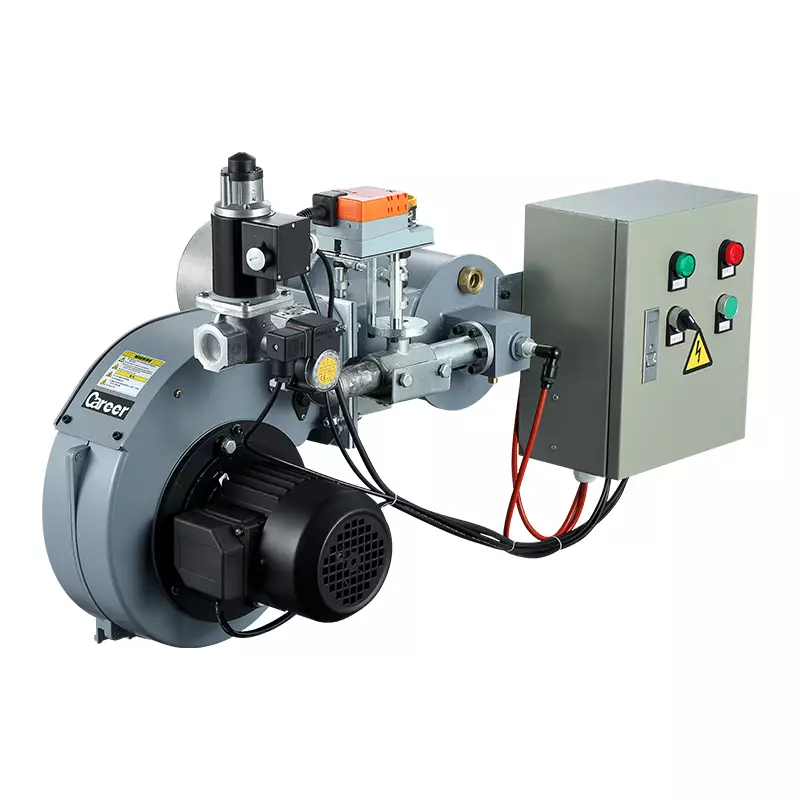
When the air-fuel ratio drifts from its ideal point, the consequences appear immediately on your energy bills and maintenance logs. A ratio that is too lean (excess air) allows heat to escape up the stack, lowering flame temperature and slowing production cycles. A ratio that is too rich (excess fuel) creates carbon deposits, soot, and unburnt hydrocarbons—fouling heat exchangers and risking dangerous rollouts. For an industrial gas burner like our BX20 modulating immersion burner, maintaining the correct ratio ensures clean, stable combustion with low NOx and CO emissions, which is critical for sensitive applications such as textile dyeing and finishing.
How Modulating Burners Achieve Precision Control
Fixed-ratio burners struggle when heat demands change throughout the day. That is where modulating technology transforms operations. The BX20 gas burner features a 40:1 turndown ratio, meaning it can reduce firing rates dramatically while keeping the air-fuel mixture precisely balanced. As the burner fires natural gas or LPG directly into compact immersion tubes, its control system continuously adjusts airflow to match fuel input. This dynamic response not only maintains flame stability but also prevents the thermal shocks that crack tubes and ruin batches. For textile dyers who cannot afford uneven temperatures, this consistency is non-negotiable.
Engineering Reliability Through Every Component
Beyond the control logic, physical design choices affect air-fuel stability. Our Career Burner team integrates customized solutions with batch consistency errors below 0.5%, ensuring every burner performs identically to its predecessor. We also partner with third-party testing and certification resources so you receive independent verification of emissions and efficiency. From the intake air damper to the gas valve train, every component supports a repeatable, reliable ratio.
Maximizing Margins Through Combustion Tuning
Understanding air-fuel ratio is not an academic exercise—it is a profit driver. A properly tuned industrial gas burner reduces fuel consumption by 5–12% compared to a drifting system, extends tube life by eliminating carbon buildup, and keeps your plant compliant with environmental regulations. At Career Burner, we recommend you let our expertise work for you. Whether you need a BX20 immersion burner for textile dyeing or a custom solution for another fluid-heating process, we deliver precision, documentation, and long-term support. Contact us to schedule a combustion audit—because the right ratio means the right returns.