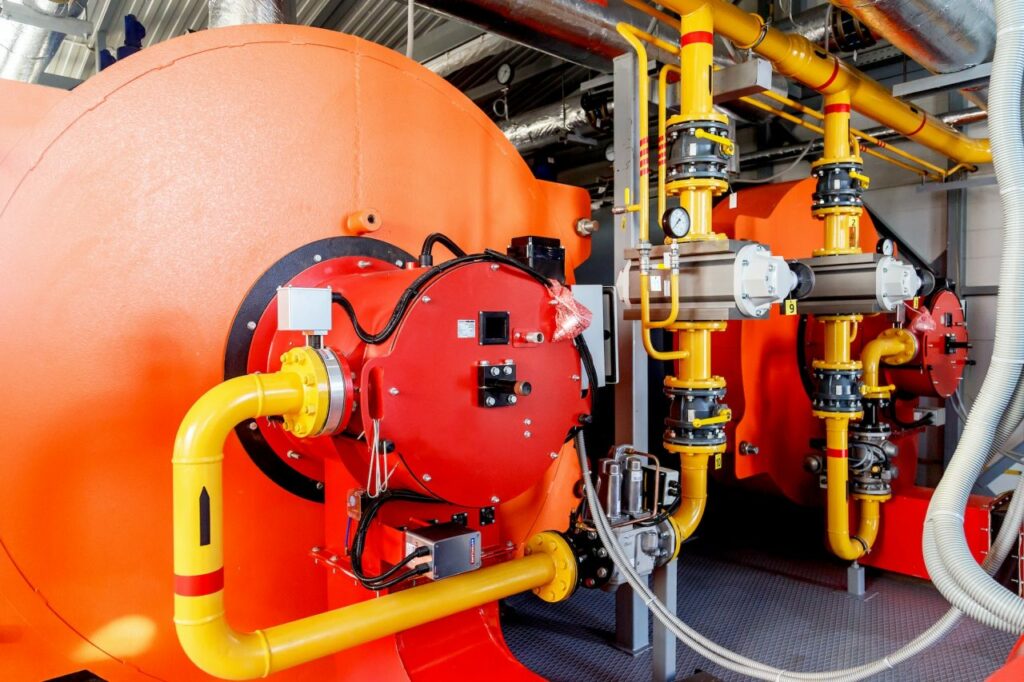
When fuel costs rise and margins tighten, the first place we look is the stack. Combustion efficiency tells us how completely your burner converts fuel into usable heat—and how much energy is escaping as wasted flue gas. But measuring it is not about guesswork or annual inspections. It requires real-time data, the right instruments, and a clear understanding of the variables that matter. Let us walk through exactly how to capture that number and, more importantly, how to act on it.
At Career Burner, we have spent over 30 years helping plants turn fuel into profit. With a strong focus on environmental protection, we provide professional energy-saving heating programs backed by extensive experience in low-emission combustion technology. Our natural gas burner solutions—including the BX20 Immersion Tube Burner—are engineered for measurable efficiency. From our ISO-certified facility in Foshan, China, we export worldwide, continuously improving service while developing outstanding products. Measuring efficiency is our daily discipline.
The Three Numbers That Reveal Everything
Combustion efficiency boils down to three measurements: flue gas temperature, net stack temperature, and excess oxygen or carbon dioxide. First, we measure the flue gas temperature right after the heat exchanger. Second, we subtract the ambient combustion air temperature to get net stack temperature—a lower number means more heat stayed in your process. Third, we analyze oxygen content in the exhaust. Too much oxygen (above 3–4% for natural gas burner systems) means dilution and energy loss. Too little risks incomplete combustion and carbon monoxide. A portable combustion analyzer inserted into a test port gives us these readings in seconds.
Why Flue Gas Temperature Tells the Real Story
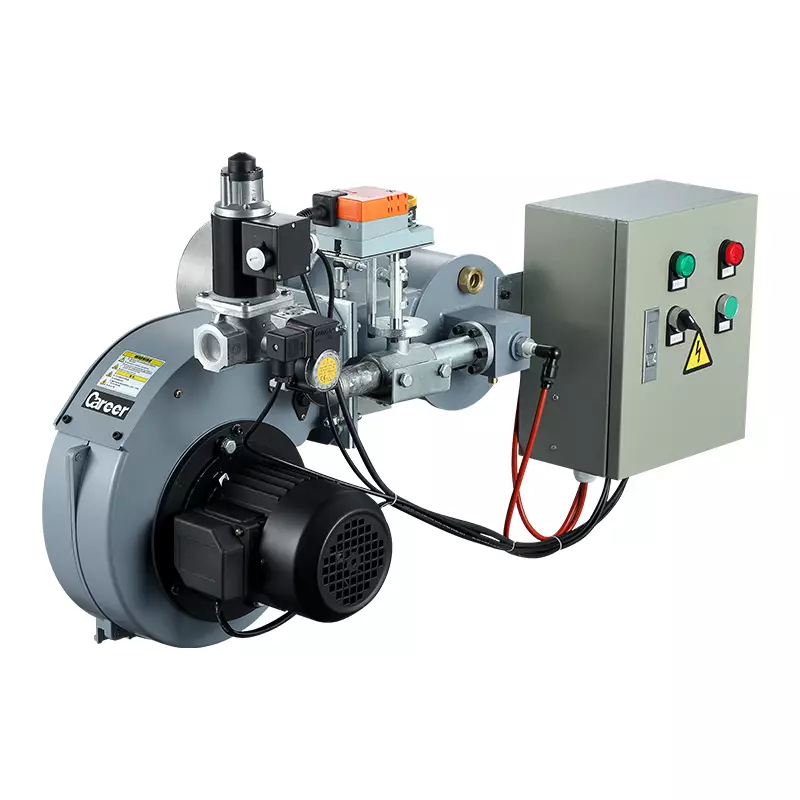
Many operators focus only on oxygen, but flue gas temperature is equally revealing. For every 40°F (22°C) reduction in net stack temperature, efficiency improves by roughly 1%. That is why the BX20 modulating immersion tube burner—with its 40:1 turndown ratio—maintains lower flue temperatures across varying loads. When firing natural gas or LPG directly into compact, submerged tubes, heat transfers through the tube walls without direct fluid contact, keeping exhaust cooler and recovery higher. If your flue gas suddenly rises, you may have fouled heat transfer surfaces or a drifting air-fuel ratio.
Practical Steps for Your Daily Walkthrough
Measuring efficiency should not require a consultant. Equip your team with a calibrated combustion analyzer and follow the same routine weekly. Record oxygen percentage, net stack temperature, and calculated efficiency. Compare those numbers against baseline readings taken when the natural gas burner was last tuned. Watch for trends: a slow oxygen drift indicates damper linkage wear; a sudden temperature spike suggests soot buildup. For textile dyeing operations using immersion burners, even a 2% efficiency drop can add thousands in monthly fuel costs.
Turning Data into Lower Fuel Bills
Measurement without action is just documentation. Once you know your current efficiency, compare it to the target for your burner type. A well-tuned natural gas burner should achieve 80–85% combustion efficiency without flue gas recovery, and higher with condensing technology. If your numbers lag, check three things: burner head cleanliness, gas pressure stability, and control system calibration. For BX20 users, the modulating control automatically compensates for some drift, but annual professional testing remains essential.
The Career Burner Commitment to Measurable Savings
From immersion tube burners for textile dyeing to customized heating programs, Career Burner delivers equipment designed for testable, repeatable efficiency. We integrate third-party testing resources and maintain batch consistency errors below 0.5% so you know exactly what to expect. We recommend you let our team perform an initial combustion audit—or upgrade to a modulating natural gas burner like the BX20. Because when you measure efficiency the right way, you stop burning profits and start burning only fuel. Contact Career Burner today to schedule your stack analysis.