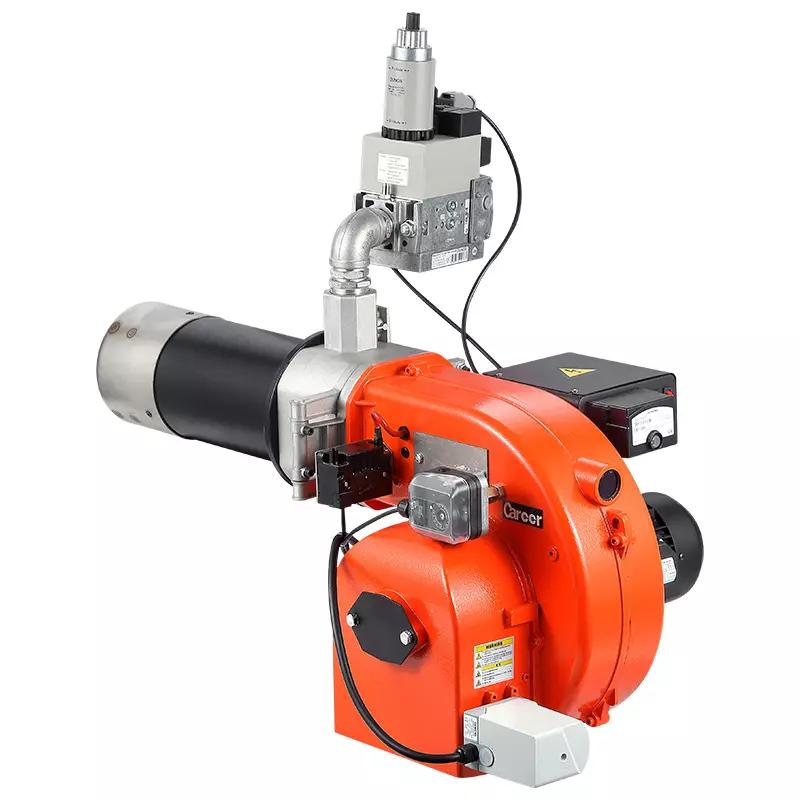
Can you burn used motor oil? Or more precisely, can you burn waste oil? Used motor oil—any petroleum-based or synthetic oil contaminated during use—is the most common subset of “waste oil.”
While the short answer is yes, doing so safely and legally requires a dedicated, certified waste oil burner. Attempting to use standard heating equipment for these fuels leads to environmental violations, catastrophic mechanical failure, and severe safety hazards.
What Is a Waste Oil Burner? How Do Waste Oil Burners Work?
While a traditional diesel burner is designed for clean, low-viscosity fuels, a waste oil burner is an engineered system built to handle “dirty” fuel with varying thicknesses and impurities.
The core of the process is a multi-stage preparation cycle.
1. Filtration and Delivery
First, the waste oil is drawn through a specialized filtration system to remove heavy particulates and debris. Because used motor oil, transmission fluids, and hydraulic oils are significantly more viscous than diesel, they cannot be atomized at room temperature. The filtered oil is then delivered to the burner via an oil pump.
2. Preheating
A dedicated waste oil burner features an internal preheating block, which heats the oil to a precise temperature. Heating the oil reduces its viscosity, making it fluid enough for the next critical stage: air atomization.
3. Air Atomization
In standard burners, fuel is forced through a nozzle at high pressure (mechanical atomization). In a waste oil system, the burner uses compressed air to “impact” and tear the heated oil into a microscopic mist. This air-assisted atomization ensures that even if the oil contains minor microscopic impurities or varies in consistency, it will still achieve a clean, complete burn.
4. Ignition and Combustion
Electrodes generate a high-voltage arc to ignite the oil mist. Then, there could be a blower that provides secondary air to shape the flame and ensure complete combustion within the combustion chamber or heat exchanger. Finally, the generated heat is transferred to the intended space.
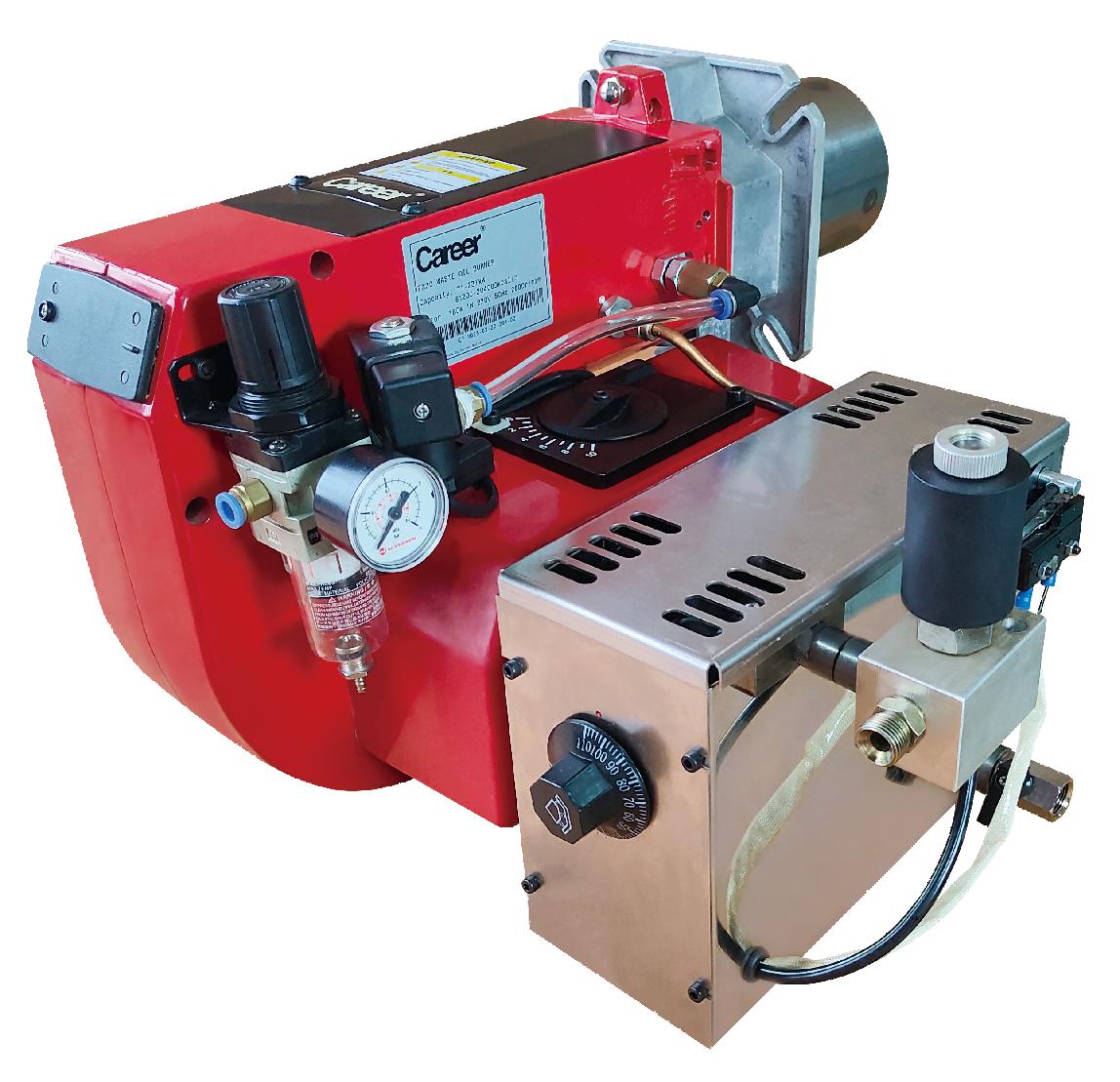
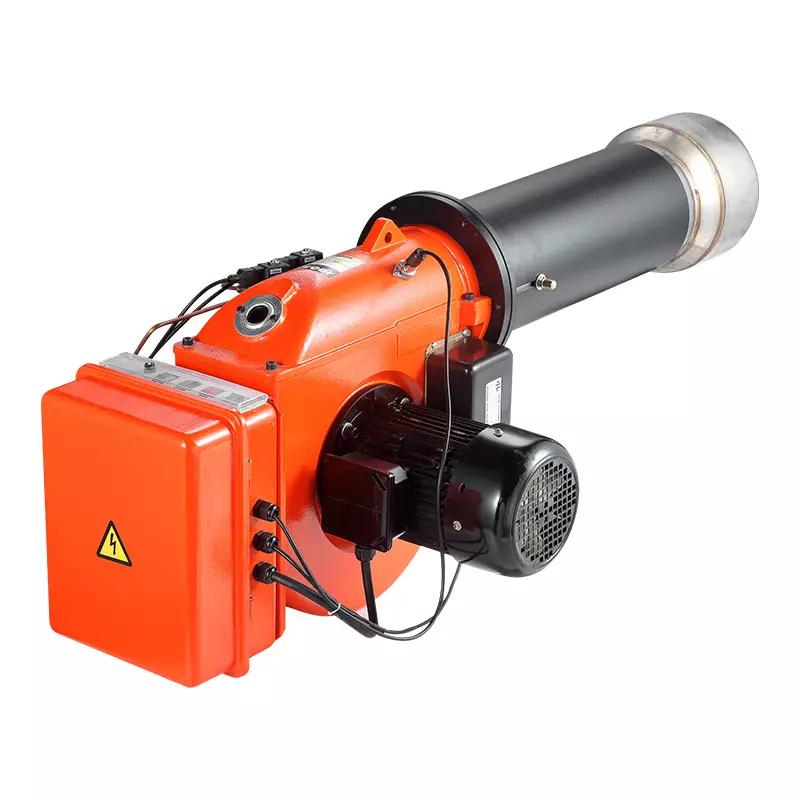
Picture shown: FX20 Automatic Waste Oil Burner /Manual Waste Oil Burner Siphon Nozzle Renewable Energy
The Core Differences: Why a Dedicated Waste Oil Burner is Mandatory
You may now wonder: Can you use a standard oil burner to burn waste oil? The answer is no for several technical reasons:
- Viscosity Control & Preheating: Standard oil burners rely on room-temperature fuel. Waste oil requires an integrated oil/air preheater to lower viscosity before ignition. Without this, the burner will fail to start or produce unstable, smoky combustion.
- Air Atomization vs. Pressure Injection: Whileclean oil is “pushed” through a nozzle via mechanical pressure, waste oil uses compressed air to “shear” the oil into droplets. This air-assisted method allows for more complete and efficient combustion.
- Corrosion Resistance & Materials: Waste oil can contain sulfur, chlorine, and heavy metals. Dedicated units utilize high-grade, corrosion-resistant materialsto resist acidic sulfidation and high-temperature oxidation—protections that standard burners may not possess.
Based on these fundamental differences, it becomes clear that using a standard oil burner to burn used lubricants is unsafe, inefficient, and potentially damaging to the equipment.
What Can a Waste Oil Burner Safely Burn?
It should also be noted that a high-quality waste oil burner is not a “trash can,” even though it is a highly versatile piece of industrial equipment. Manufacturers and facility operators must adhere to strict fuel guidelines to maintain equipment integrity and environmental compliance. Most dedicated systems are engineered to safely combust:
- Used Crankcase Oils: Standard motor oils ranging from 10W to 50W viscosity.
- Automatic Transmission Fluid (ATF): Often recycled in automotive service sectors.
- Hydraulic Fluids: A common byproduct in manufacturing and heavy machinery.
- Diesel/Fuel Oils (#1 and #2): Useful as backup fuels or for mixing.
- Synthetic Oils: Modern burners are designed to handle synthetic blends efficiently.
Additionally, there are critical safety warnings:
- Never attempt to burn gasoline, paint thinners, solvents, or antifreeze. These substances generally have low flash points and can cause explosions or release toxic vapors.
- Do not attempt to burn waste oil in an unmodified diesel burner. The lack of preheating and proper atomization will lead to immediate nozzle clogging, equipment damage, and potentially serious safety risks.
Advantages of Using a Waste Oil Burner
Transitioning to a dedicated waste oil heating system offers significant economic and operational advantages for industrial facilities. When evaluating a waste oil burner price, business owners should view it as an investment in energy independence rather than a simple equipment cost.
1. Lower Fuel Bills
By utilizing readily available waste oil, or that which can be obtained at a significantly lower price compared to traditional fuels, businesses can drastically reduce or even eliminate the need for natural gas, propane, or electricity. In cold climates, industrial facilities often save thousands of dollars annually on heating overhead.
2. Reduced Disposal Costs
On-site recycling eliminates “cradle-to-grave” liability and the associated costs of third-party hauling. Instead of paying a contractor to remove your used oil, you utilize its inherent energy value right where it is generated.
3. Lower Overall Environmental Footprint
Burning waste oil on-site is an EPA-compliant method of recycling that prevents soil and water contamination from transport spills or improper dumping. Since used oil has a high energy density, it provides a high-efficiency alternative that reduces reliance on new fossil fuel extraction.
4. Versatile Fuel Handling
Modern waste oil burners excel in flexibility, processing fuels from used engine, transmission, and hydraulic oils to synthetic and cooking oils. They can manage diverse viscosities and allow for fuel blending. Furthermore, they can also switch to standard oil as backup, ensuring that the system remains operational even if the waste oil supply is temporarily depleted.
Why Career Burner Is the Industry Choice
For over 20 years, Career Burner has established a trusted name in designing and manufacturing burners, providing ISO 9001-certified solutions tailored to rigorous commercial demands. Our range of waste oil burners covers a wide power spectrum—from 20 kW for smaller workshops to 240 kW for large-scale industrial processors—ensuring that every facility finds its perfect thermal match.
Career Burner equipment is distinguished by its intelligent engineering. Our units feature advanced control units, flame monitoring sensors, and automatic ignition systems that prioritize safety without sacrificing performance. By utilizing superior air-assisted atomization technology, Career Burner products ensure a stable flame even when handling variable-viscosity waste oils.
Conclusion
Can you burn used motor oil, or more broadly, waste oil? The only solution is to choose a dedicated waste oil burner system to ensure safety, efficiency, and longevity. Career Burner offers reliable, high-performance solutions for all industrial needs. Reach out to Career Burner today to explore the right waste oil heating system for your facility and start saving on fuel and disposal costs!